Blog
Get Pay Right on ADP Workforce Now® Next Gen™
Bringing trusted compensation intelligence and seamless planning to even more ADP users.
Written by Salary.com Staff
July 25, 2025

In 2025, a great compensation policy isn’t just about setting pay; it’s about creating value. As the job market grows more competitive, businesses need strategies that go beyond simple salary ranges and standard bonuses.
This guide shows how to build a comprehensive compensation policy that attracts top talent, drives engagement, and retains your best people. It also covers everything from building effective pay structures to managing benefits and ensuring compliance.
A compensation policy is a foundational HR document outlining how an organization distributes employee pay across all roles, including full-time, part-time, and contract positions. It defines salary ranges, bonus structures, and employee benefits to create a clear, consistent system for employee remuneration.
By basing compensation decisions on job responsibilities, employee performance, and market data, the policy helps ensure pay practices are structured, transparent, and fair. To streamline this process Salary.com's Compensation Planning helps HR teams design and maintain up-to-date market data, making it easier to create fair and competitive compensation programs.
HR professionals play a central role in crafting and maintaining this policy. Human resources is responsible for overseeing compensation policy development, ensuring fair implementation, and fostering a motivating work environment. They help ensure the organization offers competitive compensation packages that align with the organization’s financial goals, comply with federal laws, and reflect the current job market.
Evaluate and set up structured compensation packages
Align pay systems with statutory requirements
Conduct regular reviews using industry market data
Integrate performance based bonuses and salary increases
Manage key employee benefits like health insurance, paid time, and fringe benefits
A robust compensation policy should be built on four essential pillars:
Salary ranges: Every position within the organization should have a defined salary band for different positions, adjusted for job performance, experience, and the labor market.
Bonus structures: Incorporate sign on bonuses, performance based bonuses, and quarterly incentives tied to department and company's goals.
Employee benefits: Offer a comprehensive benefits package—including health insurance, sick leave, and other fringe benefits—to boost satisfaction and retention. Providing each benefit is crucial for attracting and retaining talent, as well as aligning with employee needs.
Equity compensation: Long-term rewards like stock options or stock units align employee interest with company success.
Also, don’t forget to plan for additional compensation such as relocation bonuses, education stipends, or special awards for outstanding overall performance. For accurate benchmarking and structure setup, Salary.com’s Salary Planning tool delivers real-time insights, ensuring your compensation packages stay competitive.
When developing your own compensation policy, use a clear compensation policy template and follow these key strategies:
Benchmark with similar organizations to offer competitive salaries
Ensure your policy supports attracting and retaining talent
Identify who your eligible employees are and tailor compensation based on their levels
Communicate openly so employees understand how pay is determined, including the criteria and process used to determine compensation
Ensure flexibility so the policy remains relevant to future shifts
Many high-performing companies integrate these elements into their strategies. Here are a few notable examples:
Google: is a prime example of a company with a highly structured and competitive compensation policy. Their approach includes clearly defined salary ranges for all roles, comprehensive employee benefits (including health insurance and paid time off), and aggressive bonus structures.
Netflix: takes a unique angle on compensation policy. Instead of fixed models, their HR team allows eligible employees to personalize their compensation packages by choosing how much of their total pay is distributed as salary versus stock options. This flexible compensation structure empowers staff to align compensation with personal goals while staying in line with the company’s organizational growth strategy.
SafetyWing: offers a standout compensation policy template: a flat salary for all roles regardless of title or location. While unconventional, this approach ensures equal employee compensation and eliminates geographical pay gaps. They supplement this with strong employee benefits, including health insurance and extended sick leave, to attract and retain a highly mobile workforce
Ally Financial: recently updated its compensation policy outlines to offer equity for all employees via restricted stock units. Their base salary model now includes automatic salary increases for inflation, performance, and tenure. Performance reviews and policy updates are conducted annually to ensure ongoing alignment. They also offer a comprehensive benefits package, provide tools for career development, and align every component of their compensation policy with long-term company’s goals.
Regular reviews and updates to these policies help ensure they support the organization's financial goals and drive long-term success. To replicate these results, Salary.com’s Total Compensation Planning helps design full-scale reward systems that support growth, retention, and fairness.
Creating a results-driven compensation policy involves strategy, research, and clear communication. Here’s how to build one effectively:
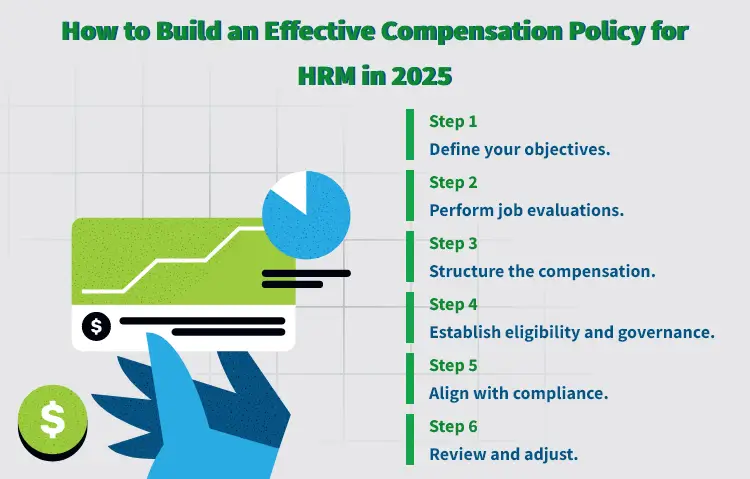
Before crafting any comprehensive compensation policy, it’s essential to set clear, actionable objectives that align with your organization’s financial goals. Consider what you want to accomplish, whether it’s attracting talent, retaining top talent, or motivating employees to boost employee performance and support organizational growth.
Assess each role’s relative value to the business. Start by gathering market data, studying industry trends, and comparing similar positions in the labor market. This helps you define competitive benchmarks and create salary ranges that remain relevant over time. Conducting detailed evaluations ensures that entry level positions, highly specialized roles, and leadership functions are all fairly compensated.
Once job values are determined, design layered compensation packages that reflect your objectives and evaluation findings.
A robust structure typically includes:
Competitive salaries within clearly defined salary ranges
Performance-based bonuses and sign-on bonuses for key hires
Equity components like stock options or stock units
A comprehensive benefits package including health insurance, paid time off, sick leave, and fringe benefits
Salary.com’s Reward Planning Tool simplifies this process, equipping HR with tools to manage compensation decisions with precision and purpose.
Outline clear policies describing how employees receive their pay, bonuses, and employee benefits. Your own compensation policy should specify eligibility criteria for bonus structures, stock options, and performance-based bonuses. Also, formal governance documents—like a compensation policy template—help standardize practices across departments and locations.
Your compensation approach must ensure compliance with all relevant federal laws, local regulations, and statutory requirements. This includes minimum wage laws, equal pay provisions, tax rules, and record-keeping obligations. Collaborate with your human resources and legal teams to audit your policies and verify adherence to all requirements.
Run regular reviews to keep the policy updated. Policies should change with the labor market, industry trends, and economic shifts. These reviews are an opportunity to recalibrate salary ranges, refine bonus structures, and expand or update employee benefits as needed. Solicit feedback to ensure that employees feel fairly compensated, valued, and supported in their growth.
Building an effective compensation policy in 2025 demands more than simply setting pay scales, it requires a thoughtful approach that balances fair and competitive compensation with your organization’s financial goals.

The latest research, expert advice, and compensation best practices all in one place.
Blog
Bringing trusted compensation intelligence and seamless planning to even more ADP users.

Blog
Learn how to train managers for effective pay conversations and build trust.

Blog
Total rewards package flexibility lets employees choose what matters - pay, perks, and benefits tailored to their needs.