Blog
Get Pay Right on ADP Workforce Now® Next Gen™
Bringing trusted compensation intelligence and seamless planning to even more ADP users.
Written by Salary.com Staff
April 30, 2025

Diversity can be many things, such as demographic diversity like gender, race, and disability or cultural diversity like nationalities and languages. In the workplace, these differences create a diverse talent pool that connects a bridge between inclusivity and the company's goals.
In a study, 76% of job seekers think that diversity is important in considering job offers, while 80% said that they would want to be in a company that values diversity, equity, and inclusion.
Auto-audit pay gaps. Eliminate bias before it strikes.
Here is where diversity recruiting strategies make the difference. Diversity recruiting strategy transforms your hiring process into a more inclusive and equitable system, allowing people from diverse walks of life to be part of the collaborative work in your company.
Learn more about diversity recruiting strategies, including their importance, significant roles, best practices, and how to create one in this article.
Diversity recruiting is the process of hiring candidates without biases against an individual’s background, culture, and experiences. This method is an essential part in fostering a healthy and inclusive working environment as it eliminates prejudice and discrimination.
There are two types of diversity in the workforce: inherent and acquired. Inherent diversity refers to the natural differences of every candidate, such as gender and race. Acquired diversity refers to characteristics that candidates gain through time like education and experiences.
A huge part of offering an inclusive workplace for these diverse workers is eliminating pay gaps. Tools like Regression and Cohort Analyses conduct assessment in salary differences between gender, race, and other factors to identify and resolve pay disparities.
Diversity recruitment process is not a one-man project. Key roles need to collaborate and put in effort to ensure that diversity equity and inclusion (DEI) is effectively established in the recruiting strategy. Here are vital roles in diversity hiring process:
Hiring managers: They play a central role in increasing diversity in recruitment. They need to align hiring practices with the company’s DEI goals, ensure that interview panels come from diverse backgrounds, and practice objective evaluation of potential candidates.
Talent acquisition leaders: They develop diverse applicant pools that involve underrepresented groups. Some practices that foster inclusivity include salary transparency, check-ins with new talents, and employee engagement.
Entire workforce: To establish DEI in the company culture, everyone must play their part. Employees can refer to more diverse candidates through referral programs and dismiss any biased remarks and actions in the workplace.
A diverse team offers broader viewpoints, experiences, and skillsets that can lead to a more productive working environment. Here are the benefits of diversity recruitment:
Enhanced creativity: Diverse employees who come from different backgrounds and walks of life lead to more creative, innovative, and diverse ideas.
More diverse workforce decisions: Decision-making in a company must encompass all facets, and a diverse range of workforce ensures that different perspectives are accounted for, leading to more efficient plans, processes, and execution.
Stronger company reputation: Companies that encourage diversity, equity, and inclusion are attractive to top talents since it means that workplace biases are not tolerated. This gives way to a reputable company branding, appealing to potential candidates.
Improved customer experience: Customers have diverse backgrounds and needs, so it is important that employees varied to better accommodate distinct demands. This leads to better relationships with clients and increased profit.
Workplace diversity leads to equal opportunities for individuals from different backgrounds. This equal chance includes an equitable pay structure, which can be magnified through Pay Equity.
This tool can assess pay differences, evaluate job structures, and recommend strategies that can remediate inequitable compensation for a fair employee and compensation strategy.
Recruiting diverse groups does not start in the interview process. It must have a robust strategy to ensure that the company’s DEI objectives are met, alongside the job satisfaction of the workforce.
Here are steps to create a diversity recruitment strategy:
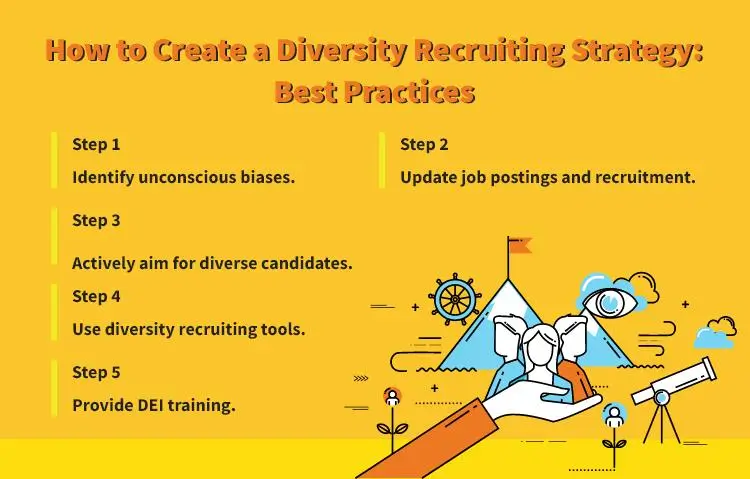
Before hiring, be aware of the existing prejudice in your company first. Align your DEI goals and targets with these biases to create a safe working space for underrepresented individuals. Having a clear vision of company diversity influences the success of the recruiting process.
Diversity audit is also one way to do this as it identifies gaps in the organization. You can gather data about the demographic of the workforce, conduct discussions on inclusive culture, and interpret common trends to make DEI improvements.
Make sure your past and current job ads and job descriptions are using a format that is inclusive to diverse candidates. Be mindful on culturally biased terms and stay neutral in your language.
You can include encouragements for candidates from diverse backgrounds to apply. It is also best to include benefits that appeal to a broader range of people, such as flexible working hours, work-life balance, health insurance, mental health support, and retirement plans.
Create a talent pool coming from various sources and target diverse candidates. To avoid the shortage of diversity and inclusion, check out where diverse talents usually come together, such as community groups for women in STEM, different sexual orientations, people with disabilities, and veterans.
Organize recruitment events, spark conversation in online platforms, or establish a referral program, letting them know that your company is actively looking for diversified employees.
Using technologies in recruitment makes it more objective against unconscious biases. One way to ensure that your company is equitable with diverse talents is by offering them fair compensation through Salary.com’s Pay Equity Suite.
Tools like this focus on diversity like gender and race, evaluate demographic distribution and pay levels, assess pay gaps across your company, and ensure that your organization goals are aligned with your DEI initiatives.
Incorporating DEI in a company is always a work in progress. The objectives of diversity training are to raise awareness in unconscious biases, inspire inclusive actions and decisions, craft diverse company policies that cater to equality and inclusivity, and devote on constant DEI practices.
Here are some of the best practices you can use for your company’s diversity recruiting efforts:
When the organization already has an inclusive system in place, effective diverse recruitment will follow. Fostering belongingness and prioritizing employee's value is a vital ingredient in hiring and attracting the best talents.
Once you have an established and effective DEI strategy in the company, exhibit success stories from diverse workers and showcase diversity initiatives of the organization that give way to inclusive working environment.
To make informed decisions about diversity recruitment, track diversity metrics like the demographics, hiring rates, and employee retention. This will help your company gage the success of the diversity strategy and make way for improvements.
One-click compliance reports for state pay equity laws.
Still, the best practice in diverse recruitment is giving equal pay to employees regardless of their background, culture, and identity. To mandate equitable salary structures, exercise pay transparency, and communicate a fair workplace culture, use Pay Equity to facilitate your diversity recruiting strategy now.

The latest research, expert advice, and compensation best practices all in one place.
Blog
Bringing trusted compensation intelligence and seamless planning to even more ADP users.

Blog
Learn how to train managers for effective pay conversations and build trust.

Blog
Total rewards package flexibility lets employees choose what matters - pay, perks, and benefits tailored to their needs.