Blog
Get Pay Right on ADP Workforce Now® Next Gen™
Bringing trusted compensation intelligence and seamless planning to even more ADP users.
Written by Salary.com Staff
May 23, 2025

Developing a diverse and inclusive workplace is crucial for success in today's competitive business landscape. Inclusive hiring practices are at the heart of this effort, offering numerous benefits that can completely transform your entire organization’s culture and performance.
A recent survey discovered that 56% of US employees believe that promoting DEI (diversity, equity, and inclusion) practices at work is a great strategy. On the other hand, about 61% of workers say that their organization already implements policies that ensure fairness in hiring, pay, and promotions.
As an employer, you have to understand how inclusive hiring practices can bring a positive impact to your business both at present and in the future. But how exactly do you develop inclusive hiring practices for your company? This guide will highlight the importance, benefits, challenges, and actionable steps to implement inclusive hiring.
Inclusive hiring refers to a company’s recruitment practices that are designed to attract and hire many candidates from diverse backgrounds, ensuring equal opportunities for all applicants. Its main goal is to eliminate bias and discrimination in the workplace, fostering a healthy work environment where everyone can thrive freely.
This approach has the potential to produce a positive domino effect for your company. It not only enriches your workforce with diverse perspectives but also enhances your organization’s reputation and performance, leading to an overall better business success.
Developing DEI best practices for your company requires a deep understanding of human resources management and regulatory compliance. Salary.com’s consultants can help you get on the right track and develop a framework that’s aligned with your business goals, mission, and vision.
Inclusive hiring practices are vital to a company’s overall recruitment strategies because they tap into a broader applicant pool, which can lead to several positive drivers of success within the company.
Here are some key reasons why diversity hiring practices are important:
Legal compliance: It ensures that the company follows and adheres to anti-discrimination laws, protecting the company’s reputation.
Talent acquisition: Diversity hiring practices also prompt a company to have a wider perspective on hiring potential employees, getting the best possible diverse candidates from a bigger talent pool.
Innovation and creativity: A diverse workforce often brings unique perspectives to work. This fosters innovation, creativity, and resourcefulness.
Diversity hiring practices are a big thing for companies in today’s competitive business landscape. However, it could do more harm than good if not executed properly. Make sure that you’re on the right track by availing of Salary.com’s consulting services.
As much as inclusive hiring practices pack a great deal of benefits to an organization, they also impose several challenges which, if not addressed, could cause significant problems for the company:
Bias in hiring processes: Unconscious biases can affect hiring decisions, requiring intentional strategies to mitigate them.
Cultural integration: Ensuring that diverse hires feel included and valued within the existing culture can be challenging.
Communication barriers: Differences in language, communication styles, and cultural norms could also become a significant barrier during hiring.
Lack of accessibility: It’s also crucial to ensure that the hiring process and workplace are easily accessible both physically and digitally for every candidate.
Attracting diverse employees: This could be the most important step in developing diverse hiring practices, and it usually begins with the company’s internal workplace culture. What could your organization offer to attract a diverse talent pool?
Here’s a quick step-by-step guide to help you develop inclusive hiring practices for your organization:
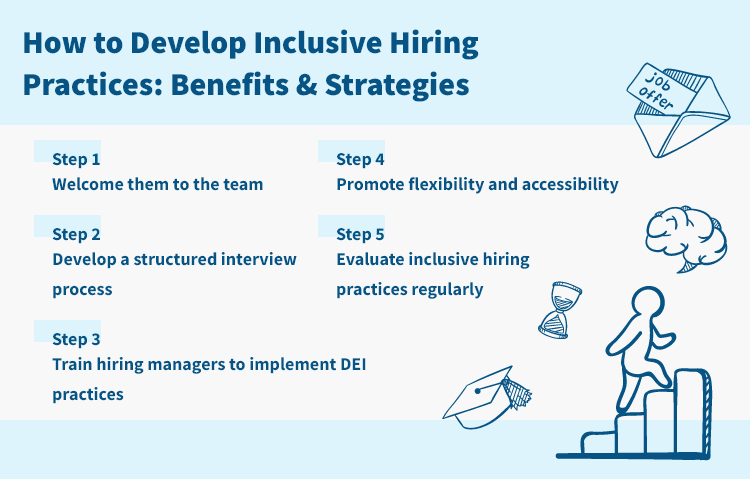
Make sure that your organization knows how to manage job descriptions and job titles effectively. This is the first and most important step in developing inclusive hiring practices for companies. Implementing diversity and inclusion principles in the job postings can help eliminate personal biases and make job seekers or employees feel valued.
Some of the things to keep in mind are:
Use clear and concise language
Highlight essential skills and qualifications
Focus on evaluating candidates' abilities, not personal characteristics
Emphasize your commitment to DEI practices
An organization’s inclusive workforce planning strategies are essential to attaining its long-term business success. Make sure that it’s always aligned with the job structures, budgeting, and hiring decisions of the company.
The interview stage is also a crucial step, as it’s supposed to effectively filter out the candidates based on their performance. It helps to use gender-neutral language, not use the same questions for every candidate, and utilize applied psychology to navigate the interview process effectively.
Standardize your interview questions, invite a diverse interview panel with proper training, and provide accommodations for those who need them, to eliminate bias and encourage employees, such as qualified candidates with disabilities.
Establishing a company’s inclusion initiatives starts by helping the hiring team train and learn more about DEI principles because they will serve as the role models in the company. Invest in providing workshops, seminars, and certifications to help your company's HR professionals lead and promote better diverse hiring practices.
The essence of fostering a diverse and inclusive workplace is providing access and flexibility to everyone. So, make sure that your company follows up with this cause by giving equal access to encourage candidates. It starts with accomplishing even the small details of ensuring an accessible website, a smooth application process, and reasonable adjustments to those in need.
Remember that you won’t be able to perfectly execute inclusive hiring practices on the first try. That’s why continuous improvement and regular feedback are key to attaining success.
Regularly assess your inclusive practices to identify areas for improvement. Use metrics such as diversity metrics and feedback from candidate experience to refine your processes and ensure they remain inclusive.
To help you gain a better perspective on DEI principles in the industry, below are some examples of inclusive hiring practices by some of the leading companies in the US:
Microsoft’s Autism Hiring Program: Microsoft values the potential of every candidate, despite their medical condition. Autism Hiring Program is Microsoft’s flagship strategy in inclusive hiring for people with disabilities. This program actively seeks out and supports individuals with autism, leveraging their unique skills in areas like data analysis and software testing.
Accenture’s Inclusive Culture: Accenture fosters an inclusive and diverse workplace culture, which has helped the company see significant profitability gains and an exceptional reputation. The company is proud to accommodate talents with different perspectives, backgrounds, and lived experiences.
General Motors: The largest automaker by volume in the US, promotes the hiring of a diverse talent pool through partnerships with significant organizations such as Women of Color in Technology, National Society of Black Engineers, and Society of Hispanic Professional Engineers. This highlights the organization’s commitment to hiring talent from diverse backgrounds and cultures all over the world.
Adopting inclusive hiring practices can help businesses unlock a gold mine of benefits, from enhanced creativity and innovation to improved employee engagement and financial performance. Moreover, considering candidates from underrepresented groups, such as female candidates and ethnic minority groups, can greatly enhance a company's reputation.
Implementing diverse initiatives requires commitment but can lead to a more resilient, diverse, and successful organization. Seeking recommendations from employee referral programs can also help assemble diverse teams, as well as utilizing services from recruitment agencies or assistive technology.

The latest research, expert advice, and compensation best practices all in one place.
Blog
Bringing trusted compensation intelligence and seamless planning to even more ADP users.

Blog
Learn how to train managers for effective pay conversations and build trust.

Blog
Total rewards package flexibility lets employees choose what matters - pay, perks, and benefits tailored to their needs.