Blog
Get Pay Right on ADP Workforce Now® Next Gen™
Bringing trusted compensation intelligence and seamless planning to even more ADP users.
Written by Salary.com Staff
April 30, 2026

A phantom stock plan allows a company to offer select employees the financial upside of owning shares in the company, without transferring any ownership to them. Instead, employees will receive a payment in cash that reflects the value of the shares that they would have otherwise received.
A phantom stock plan creates phantom units that track the value of the shares that the company has or the value of the entire company. Employees will be granted the right to a cash payment when the company reaches specific parameters. The HR department finds significant benefit in using this system. Phantom stock does not add to the share ownership of the company.
Because phantom stock operates as a structured incentive compensation program, organizations often rely on compensation management platforms such as Compensation Planning to administer long-term incentive rewards, manage eligibility rules, and track future payout obligations tied to company performance.
Long-term incentive plans require a company to lock employees and executives for three to five years or more. This ensures that the employees focus on the company’s growth. According to a survey conducted by WorldatWork of privately held companies, 15 percent of them that offered long-term incentives used phantom equity as one of their vehicles.
The key to understanding that phantom stock are effective is the linkage between the employee’s phantom shares and the value of the company. As the value of the company increases, so does the value of the employee’s phantom shares. This ties into retention incentives.
Organizations typically benchmark executive incentive opportunities using Compensation Software to ensure phantom stock awards align with competitive executive compensation practices and market pay positioning before grants are issued.
Phantom stock compensation is paid in cash, not shares. The value of the payment is the fair market value of the shares that were granted to the employee. By settling phantom stock awards in cash, companies avoid transferring ownership.
The employee receives the taxable income payment, and the company receives a tax deduction. There is no need for the company to issue shares to the employee.
Recent data from Carta’s 2025 analysis of private-equity-backed companies reveals that phantom stock now represent a majority of new equity grants issued to management teams. This is a significant increase from 2019.
Phantom stock allow HR departments to have a great deal of flexibility and control over how they compensate their executives.
The structure of a phantom stock begins with deciding on the number of phantom shares, who qualifies, and when the employees will be paid. There are two primary types of phantom stock plans: full-value and appreciation-only.
| Plan Type | What Employees Receive | Typical Use Case |
|---|---|---|
| Full-Value | Entire current value plus any growth | Strong retention focus |
| Appreciation-Only | Only the increase above grant-date value | Performance-driven growth emphasis |
The initial value of each phantom unit is set by an independent third-party appraisal. Most plans use a time-based vesting schedule.
The value of phantom stock units is established and determined by the fair market value of the company. An independent 409A valuation that is conducted at the time of granting the phantom stock will determine this initial value. The formula can use EBITDA multiples or book value.
The method used to establish the value has to be consistent throughout the life of the stock plan.
The timing of phantom stock payouts can be deferred to a specific event, such as the employee’s retirement or the sale of the company. The deferred compensation allows the employee to defer taxation on the phantom stock until the time of receipt.
The deferred compensation can also allow the company to defer a portion of the cash payment for several years.
The value of phantom stock awards includes the initial grant value and the appreciation that the company gains over time. Most organizations will use third-party appraisals and pre-determined formulas to value the phantom stock.
The valuation of the company as a whole will establish the initial value of each phantom unit. If the company is valued at $20 million and has issued 2 million phantom units, the initial value of each phantom unit is $10. Should the company grow to $30 million, the value of the unit will be $15.
This direct link between the company’s valuation and the phantom value creates a highly motivational incentive for employees.
The different valuation methodologies used to place a value on the company will have a direct impact on the value of the phantom stock award that is offered to the employee.
| Methodology | Best For | Pros | Cons |
|---|---|---|---|
| Third-Party Appraisal | Complex or PE-backed firms | Highly defensible | Higher cost |
| EBITDA Multiple | Service or stable businesses | Simple, predictable | May miss unique factors |
| Book Value | Asset-heavy companies | Easy to calculate | Often understates true worth |
The choice of methodology will impact the outcome of determining the value of phantom stock.
The best way to begin creating a plan involves the following five steps:
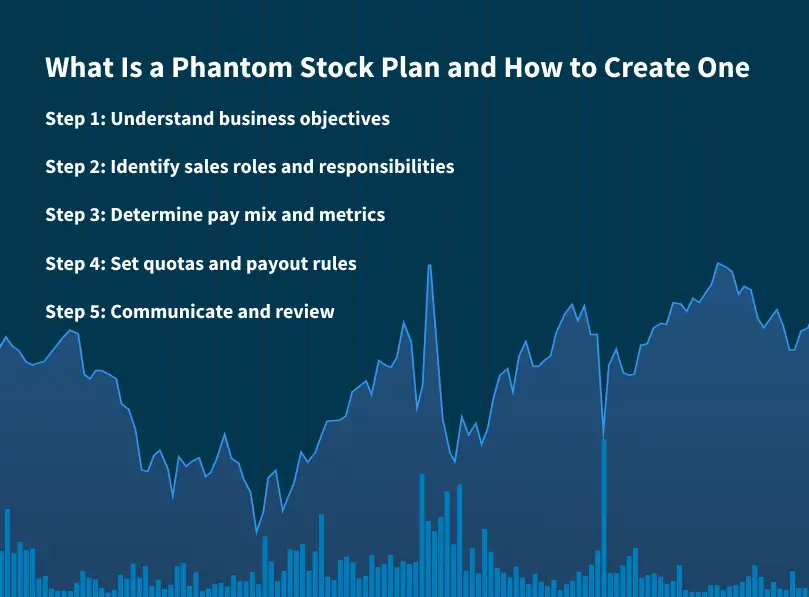
The employees to be granted phantom stock, and what event or time frame will trigger the "payout" are to be decided. The company will also have to decide whether the phantom stock award will be of the “appreciation only” type or the “full value” type.
As there is no public market for phantom stock, the company will have to "invent" a price for the units. The value could be based on a formula, such as using a multiple of the company’s EBITDA, using the book value, or using an annual independent appraisal of the company. Consistency in this valuation will help the company and the employees.
To ensure that the company continues to have skilled employees, it has to decide on a vesting schedule. The most common is a 3-to-5-year "graded" vesting schedule with a percentage of total awards earned each year. Other options include "cliff" vesting when a specific percentage of phantom stock vests after a certain period.
Creating a formal Phantom Stock Agreement is essential. For U.S. companies, IRS Section 409A is essential. If not properly fulfilled, the company and the employees may be subject to significant penalties.
Once the agreement is drafted, "Grant Notices" will be issued to the employees. It is vital to make it clear to the employees that this is a cash bonus plan, not a share ownership plan. Additionally, creating a simple ledger to track the phantom stock is vital.
To effectively administer grants, monitor vesting schedules, and track future payout obligations, organizations commonly use Compensation Planning to manage long-term incentive programs, forecast compensation costs, and maintain centralized visibility over deferred compensation awards such as phantom stock.
The best way to ensure that a phantom stock is compliant with all legal and tax regulations is to maintain a robust set of documentation.
Internal Revenue Code Section 409A requires that phantom stock be specifically structured to avoid immediate taxation to the employees and a 20 percent penalty on them. Most organizations will include this in the planning of the phantom stock.
In most phantom stock, a “change in control” clause states that the outstanding phantom stock units will be paid to the employee in a lump sum or accelerated manner should a change in control of the company occur.
The definition within the phantom stock of what constitutes a change in control will determine the value of the phantom stock award that the employee is to receive.
Governance requires the company to maintain written documentation of the phantom stock. This includes maintaining a ledger of the number of phantom units each employee is to be granted. Additionally, the company must maintain the valuation and communication ledgers.
Here are the common question about the topic:
No. Phantom stock units are non-transferable. The units will remain in the employee and will not to others.
The most common outcome is that the employee forfeits any right to the remaining unvested phantom stock. Vested phantom stock is typically paid out in accordance with the schedule that was established.
Payouts represent future cash outgo for the company. The company will accrue the phantom stock value and provide for it through sinking funds or insurance policies. Phantom stock awards provide for installment payments.
Yes. Phantom stock plans are not affected by the number of shares outstanding or the restrictions on private companies. In fact, many small and mid-sized companies use phantom stock to motivate and reward employees.

The latest research, expert advice, and compensation best practices all in one place.
Blog
Bringing trusted compensation intelligence and seamless planning to even more ADP users.

Blog
Learn how to train managers for effective pay conversations and build trust.

Blog
Total rewards package flexibility lets employees choose what matters - pay, perks, and benefits tailored to their needs.