Blog
Get Pay Right on ADP Workforce Now® Next Gen™
Bringing trusted compensation intelligence and seamless planning to even more ADP users.
Written by Salary.com Staff
July 26, 2024

Recruitment is a critical part of human resources management as it impacts the quality of talent in an organization. Without a clear recruitment process, expect lower-quality hires, decreased productivity, poor cultural fit, and higher turnover.
With this in mind, companies should learn how to improve recruitment process to secure quality hires. However, the road isn't easy due to various challenges. This article offers steps and suggestions for hiring process improvement. Also, discover how Salary.com's Real-time Job Posting Salary Data solution can streamline your recruitment efforts and help find top talent.
Live job scraping. Know their pay secrets instantly.
A recruitment process is a series of steps companies take to fill job openings. Its main goal is to find and attract qualified job applicants with the right skills and experience. This helps the company hire quality candidates for the job, boosting productivity, improving team fit, and increasing the chances of long-term success for both the company and the new employee.
Recent studies show that employers face challenges in recruiting and hiring. Also, 71% of recruitment and hiring managers believe HR departments should improve their quality-of-hire and recruitment strategies.
So, it's important for companies to learn how to improve recruitment process within their workforce. This hiring process improvement helps them attract top talent effectively and ensures long-term success for both the organization and new candidates.
Thanks to the Real-time Job Posting Salary Data solution, most employers can easily find potential candidates, improving the quality of their recruiting process with this top-notch tool. The software's compensation intelligence allows them to check median salaries, trends, salary ranges, and base salary distributions.
As mentioned, the recruitment process is how companies find and hire new employees. It typically starts with identifying the need for a new position and writing a well written job description to attract qualified job seekers. Recruiters then conduct job searches for potential hires through various channels like social media or use tools like Real-time Job Posting Salary Data to scan millions of online job postings on one single platform.
Then they screen applications, conduct a thorough interview process, and select the best person for the job. Once a job offer is accepted, the onboarding process begins to help the new hire settle into their role.
Here’s a summary of a typical, structured hiring process:
Identifying recruitment needs.
Preparing the recruitment plan.
Sourcing best candidates.
Screening and shortlisting candidates.
Interviewing, selecting, and offering.
Onboarding and evaluating.
When executed correctly, a company's hiring efforts can become a powerful engine driving its success. Here's why improving your hiring process is important:
Boosts quality of hires
A clear hiring process helps you find quality candidates with the right skills and fit for your company. This leads to hiring people who excel in their roles and boost company success.
Drives cost savings
Attracting the right fit from the start reduces costly bad hires from turnover, retraining, and lost productivity. A streamlined process also saves time and resources for unqualified applicants.
Improves employer brand
Candidates judge your company based on their hiring process experience. A smooth, positive candidate experience improves your attractiveness as an employer, which attracts top talent and enhances your reputation.
Minimizes bias
Clear criteria and structured interviews help minimize unconscious bias in the selection process. This ensures you're evaluating job candidates are evaluated based on qualifications, not irrelevant factors.
Streamlines efficiency
A well-organized hiring process gets you from open position to filled position faster, reducing time spent finding qualified candidates and freeing resources for other business priorities.
Know who's hiring, where, and for how much.
So, how can a company achieve recruitment process improvement? To ensure your efforts in achieving recruitment process improvement are successful, check out these tips and suggestions.
Stay updated and use data for hiring process improvement: Monitor industry trends and use data to assess your recruitment strategies for better results.
Write clear job descriptions: Clear job descriptions attract great candidates and reduce time spent filtering unqualified applicants.
Simplify the job application process: Streamline applications by focusing on key qualifications and ensuring ease of submission.
Use tools for efficient recruitment: Applicant Tracking System (ATS) automates tasks, saving time and helping focus on the right candidates.
Consider video interviews: A video call or interview provides quick insights into candidates' personalities and communication skills, unlike face to face interviews.
Assess cultural fit: Evaluate how well candidates' values and work styles align with your company culture to attract and retain top talent.
Use an employee referral program: Encourage current employees and your recruitment team to refer suitable candidates, leveraging their networks for high-quality hires.
Knowing how to improve your recruitment process is a must-have skill for anyone involved in talent acquisition. It helps organizations attract, assess, and hire top candidates efficiently.
Luckily, a helpful tool—Real-time Job Posting Salary Data—allows compensation professionals, recruiters, and talent acquisition employees to stay updated with current salary trends.
Before we tackle the steps on how to improve recruitment process, let's discuss first the tool that can help streamline this process—the Real-time Job Posting Salary Data.
This tool is a comprehensive solution that provides a real-time dataset capturing job posting and labor market analytics. It helps organizations keep their salary offerings competitive and in line with market trends.
With Real-time Job Posting Salary Data, users can:
Find qualified candidates through job postings and analyze data insights.
Analyze peers' or competitors' activities in real time.
Get up-to-date salary information for specific job titles, locations, and industries.
View compensation intelligence, including medians, trends, ranges, and base distributions.
Find key job metrics, including total job postings, hiring companies, and average job durations.
Share labor market movements and critical data with stakeholders through reports.
Attract the right talent with competitive salaries to improve the hiring process.
Use data to adjust salary ranges and job offers.
Now that you understand what Real-time Job Posting Salary Data is and its key features, let's explore how to improve recruitment process using this tool:
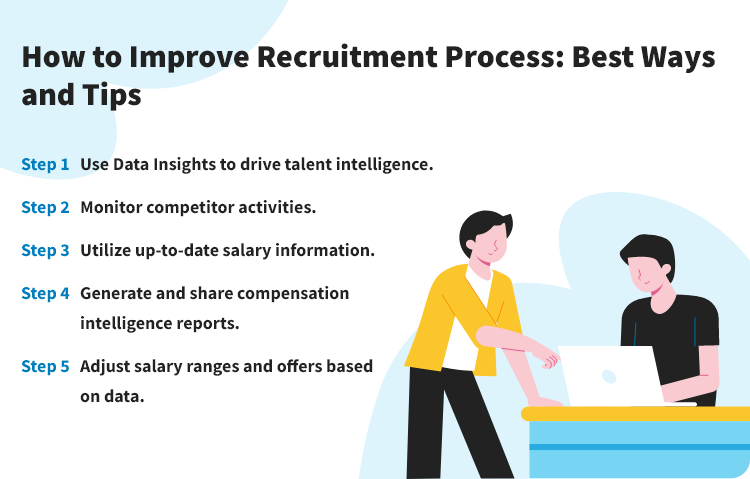
Salary.com's Data Insights offers interactive dashboards with job titles, benchmark matches, compensation distribution, top-paying skills, salary trends among peers, hiring processes’ activity, and trending jobs by job family. This information supports your strategic decision-making.
Study competitors' current job postings and salary offerings. Use this data to ensure competitiveness, understanding what peers offer and how they position their roles. Adjust recruitment strategies to attract candidates considering similar positions elsewhere.
To do this, switch to “Company View” from “Posting View” and create or add to peer groups. This allows you to compare with competitors when searching for prospective employees. Quick tip: Make sure to click "Peer Groups" on the home screen.
Access current salary data for job titles, locations, and industries to ensure competitive compensation packages. Aligning salaries with market trends increases your chances of attracting qualified candidates who meet your requirements.
Compile and share detailed reports with stakeholders, including key job metrics like total postings, hiring companies, and average job durations. Highlight median salaries, trends, ranges, and distributions to offer a clear view of the labor market, aiding in strategic decision-making.
Note: These reports can be formatted as .xlsx or PDF.
Regularly check real-time salary data to adjust salary ranges and offers as necessary. Keep your compensation packages competitive to attract and retain top talent. This approach helps maintain a dynamic hiring process that adapts to market changes effectively.
Understanding how to improve recruitment process involves refining job postings and streamlining candidate selection. With Salary.com's Real-time Job Posting Salary Data solution, organizations can ensure competitive compensation, attract top talent, and improve recruitment efficiency. Its top-notch features not only aid in hiring process improvement but also contribute to strategic workforce planning.

The latest research, expert advice, and compensation best practices all in one place.
Blog
Bringing trusted compensation intelligence and seamless planning to even more ADP users.

Blog
Learn how to train managers for effective pay conversations and build trust.

Blog
Total rewards package flexibility lets employees choose what matters - pay, perks, and benefits tailored to their needs.