Blog
Get Pay Right on ADP Workforce Now® Next Gen™
Bringing trusted compensation intelligence and seamless planning to even more ADP users.
Written by Salary.com Staff
March 14, 2025

The competition for top talent is fiercer than ever. A 2024 survey of nearly 7,500 organizations across more than 150 countries highlights how companies are reshaping total rewards, benefits, and cost-management strategies to remain competitive.
With these shifts in mind, organizations must strengthen their approach to compensation, and they can do so using real-time salary data to benchmark pay, address disparities, and attract top talent. But first, it is important to understand how a real-time salary dataset works and how to leverage it to gain a competitive edge.
A real-time salary dataset is a collection of up-to-the-minute information about employee earnings. It often comes from sources such as employee reports, HR data, and public salary records like the Occupational Employment Wage Statistics.
For example, if a company is hiring a software engineer, a real-time salary dataset shows what similar roles in the same area and industry are paying, helping companies offer competitive salaries and attract top talent.
With real-time salary datasets, HR professionals can measure various compensation metrics that provide actionable insights into pay trends, such as:
The average salary for a specific role in real time
How much companies in the same industry are paying
What factors influence salary variations, such as experience and location
How often salaries change over time
The impact of market demand on compensation levels
Pay differences across job levels and skills
Finding the best source of salary data is key to making informed pay decisions. For organizations needing a tool to track real-time salary trends, Salary.com's Real-time Job Posting Salary Data Solution offers up-to-date pay insights to stay competitive.
As mentioned earlier, real-time salary datasets aggregate and analyze salary information from various sources, such as job postings, employee-reported data, and company surveys, to provide up-to-date salary ranges and trends for specific jobs and locations.
These datasets are often powered by web scraping, APIs, and machine learning algorithms that collect and process data from multiple sources in real-time.
The information is then organized into a file and presented in a user-friendly format, allowing individuals and organizations to access current salary data for benchmarking, negotiation, and compensation planning purposes.
Some popular platforms that provide this type of data include Salary.com, which also offers an AI-powered tool that delivers real-time competitive intelligence by analyzing job postings, market trends, and in-demand skills based on job title and location.
Yes, real-time salary data is in high demand. Organizations need up-to-date pay insights to stay competitive, especially as the talent acquisition trends change in 2025. Since traditional salary surveys often lag behind market changes, real-time data ensures accurate benchmarking and pay adjustments.
However, Forbes notes that relying only on real-time data has limits, as it may not capture long-term trends and could lead to reactive decision-making. Combining real-time insights with other compensation strategies ensures a balanced approach.
Organizations rely on real-time salary data to stay competitive. Outdated pay information makes hiring, retention, and budgeting more difficult. Here is why real-time data is important:
With wages shifting due to demand and talent shortages, organizations need salaries that reflect the current market. Real-time data helps HR and recruiters make fast, informed pay decisions to secure top talent before competitors.
Real-time salary trends help organizations adjust pay and retain employees. Knowing market rates allows HR to fix pay gaps before they cause turnover.
Talent intelligence platforms show salary trends by location, helping organizations hire cost-effectively. For example, companies can recruit remote employees in areas with lower salaries but strong talent.
Salaries change with the economy, inflation, and industry trends. Organizations need current labor market data to adjust budgets, stay competitive, and attract top talent while staying financially stable.
New technologies and changing job roles affect salary expectations. Real-time data helps organizations recognize and pay for in-demand skills.
Real-time Job Posting Salary Data helps you track competitor hiring trends, key roles, and pay structures. Benchmark effectively, adjust your strategy instantly, and stay ahead of market shifts.
To attract top talent, companies need competitive salaries and up-to-date hiring insights. Fortunately, there are tools like Real-time Job Posting Salary Data Solution that can help by scanning millions of job postings for real-time salary data.
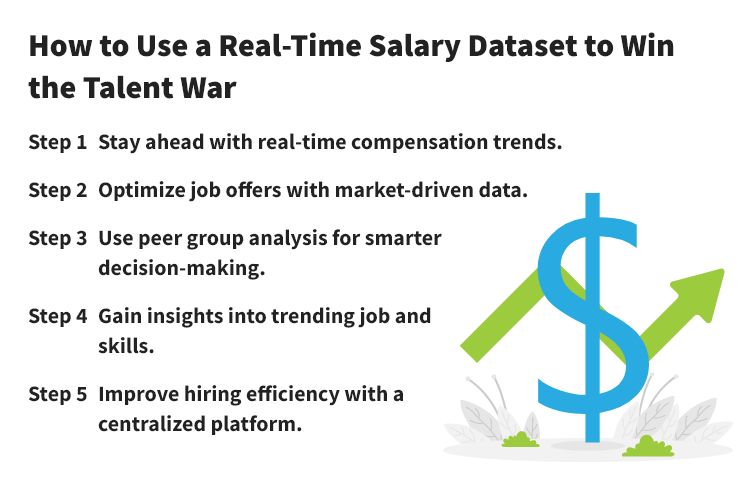
Relying on past salary data can make hiring harder. Salary.com's AI-powered tool provides real-time salary trends, including median pay, ranges, and base salaries for specific jobs and locations. This helps companies adjust pay, stay competitive, and attract top talent.
Creating competitive job offers requires real-time market insights, not just a salary range. The Real-time Job Posting Salary Data Solution helps companies track salary trends, job postings, and hiring demand.
If a job stays open longer, it may signal a need for better pay or adjusted requirements. Using the tool’s data, businesses can offer competitive salaries, increase acceptance rates, and speed up hiring.
Knowing how competitors hire and pay employees is key in a competitive job market. The tool’s Peer Groups feature helps companies track salaries, job postings, and hiring trends by industry and location.
On the other hand, the 'Company View' feature allows businesses to create custom peer groups and monitor market shifts. Companies can also generate reports in .xlsx or PDF to share insights and keep pay strategies competitive.
The tool's Data Insights dashboard tracks trending jobs, top-paying skills, and hiring activity. Businesses can use this data to refine job descriptions, highlight key skills, and adjust salaries based on market trends. If a skill is in high demand, companies can update job requirements to attract top talent.
Manually searching multiple job boards for salary data is time-consuming and inefficient. The Real-time Job Posting Salary Data Solution streamlines this process by providing a single platform to track job postings, hiring trends, and salaries. This saves time, ensures accuracy, and helps recruiters make faster, data-driven decisions.
Real-time salary data helps businesses set fair and accurate pay. Follow these best practices to make the most of it:
Identify reliable sources of real-time salary data to ensure informed decision-making.
Ensure data accuracy and relevance by verifying information from multiple trusted sources.
Utilize real-time data for key HR processes such as compensation planning and salary benchmarking.
Stay agile and adapt to market changes by regularly reviewing and updating salary structures.
Communicate transparently with employees to build trust and maintain fairness in compensation decisions.
Over the years, hiring has evolved, and technology has made real-time salary data essential. Salary.com's Real-time Job Posting Salary Data tool gives companies insights into job postings, salary trends, and hiring activity, improving workforce planning and pay strategies.

The latest research, expert advice, and compensation best practices all in one place.
Blog
Bringing trusted compensation intelligence and seamless planning to even more ADP users.

Blog
Learn how to train managers for effective pay conversations and build trust.

Blog
Total rewards package flexibility lets employees choose what matters - pay, perks, and benefits tailored to their needs.