Blog
Get Pay Right on ADP Workforce Now® Next Gen™
Bringing trusted compensation intelligence and seamless planning to even more ADP users.
Written by Salary.com Staff
June 26, 2026

Employee financial stress is a growing problem for employers and employees alike. Employees struggling with financial stress tend to have lower levels of focus and productivity at work. It is essential for HR and compensation departments to understand the impact of financial stress on employees' performance and how compensation can alleviate this problem for the company and its people.
This guide is for HR and compensation professionals who would like to improve the financial wellbeing of their employees through improvements to their compensation and payroll processes.
Employee financial stress or EFS is the feeling of concern regarding an employee's financial situation. Many employees may struggle with debt, bills, inflation, or unexpected expenses. These financial issues can impact an employee's personal and professional life.
It exists within many companies due to wages not keeping up with the cost of living. Additionally, many employees have challenges with saving money, healthcare costs, and even family responsibilities.
HR professionals must be aware of the impact of financial stress on the workforce. Implementing a good compensation strategy can help alleviate this problem within the company.
EFS reduces employee focus, morale, and long-term performance.
Employees with financial problems may lose their concentration at work as they think about their finances.
Absenteeism may occur because of financial problems as the employee might need to attend to their finances or a side job.
Employees with financial problems may seek higher pay elsewhere in the job market.
Employee morale may decline as they feel that their pay is in line with the rising costs of living.
CompAnalyst® helps organizations communicate the full value of employee compensation and benefits packages clearly. This can improve employee appreciation and reduce compensation misunderstandings.
Poor compensation and payroll systems can create uncertainty and increase employee financial pressure.
Employees may miss their critical bills and experience further hardship
Employees may feel further financial stress as their purchasing power may decline
Employees may become confused by the incentives and begin to lose trust in the compensation system
Employees may begin to get frustrated with the communication of the payroll company regarding their pay stubs
Compensation structure affects how stable and secure employees feel about their income.
Employees who may receive unpredictable bonus or commission income may struggle to meet their monthly expenses.
Employees may experience lowered morale if they are paid comparably to new hires.
Workers may believe they are underpaid since there is no way to benchmark salaries against others in the industry.
Workers may become less motivated to perform well since the incentives are not easily understood by the workers.
CompAnalyst® helps HR teams accurately match internal roles to market data. Accurate job matching improves compensation for benchmarking and pays fairness.
Payroll practices directly affect employee financial stability because workers depend on accurate and timely pay.
Payroll mistakes can damage the trust of employees and cause financial stress for workers on fixed budgets.
Incorrect calculations of overtime pay can create disputes and dissatisfaction among the employees.
Reimbursement of travel and business expenses is often delayed, increasing the financial burden on employees.
Employees do not have access to flexible pay programs to cover emergency expenses.
Strong HR benefits help employees improve financial security and reduce daily financial pressure.
Financial wellness programs can teach employees how to budget, save, and manage their debt.
Retirement savings plans with employer contributions allow employees to save for their future.
Health insurance programs can help lower the expenses that employees have to contribute to medical costs.
Earned wage access programs allow employees to gain access to a portion of their earned wages prior to their next payday.
Tuition assistance programs allow employees to pursue higher education and future career opportunities.
HR policy can reduce systemic financial stress by creating fair compensation systems and stronger employee support programs.
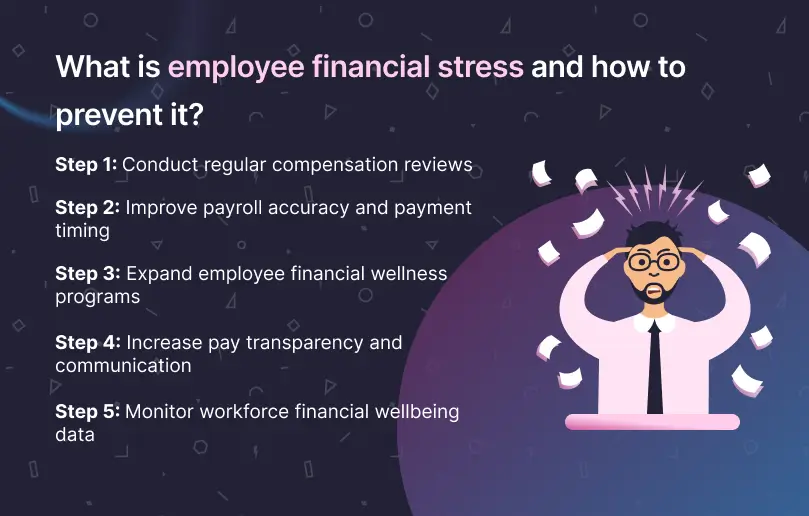
Step 1: Conduct regular compensation reviews
HR teams should review the salary structures in place for each position within the company. Conducting regular compensation reviews allows organizations to compare salaries with industry standards and inflation trends. This process ensures that companies pay their employees fairly and sustainably.
CompAnalyst® Market Data provides comprehensive compensation market data that organizations can use to compare salaries against industry benchmarks and inflation trends.
Step 2: Improve payroll accuracy and payment timing
Organizations should maintain accurate payroll systems and payment schedules. Employees rely on the organization to pay their bills and cover their expenses. Maintaining accurate payroll systems will contribute to employee trust and financial stability.
Step 3: Expand employee financial wellness programs
HR departments can offer financial education and retirement plan programs that will help employees establish financial and retirement plan goals. Financial wellness will allow employees to feel more confident and engaged in the workplace.
Step 4: Increase pay transparency and communication
Companies should provide a clear explanation of salary, bonus, and promotion opportunities for employees. Providing this information allows employees to feel secure in their jobs. Additionally, explaining this information helps to reduce confusion and frustration in the workplace.
Step 5: Monitor workforce financial wellbeing data
Survey employees, track turnover and payroll concerns to gain insight into financial stress trends within the workforce. Utilize workforce analytics to improve compensation strategies for employees. Monitoring payroll and turnover contribute to the overall long-term workforce and employee wellness strategy.
Pay transparency reduces employee uncertainty and improves trust in compensation decisions.
Employees can understand how much they can earn in their position.
Employee concerns regarding unfair paychecks will be reduced.
Employees will have more trust in the management of the organization.
Pay transparency also helps ensure pay equity in the organization.
Inflation reduces employee purchasing power and increases financial pressure across the workforce.
High costs of food, housing, and transport for employees, even with the same salaries, can cause stress.
Employees may ask for salary adjustments due to inflation and cost of expenses.
Higher costs of living may encourage employees to leave the company in search of higher paying jobs.
Inflation may cause employees to focus on needs rather than savings.
Here are some FAQs for better understanding.
The main causes of EFS are low wages, inflation, debt, healthcare costs, and lack of savings. Other common causes of financial stress among employees include inconsistent pay practices and rising living expenses. Surveys of the workforce continue to indicate that financial stress is one of the top concerns of employees in 2026.
Employers can measure EFS through surveys, absenteeism and turnover rates, financial wellness program participation, payroll complaints, and dependence on overtime shifts. These measurements can help employers improve compensation and employee support programs for their organizations.
Employee benefits can reduce financial stress for employees by providing improved access to healthcare, improving retirement savings options, and providing financial security. Financial wellness and flexible pay options can also aid employees in managing their personal finances.
Furthermore, offering such benefits can improve employee retention and satisfaction with the company.

The latest research, expert advice, and compensation best practices all in one place.
Blog
Bringing trusted compensation intelligence and seamless planning to even more ADP users.

Blog
Learn how to train managers for effective pay conversations and build trust.

Blog
Total rewards package flexibility lets employees choose what matters - pay, perks, and benefits tailored to their needs.