Blog
Get Pay Right on ADP Workforce Now® Next Gen™
Bringing trusted compensation intelligence and seamless planning to even more ADP users.
Written by Salary.com Staff
July 10, 2026

Retention analysis is a vital process for companies that want to understand the reasons that their employees remain within the company and the factors that motivate them to leave the employer. Such an analysis is closely related to compensation, employee engagement, and staffing processes.
This guide walks through the steps, templates, and links to help with compensation to make the process of analyzing employee retention effective. HR teams can use this guide to implement changes to improve employee retention.
Retention analysis looks at how long people stay in a company and what factors affect their decision to leave or remain with the company. Through analyzing departures and feedback from employees, companies can proactively address any issues that could cause further problems for the organization.
Through conducting a retention analysis, professionals can examine the impact of pay, conditions, and loyalty within the company. The data collected from this analysis can inform business and pay-related decisions. As a result, companies experience improved compensation strategies and a more productive workforce.
Companies can take proactive steps to improve retention by reviewing the data collected from current and former employees. Through performing retention analyses over time, organizations can fine-tune their policies to retain their current workforce.
Attrition rates and turnover rates both track employee departures but differ in important ways.
| Aspect | Attrition rate | Turnover rate |
|---|---|---|
| Definition | Measures employees who leave without being replaced, often due to retirement or natural reduction. | Measures all employees who leave, with positions typically refilled through new hires. |
| Focus | Gradual workforce shrinkage without immediate backfilling. | Overall movement including replacements, signaling activity, or instability. |
| Impact | Often points to stable or contracting operations. | Reflects hiring needs and can indicate growth or challenges. |
| Calculation Example | (Departures without replacement / Average headcount) x 100 | (Total separations / Average headcount) x 100 |
HR teams track voluntary and involuntary turnover separately because each type offers unique insights into workforce health.
Voluntary turnover happens when employees leave a company for better opportunities or due to other personal reasons. Tracking this metric helps to reveal areas for improving total rewards strategies.
Involuntary turnover happens when a company must end an employee's employment. By separating this data from voluntary turnover, companies can more easily discover areas for improving hiring or management practices within the organization.
By tracking both types of turnover separately, companies can more easily enact targeted changes to improve overall employee turnover.
CompXL® strengthens retention strategies by building structured reward programs that increase satisfaction and reduce voluntary exits.
Effective tracking of retention analysis begins with consistent data collection and clear metrics. Follow these named steps for reliable results.
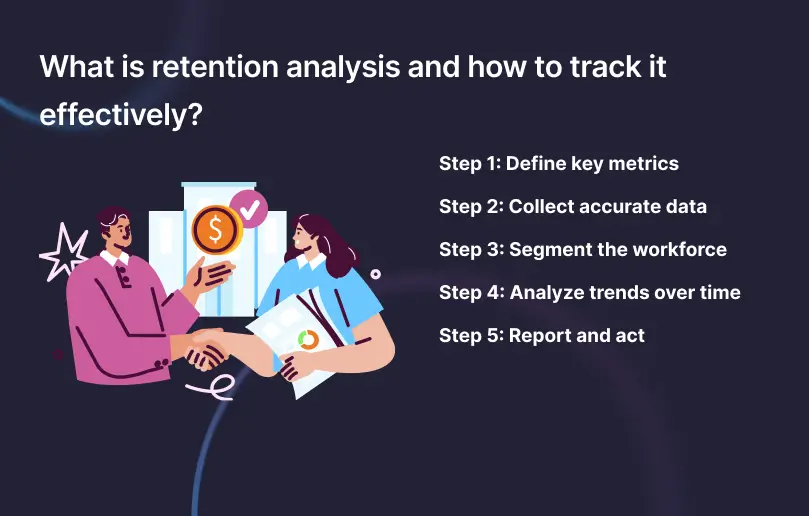
Choose the right retention rate, tenure, and reasons for leaving metrics. Gather the data on current year metrics. Ensure that the HR and compensation departments agree on the retention rate metric. This will lay the groundwork for the rest of the process.
Use systems to collect information from payroll, performance, and exit interviews. Ensure the information is up to date. Use employee surveys to add further context to the information. Collecting this data consistently will avoid any errors in the analysis.
Break the data down by department, role level, tenure with the company, or pay bands. This will reveal specific patterns within the data that relate to certain variables. This will help with providing solutions to identify problems.
Use simple charts or calculations to find patterns. Compare compensation with industry benchmarks. Use compensation to change metrics to track employee retention. Periodically reviewing these metrics allows for catching any issues early.
Share findings with leadership and form an action plan. Measure the results of the changes implemented. Make adjustments to the plan as necessary. This step ensures that the plan can be continuously improved.
HRIS data improves retention tracking accuracy by centralizing information and cutting down on manual mistakes.
Centralized records store all employee hire and departure dates and pay history.
Automated reporting software quickly generates the metrics needed by the organization.
Real-time updates help the organization identify emerging trends.
Integration with other HR and organizational tools allows the time to connect compensation to other employee organization metrics.
Analytical models in retention analysis turn raw data into useful predictions and understanding.
Models that describe the basic features of the data
Models that demonstrate which factors have the most influence in causing employees to leave
Models that explore how employee churn changes over time with their employment with the company
Cohort analysis in employee retention tracking groups for employees who joined around the same time to compare their staying patterns.
Reveals hiring patterns by tracking specific groups for months or years
By comparing hiring classes, companies can see if newer hires last longer due to improvements in onboarding or pay
Using this model, companies can also find early warning signals of when one group of hires begins to fall away from others
Survival analysis in HR analytics examines the time until employees leave and what affects that timing.
Kaplan-Meier curves can display the chance of staying employed over time.
It can account for censored data for those still employed by the company.
Covariate analysis can be used to determine the impact of different elements on the length of employment.
SalaryIQ™ provides real-time salary intelligence that helps explain tenure patterns and retention differences across roles.
Predictive analytics forecast employee turnover by applying historical data to identify future risks.
Use machine learning models to review engagement, pay, and performance to create flight risk scores for each employee.
Identifying the employees at risk allows employers to intervene and assist these employees.
Testing different scenarios with the employees allows employers to envision the impact of altering an employee's compensation.
Compensation and engagement strongly shape retention analysis outcomes by driving satisfaction and loyalty.
Pay that is fair for the work individuals do makes employees feel that they are valued for the work that they do.
Using engagement and pay surveys together uncovers links between the two elements.
Total rewards that go beyond salary are linked to improved employee retention.
CompAnalyst® creates structured pay bands that improve fairness and reduce turnover caused by inconsistent compensation practices.
Compensation of benchmarking influences retention of outcomes by keeping pay competitive with the broader market.
Market comparisons stop employees from seeking higher offers elsewhere.
Salary structures remain competitive, and employees develop a sense of loyalty toward the company.
Transparency in salaries increases trust from employees and the company.
Pay equity analysis plays a key role in employee retention by spotting and correcting unfair pay differences.
Builds trust through consistent and fair treatment of similar roles
Helps to reduce resentment among employees that can otherwise result in voluntary turnover
Regular audits to ensure fairness in roles and to ensure continued engagement in the organization
Salary bands and total rewards strategy support retention by offering clear growth paths and full value.
Defined bands provide transparency for employees to understand their earning potential.
Holistic rewards provide various benefits and perks to meet the individual needs of employees.
Structured approaches ensure competitive and fair compensation for employees.
Here are some FAQs for better understanding.
Turnover rates and attrition rates differ mainly in whether positions get refilled after people leave.
| Aspect | Attrition Rate | Turnover Rate |
|---|---|---|
| Definition | Measures employees who leave without being replaced, often due to retirement or natural reduction. | Measures all employees who leave, with positions typically refilled through new hires. |
| Focus | Gradual workforce shrinkage without immediate backfilling. | Overall movement including replacements, signaling activity, or instability. |
| Impact | Often points to stable or contracting operations. | Reflects hiring needs and can indicate growth or challenges. |
| Calculation Example | (Departures without replacement / Average headcount) x 100 | (Total separations / Average headcount) x 100 |
Exit interviews also allow organizations to fine-tune their retention strategies. Many use exit interviews and analyze the results to improve their retention strategies. By reviewing the results of these surveys regularly, organizations can find common themes in why employees leave. By acting on these findings, organizations can find gains in their ability to retain their employees.
Common tools include modern HRIS systems, predictive modeling software, and dashboards. The software that combines HR data with analytics makes it easier for compensation professionals to track employee retention. These platforms can track a variety of metrics, from basic reports to sophisticated analytics.

The latest research, expert advice, and compensation best practices all in one place.
Blog
Bringing trusted compensation intelligence and seamless planning to even more ADP users.

Blog
Learn how to train managers for effective pay conversations and build trust.

Blog
Total rewards package flexibility lets employees choose what matters - pay, perks, and benefits tailored to their needs.