Blog
Get Pay Right on ADP Workforce Now® Next Gen™
Bringing trusted compensation intelligence and seamless planning to even more ADP users.
Written by Salary.com Staff
July 25, 2025

Attracting and retaining top talent is a challenge for businesses of all sizes. One of the most effective strategies to achieve this is through compensation and best salary benchmarking tools. Understanding and implementing this practice, companies can ensure they offer competitive salary ranges that align with industry standards, making them more attractive to skilled professionals.
This article will explore what compensation benchmarking is, why it’s important, and how you can use it to attract the best talent in your industry.
Compensation benchmarking is the process of comparing your organization’s pay rates with those of other companies in the same industry, region, or job market. This involves analyzing salary data for specific roles to determine whether your compensation packages are competitive.
The goal is to ensure that your own pay structures and scales are aligned with market standards, helping you attract and retain top talent while maintaining internal equity. Compensation benchmarking typically includes:
Base salaries
Bonuses and incentives
Benefits packages
Non-monetary perks
For example, if you’re hiring a software engineer, you’d research what other companies are paying for the same role in your area. This helps you set a salary range that’s attractive to candidates while staying within your budget.
Compensation benchmarking data is a critical tool for any organization that wants to stay ahead in the talent game. Here’s why it matters:
Attracts top talent: Competitive salaries are one of the first things job seekers look for. Benchmarking ensures your offers stand out.
Retains employees: Fair and competitive pay reduces turnover by keeping employees satisfied and motivated.
Maintains market relevance: Industries evolve, and so do salary expectations. Benchmarking keeps your compensation strategies up to date.
Supports budgeting: Understanding market rates, you can allocate resources more effectively and avoid over- or under-paying employees.
Enhances employer brand: Offering competitive compensation positions your company as an employer of choice, boosting your reputation in the job market.
Real-time job posting salary data helps you maintain market relevance by offering real-time competitive pay insights. With advanced AI matching and real-time updates, you can ensure your compensation packages remain attractive and aligned with current market trends, further enhancing your employer brand.
One of the most effective ways to conduct this compensation data benchmarking is by using real-time job posting salary data. This approach provides up to date insights into what other companies are offering for similar roles. Here’s how it works:
Collect data: Use tools and platforms that aggregate salary information from job postings across various industries and locations.
Analyze trends: Look for patterns in the data, such as average salaries for specific roles, regional differences, and emerging trends in benefits or incentives.
Compare and adjust: Compare your current compensation packages with the data you’ve gathered. Identify gaps and adjust your pay scales accordingly.
Real-time data is particularly valuable because it reflects the current state of the job market, allowing you to make timely and informed decisions.
To get the most out of the compensation benchmarking process, follow these tips:
Define your goals: Determine what you want to achieve with benchmarking. Are you looking to attract new talent, retain existing employees, or address pay gaps?
Use reliable data sources: Rely on reputable salary surveys, industry reports, and real-time job posting data to ensure accuracy.
Segment your data: Break down the data by job role, experience level, and location to make more precise comparisons.
Consider total compensation: Don’t just focus on base salaries. Include bonuses, benefits, and other perks in your analysis.
Review regularly: Market conditions change frequently, so it’s important to update your benchmarking data at least once a year.
Now that you understand the importance of compensation benchmarking, let’s explore how to use it effectively to attract top talent. Follow these important salary benchmarking steps:
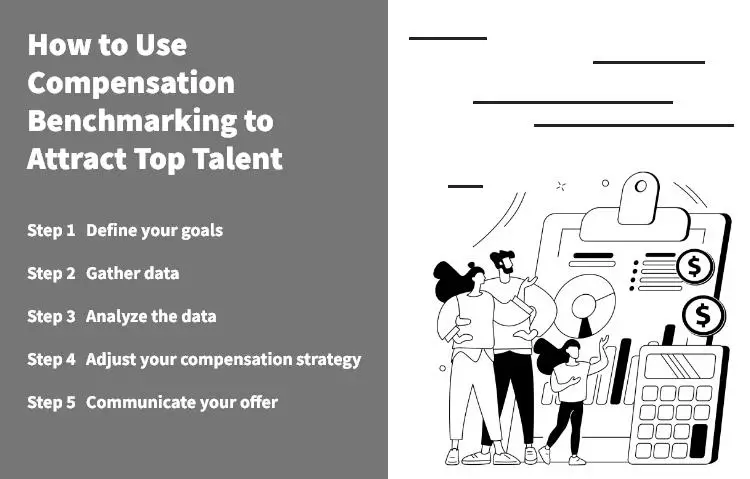
Before starting the salary benchmarking process, clearly define your objectives. Are you looking to attract new talent, retain existing employees, or address pay disparities? Having clear goals will guide your benchmarking efforts and ensure you focus on the most relevant data.
Collect salary data from reliable sources, such as industry reports, job boards, and salary surveys. Be sure to include data from companies of similar size, industry, and location to ensure accurate comparisons.
Real-time job posting salary data aggregates data from millions of job postings, making it easy to gather the most relevant salary data for comparison.
Compare your current pay rates with the data you’ve collected. Identify any gaps or discrepancies and determine whether your salaries are competitive. Pay attention to trends, such as rising salaries for certain roles or the increasing popularity of non-monetary benefits.
The Real-time job posting salary data AI-powered platform provides real-time analysis, making it easier to spot trends and gaps in your compensation packages.
Based on your analysis, make necessary adjustments to your compensation packages. This could involve increasing base salaries, offering bonuses, or adding benefits like flexible work arrangements or professional development opportunities.
Once you’ve updated your compensation strategy, clearly communicate it to potential candidates. Highlight competitive salaries, benefits, and any unique perks your company offers. Transparency about fair pay is key to attracting top talent.
Real-time job posting salary data helps you stay transparent and competitive by providing you with the most accurate and up-to-date salary data to communicate your compensation packages effectively.
Compensation benchmarking ensures your pay packages are competitive, helping attract and retain top talent. Analyzing market data and adjusting salaries, you stay ahead in the hiring game. Start benchmarking today to build a strong employer brand and secure skilled professionals.

The latest research, expert advice, and compensation best practices all in one place.
Blog
Bringing trusted compensation intelligence and seamless planning to even more ADP users.

Blog
Learn how to train managers for effective pay conversations and build trust.

Blog
Total rewards package flexibility lets employees choose what matters - pay, perks, and benefits tailored to their needs.