I keep hearing stories about employers who decide to bring employees back to the office then realize they no longer have enough space for everybody all at once. The thinking goes: it worked fine before we went remote; we'll just bring everyone back.
But everyone is often significantly more people than before. In some cases, employers have downsized space as office leases got less expensive and they didn't need as much space.
The biggest issue though is what changing remote work will do for performance. The Bureau of Labor Statistics reported in October 2024, that productivity increased in most industries with remote work. My experience is that people are often more productive when working from home because they don't have to commute, don't get interrupted all day by co-workers, and can get work and everything else done in the ways that make the most sense for their particular circumstances.
Before you make any changes in your remote or hybrid policy, it's essential to think through the logistics of what you are asking people to do and change. It's also important to understand the legal issues that may arise with accommodation and when policies are applied inconsistently.
Talk to your employment lawyer before changing your remote work policies. But first, read this great discussion from Fisher Phillips.
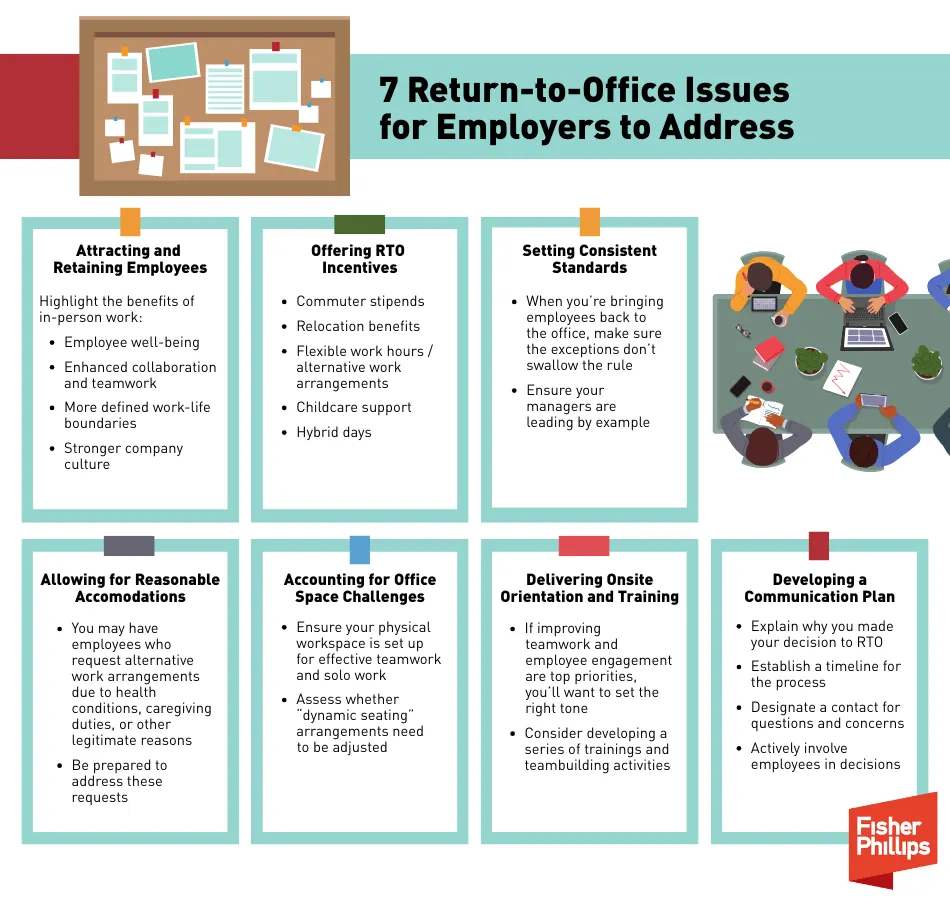
It’s been five years since the COVID-19 pandemic forever changed the way we approach remote work, but the push to bring workers back to the office full-time has gained momentum over the last few months. For instance, the Trump administration issued an executive order in January directing federal agencies to require in-person work when feasible, and some big corporations have been taking steps to scrap the hybrid model in favor of five days a week in the office. Is this news making you rethink your remote or hybrid work program, too? There are quite a few pros and cons to work through before making a move. Here are seven top issues you’ll want to assess as you consider whether to update or unwind your remote work policies.
1. Attracting and Retaining Employees
Among the chief concerns for employers that want to bring workers back to the office is fear of losing top talent. Will your star players leave for competitors that offer more flexibility? How will your talent acquisition efforts be affected?
It is important to consider employee sentiment and take their concerns into account before implementing a mandatory return-to-office policy. Many employees have grown accustomed to the flexibility of remote work, which includes reduced commuting costs and childcare expenses and the ability to live in more affordable areas. Forcing employees to return to the office full-time may lead to dissatisfaction and increase the likelihood that some employees and job candidates will seek opportunities elsewhere.
However, if you’ve been waiting for the right moment to bring workers back onsite, now might be the time since so many other employers are doing the same. Additionally, more job seekers are entering the market due to both public- and private-sector layoffs. According to recent reports, February and March brought the largest U.S. job cuts since the early days of the pandemic in 2020. The cuts were largely made by the federal government, as well as the tech and retail industry. While some employees may be seeking only remote or hybrid opportunities, others may be looking for or willing to consider a full-time office arrangement again.
Messaging is important for your recruitment and retention strategy. You’ll want to highlight the benefits of in-person work, such as:
Employee Well-Being: A physical office space can promote social connections among employees and contribute to their overall well-being.
Enhanced Collaboration and Teamwork: Face-to-face communication allows for immediate feedback and real-time problem-solving, which can lead to increased productivity and creativity while avoiding misunderstandings.
More Defined Work-Life Boundaries: Returning to the office may allow your employees to reestablish traditional work boundaries – with a clear separation between their personal and professional lives – and reduce the likelihood of burnout.
Stronger Company Culture: Being physically present in the office helps employees connect with the organization’s values, mission, and goals. In-person interactions promote a sense of belonging and employee engagement.
Be ready to walk the talk: Make sure that any benefits you boast in your recruitment and retention programs are integrated into your actual policies and practices. You’ll also want to ensure your leadership team and managers are setting the example by working from the office, too, and taking the opportunity to make meaningful in-person connections.
2. Offering Return-to-Office Incentives
To mitigate the challenges associated with mandatory return-to-office policies, employers may also consider offering the following benefits:
Commuting stipends to help alleviate the burden of travel expenses.
Relocation benefits for employees and new hires who do not live near your physical workplace.
Flexible work hours or alternative work arrangements to accommodate personal commitments.
Childcare support for parents who might hesitate to return to the office due to family responsibilities.
Set hybrid days may be a better option if you think the risks of a full-time office mandate outweigh the rewards. If you want employees to be in the office together for collaboration, think about establishing core in-person days or office hours.
3. Setting Consistent Standards
When you’re bringing employees back to the office, make sure the exceptions don’t swallow the rule. If some employees are required to return to the office and others are not, make sure you have objective guidelines for making those decisions. Consider the following questions:
How will you respond when an employee refuses to return to the office or simply ignores the mandate?
Will there be consequences for managers or employees who are not following the policy?
Will you allow employees to continue working remotely if they do not live within a reasonable commuting distance? For example, will you only require employees who live in a 50-mile radius of a worksite to show up in person?
How will you respond if employees who currently live near an office move out of commuting range?
Does it make sense to keep some roles remote? For example, perhaps an employee lives close to a client site they frequently visit. Maybe another has special equipment at home.
The key is to set clear and objective standards for all employees and apply them consistently.
4. Allowing for Reasonable Accommodations
While you can generally require employees to work in person, you may have employees who request full-time remote or hybrid arrangements due to health conditions, caregiving responsibilities, or other legitimate reasons. You should be prepared to address these requests on a case-by-case basis, considering both legal obligations and the needs of your workforce.
For example, you’ll want to ensure your policies don’t run afoul of the Americans with Disabilities Act (ADA) or similar state laws. Let’s say an employee requests to work 100% remotely as an accommodation for their anxiety disorder and submits a doctor’s note to support their request. Do you have to grant it? Maybe – here’s what you should consider:
Employers are required to engage in the interactive process with an employee who seeks an accommodation under the ADA.
Would granting the request create an undue hardship for you? The ADA requires employers to demonstrate an undue hardship before rejecting most accommodation requests. Since many employers were able to get through the pandemic with a good portion of their employees working from home, it might be difficult to show an undue hardship for remote-work requests – unless, of course, your company’s work suffered during that mandatory work-from-home period.
Look closely at their job duties and essential functions. If the work can be performed from home, it might be problematic to reject the request.
While some requests may fall squarely under the ADA, not everyone who requests to work from home will be covered by the ADA or other laws requiring accommodation. The ADA, for example, allows qualified employees and job seekers with disabilities to seek a reasonable accommodation to enable them to perform the essential functions of their jobs.
Work with legal counsel to review such requests and determine how to respond.
5. Accounting for Office Space Challenges
Ensure your physical workspace is set up for effective teamwork and solo work, as appropriate. Consider the following questions as you build your return-to-office plan:
Did you downsize your physical office space over the last few years? If you have been operating with a “dynamic seating” arrangement over the past few years with workers reserving space when they come into work, you will need to adapt to a new situation if there aren’t enough workstations for everyone.
Do you have enough space for all employees to work comfortably and effectively in the office at the same time?
Is your space designed to match your current corporate culture and business needs in terms of technology, collaboration space, and privacy?
Do your breakrooms have enough supplies?
Are you ready to handle logistics, such as cleaning, parking, security, technology, and administrative challenges?
6. Delivering Onsite Orientation and Training
If improving teamwork and employee engagement are among your top priorities, you’ll want to set the right tone from the beginning. Consider developing a series of trainings and teambuilding activities to help employees get excited about working in-person and to get to know each other better.
Here’s another consideration: An increasing number of employees – particularly those in Gen Z – have never worked in person. This transition may be a bit scary for those workers, and they may not be accustomed to business etiquette and office norms that are automatic to others. Think about how you’ll orient these employees to the office environment and what type of training will be most effective for your particular business, industry, and culture.
7. Developing a Communication Plan
The way you communicate your decision to bring workers back to the office may be critical to success:
Explain why you made this decision and how it will benefit employees and the organization.
Establish a timeline for completing the process and make sure employees know what is expected of them and by when.
Let employees know who to contact with questions or concerns and maintain open lines of communication.
Actively involve employees in decision-making processes to increase the likelihood of a successful transition back to the office.
Conclusion
Before you roll out a return-to-office policy, you’ll want to carefully consider your business needs and legal concerns and create an action plan that facilitates a smooth transition.
Share:
Subscribe for free: compensation & pay equity law review
LabelPlease enter a valid work email
You'll receive a weekly newsletter email with the most important legal news on compensation and pay equity. We handle your contact details in line with our
Privacy Policy
Thank you! You are now subscribed.
Are you concerned about pay gaps in your organization?
CompAnalyst® Pay Equity Suite can help you achieve and sustain pay equity