Prejudice against another human being because of how they look, what gender they are, or any other immutable factor is thinking we know what we're doing without any evidence.
There are a bunch of reasons humans do this. We're wired to make snap judgments about what is safe or not safe. Familiar seems safer. Even better, making judgments based on what's familiar is fast and efficient—we're optimizing and maximizing! And if we are certain, we feel like we have control and the world is less scary. Humans do not enjoy being scared. We go to great lengths to not feel scared, even when some of those lengths are harmful to ourselves and others.
Mostly, we humans really just want to feel safe and loved. And there's nothing wrong with that.
At the same time, there's something really nuts about deciding we're better than someone else based sheer speculation and assumptions about who they are. It probably involves some assumptions about who we are too. Maybe.
In a courtroom, assumptions and speculation are not evidence. The value of opinions that can't be backed up with facts is zero and carries absolutely no weight in how we make decisions about other people's lives. We don't make decisions about other human beings without evidence. It's not rational and not fair.
We even have idioms about this. Don't judge a book by its cover. Or my personal favorite, don't judge someone until you've walked a mile in their shoes—because then you'll be a mile away and you have their shoes!
Work is one of the places where some people get to make decisions that affect other people's lives. That's why employment is one of the most regulated human relationships.
In employment, employers generally have the power to hire and fire people and make decisions about what employees do all day. In the US (although not in most other places). employers can tell employees to go away for any reason, or no reason, at pretty much any time. Employees have the power to leave, but they don't have the power to go to any new employer they want, any time they want. The new employer has to agree first.
The structural power imbalance between employers and employees is why we have employment law. People should be treated fairly at work and paid fairly for the work they do. We can argue about what that looks like under different circumstances, but most of us agree that harming others is bad and treating people fairly results in them sticking around and doing better work.
I really liked this article because, while it's focused on German and EU employment law, it states the point starkly: discrimination is an abuse of power.
Not a month goes by without new allegations of #MeToo offences. In addition, there is a call for more stringent regulations on transgressive behaviour. This has led to a stronger focus on compliance standards. Organisations want to better prevent the abuse of power and discrimination in the workplace. With this increased awareness, there is also more attention on how to investigate claims of misconduct.
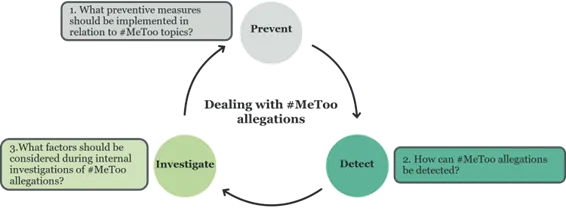
This article focuses on the three questions outlined in the below graphic:
Preliminary remark on transgressive behaviour and legal framework:
Transgressive behaviour encompasses any abuse of authority that disregards professional boundaries, including sexual harassment, bullying, and other forms of unequal treatment based on race, religion, disability, age, or (sexual) identity.
The legal framework surrounding these issues is complex, including local laws that address various aspects of unequal treatment. In Germany, the General Act on Equal Treatment (“AGG”) requires employers to prevent and address workplace discrimination, including sexual harassment, by implementing preventive measures and reporting channels. Employees have the right to report unequal treatment, which must be investigated by employers who are then required to take appropriate action. The AGG was enacted due to various EU directives.
1. What preventive measures should be implemented in relation to #MeToo topics?
Employers are faced with an increased responsibility to implement comprehensive compliance strategies that prevent transgressive behaviour.
These strategies include:
Training for employees and management: Offer training sessions on recognising inappropriate behaviour and understanding the importance of reporting it.
Establishing clear policies: Ensure that there are clear policies in place regarding harassment and discrimination, making it easier for employees to recognise unacceptable behaviour. This includes clear statements, for example in the Code of Conduct and the Anti-Harassment Policy.
Monitoring workplace behaviour: Pay attention to changes in team dynamics, employee interactions, and any signs of discomfort among staff members.
Reviewing past complaints: Analyse previous complaints or incidents within the organisation to identify patterns or recurring issues that may need attention
2. How can #MeToo allegations be detected?
Preventive measures cannot completely prevent compliance cases from occurring. Therefore, it is important for employers to also implement measures on how to detect potential #MeToo allegations.
The following detective measures have proven to be helpful:
Encouraging open communication: Create an environment where employees feel safe discussing their experiences without fear of retaliation.
Implementing anonymous reporting channels: Provide options for anonymous reporting, such as hotlines or online forms, to encourage individuals to come forward.
Conducting regular surveys: Use employee surveys to gauge perceptions of workplace culture and safety. Look for signs indicating discomfort or fear among staff.
3.What factors should be considered during internal investigations of #MeToo allegations?
Internal investigations into transgressive behaviour resemble regular investigations but require special considerations and meticulous attention due to their sensitive nature and potential ramifications for all parties involved.
Key steps in this process include:
Plausibility check: Conduct a thorough assessment of the report to determine whether claims warrant further inquiry. Evaluation criteria include whether the report is manifestly unfounded, pure conjecture, evidently based on rumours, or solely a private matter.
Investigation team: Form a competent investigation team that can include members from both HR and the legal department. The investigation team should consist of individuals with professional expertise, empathy and a commitment to neutrality and objectivity. A small team with a high level of integrity enhances communication with the affected individual and mitigates liability risks. In time-sensitive or high-reputational-risk cases, external investigators may be engaged. Utilising mixed-gender teams has frequently proven beneficial.
Confidentiality and discretion: Investigators must handle all information confidentially and discreetly to protect the privacy of those involved. This should also minimise any risk of retaliation against complainants and further escalation.
Interviews: To avoid revictimization and since a lot of the information will be based on individual recollection, it is beneficial if interviews are only conducted once. It is important to assess the credibility of interviewees and their statements, while minimising reliance on personal statements alone when evaluating the allegations. Additionally, it is essential to keep the interview team as small as possible and ensure that the interviewee feels comfortable.
No “one-fits-all” approach: Adapt to each case's unique circumstances by using a tailored approach. This ensures flexibility while adhering to established protocols and best practices throughout the investigation process. A timely investigation is especially important due to heavy reliance on personal statements and memories as well as the lack of the usual paper trail.
Summary:
Transgressive behaviour may not only contravene legal obligations. It can also pose substantial reputational risks and liability for employers. This is particularly true due to the high public attention surrounding these issues and the increase in claims against employers. However, risks can be successfully mitigated by covering #MeToo related topics within the existing Compliance framework.
Share:
Subscribe for free: compensation & pay equity law review
LabelPlease enter a valid work email
You'll receive a weekly newsletter email with the most important legal news on compensation and pay equity. We handle your contact details in line with our
Privacy Policy
Thank you! You are now subscribed.
Are you concerned about pay gaps in your organization?
CompAnalyst® Pay Equity Suite can help you achieve and sustain pay equity