Blog
Get Pay Right on ADP Workforce Now® Next Gen™
Bringing trusted compensation intelligence and seamless planning to even more ADP users.
Written by Salary.com Staff
May 09, 2025

Constantly adapting and changing ways is the key for companies that want to succeed in today’s ever-competitive times. That is why creating a learning culture where employees can grow more both as individuals and as professionals is becoming more important if companies want to leverage their growth.
That said though, creating and fostering a strong learning culture within your company isn’t enough. Ideally, it has to factor in everyone within the company, not just a specific group of employees.
Read on to learn more about learning cultures, some examples that companies can follow, along with how to create one for companies willing to try it out.
An organizational learning culture is defined as a business strategy where learning and getting new knowledge are encouraged. This ensures that every employee within the company can grow both professionally and individually.
Although it can be difficult to create, especially for newer companies, most can use a dedicated skills library tool to ease the struggle, along with doubling as helping a company’s HR with overall talent management.
An organization's learning culture ensures two things: continuous growth and fostering a more positive working environment overal l. This translates to more engaged and dedicated employees, and the continuous growth also fosters innovation.
Learning culture in the workplace also further prepares employees for future perils. This is because they may already be acquainted with the source of the problem that a company may face and address it as quickly as possible.
The growth mindset that the system ingrains within employees also ensures that innovation becomes the new normal. This includes everything from streamlining processes and providing innovative ways to fixing problems on top of many other advantages.
It’s also an important part of leadership development as well, as it can help future leaders develop skills that they might not have yet had time to learn as well as continue learning about the important factors that make a good leader as well.
Listed below are some examples of culture of learning organizations can utilize.
Rewarding and recognizing employees for achieving milestones in learning new skills is a good way to foster a positive culture of learning within the workplace, along with boosting employee engagement as well. The rewards themselves do not have to have monetary value either - it can be providing them with softer rewards like praising them in public.
The praise can go far as well, as studies have shown that employees are 2.7 times more likely to be more engaged when they know that their positive work will be recognized.
Providing employees with a more accessible way for a formal learning strategy is also a good example that employers can take as well. Company policies that value learning without turning the entire training process into a competition foster a more formal learning process among employees.
Developmental feedback is also important as it ensures that employees can learn from their past mistakes, along with fostering a more positive working environment.
Companies can also use assessment tools to help provide employee performance feedback, while imparting institutional knowledge as well.
Collaborative workspaces where peers can share their knowledge are also a form of a culture of learning within the workplace. Removing any boundaries that prohibit employees from sharing knowledge can help lift the entire workforce and help employees learn new skills they might not know in the first place.
Having a structured learning program where growth is valued is also a good example. A good structure in a learning program can help employees learn more about not just doing their job but also have a more efficient learning process.
Listed below are the steps companies can take if they want to create a true learning culture within their organization.
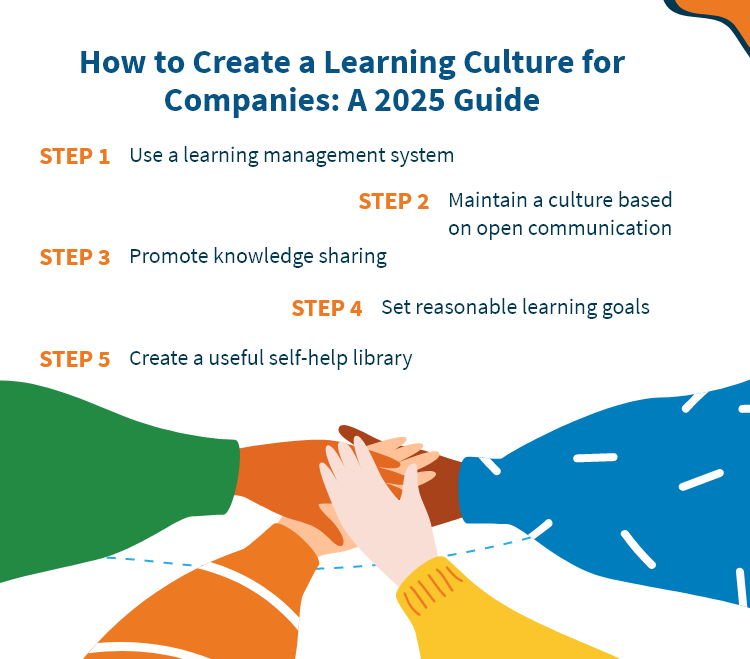
Using a learning management system can make the learning process significantly easier for employees along with making it more streamlined as well. Though companies can utilize a self-help system to do so, it’s highly recommended to use a top-of-the line job skills tool. Using this tool ensures that companies can have a more efficient learning system on top of providing a better skills competency framework.
With 64% of business leaders believing that communication is the secret to a more successful company, utilizing it to create a culture of learning within the company can help with its success.
Ensuring open communication enables every employee of any tier to learn beyond their capabilities and encourages team members to speak up, therefore fostering a more positive working environment.
Exchanging information, skills, insights, and even expertise can help set the base of a company’s learning culture on top of creating a better working environment as well. Not only that but fostering an environment where sharing knowledge is celebrated can create a more engaging workplace which can lead to a better decision-making process.
Designating employees to a reasonable learning goal ensures that whatever they learn properly aligns with the company’s goals for them and the company’s future as well.
Additionally, setting learning goals urges employees to have a more focused, purposeful learning method. Dedicating a chief learning officer from one of the more agile learners can help the leadership team develop better goals as well as encourage employees to develop specific skills and aid with their overall learning agility.
Creating a self-help library where everything can be easily accessed is a good way to finalize the creation of a company’s culture of learning. This can help agile learners go back on the lessons learned while also promoting continuous learning for everyone within the company. Not only that, but self-help libraries also promote continuous improvement, which can greatly contribute to an organization's success in the long run.
It’s highly suggested to use a third-party skills library tool that does everything. The right tool creates not just a self-help library, but also helps companies develop their job descriptions and streamline their overall skills inventory as well.
Creating new perspectives and ensuring employees feel confident isn't the end goal to create a learning culture within a company - it's to create an environment where risk taking and learning opportunities are celebrated and where new ideas and new skills are born from the most unlikely of places.
A company where learning is celebrated prioritizes learning - which in turn can help employees with their career development while also alleviating the stress senior leaders usually face with their everyday work.
It's also important to point out that mistakes are inevitable in the workplace. To truly create an effective learning culture in the workplace, an employee's psychological safety should take precedence before development opportunities.
Actively encourage them to develop a learning mindset without pressuring them too much. Allow them to set personal goals and address their own skill gaps by themselves and watch them grow in their personal lives and help them develop the hard skills needed to be the best talent within the company as well.

The latest research, expert advice, and compensation best practices all in one place.
Blog
Bringing trusted compensation intelligence and seamless planning to even more ADP users.

Blog
Learn how to train managers for effective pay conversations and build trust.

Blog
Total rewards package flexibility lets employees choose what matters - pay, perks, and benefits tailored to their needs.