Blog
Get Pay Right on ADP Workforce Now® Next Gen™
Bringing trusted compensation intelligence and seamless planning to even more ADP users.
Written by Salary.com Staff
August 23, 2024

Tracking compensation metrics is essential, especially with today's competitive job market and changing employee expectations. These metrics help you see how your pay compares to the market, ensure fairness, and guide important pay decisions.
Below, we'll unlock some of the key pay metrics organizations need to track in 2024 and how to do this effectively. Tracking methods will also be shared to help businesses stay competitive and align their compensation strategies with industry standards, ensuring employees are paid right.
Compensation metrics are qualitative measures used to evaluate how well a company's pay and rewards systems work. They help understand pay fairness, market competitiveness, employee satisfaction, and how compensation affects performance. Reviewing these pay metrics helps companies make informed decisions to improve their pay strategies and attract and keep top talent.
Some of the most common compensation metrics, which will be explained later, include:
Compa-ratio
Market ratio
Total compensation cost
Turnover rate
Employee satisfaction
Pay equity
Tracking compensation metrics is critical for organizations to maintain competitiveness, fairness, and overall financial health. Here are the key reasons why:
Attracting and keeping top talent
Tracking pay metrics helps companies offer competitive salaries and benefits. Comparing with industry standards helps attract and retain top employees by ensuring they feel valued and paid right.
Controlling labor costs
Monitoring compensation metrics helps manage labor costs. Reviewing spending on salaries, bonuses, and benefits helps identify overspending, improving budgeting and compensation planning.
Improving decision making
Pay metrics give key data for strategic decisions. Analyzing pay differences and trends helps leaders make informed choices about salaries, promotions, and hiring, leading to fairer and more effective compensation practices.
Ensuring legal compliance
Tracking compensation metrics ensures pay practices meet legal standards, such as minimum wage and equal pay laws. Regular monitoring helps avoid legal issues and penalties. This protects the organization from lawsuits and fines.
Improving employee morale and engagement
Fair and competitive pay, indicated by compensation metrics, boosts employee morale and engagement. When employees feel their pay matches their performance and market value, they are more motivated, satisfied, and committed.
Ideally, compensation metrics should be measured regularly to keep data accurate and current for decision-making. Monthly or quarterly checks are common and help spot trends, salary issues, and areas needing improvement. Larger companies or those in fast-moving markets might need real-time data. The goal is to find a balance between data accuracy, resource use, and the need for useful insights.
Tracking key pay metrics helps ensure your pay strategies match company goals, stay competitive, and keep employees satisfied. Here are some important pay metrics to track in 2024:
Pay range: Defines the minimum and maximum pay for a specific position or job level.
Compa-ratio: Compares an employee's salary to the midpoint of their pay ranges. For example, if the midpoint salary for a Marketing Manager is PHP 100,000 and an employee earns PHP 90,000, their compa-ratio is 90,000 divided by 100,000, which equals 0.90 or 90%. This means the employee's salary is 10% below the midpoint.
Total cost of workforce (TCOW): Calculates the total amount spent on employees, including salaries, benefits, and other expenses.
Merit Increases: Measures the average percentage increase in salaries for employees based on performance.
Market ratio: Compares an employee's salary to the market rate for their position.
Salary range penetration: Indicates where an employee's salary falls within their salary range.
Target percentile vs. actual positioning: Compares the desired market position with the actual market position. For example, suppose the target percentile for a Marketing Manager’s salary is the 75th percentile, but their actual salary is at the 50th percentile. In that case, the company is paying less than the targeted percentile.
Internal equity: Assesses pay fairness among employees within the organization.
Bonus and incentive pay: Measures the effectiveness of incentive programs.
Turnover rate: While not directly a compensation metric, it can indicate the impact of compensation on employee retention.
To track pay metrics effectively, use various data sources, tools, and methods to ensure your pay strategies match your organization's goals and market conditions. Here are some key methods:
HR Information Systems (HRIS)
HRIS platforms handle employee data, including salaries, bonuses, and benefits. They offer a single, organized database that combines different HR functions for easy management and reporting.
Employee surveys
Employee surveys collect feedback on how satisfied employees are with their pay, fairness, and benefits. This information helps understand their views and adjust compensation strategies accordingly.
Market data
Market data involves looking at external salary benchmarks and trends to ensure competitive pay. This usually comes from salary surveys, industry reports, and compensation studies.
Performance management systems
These systems track employee performance and connect it to pay decisions. They show how performance affects raises, bonuses, and promotions, ensuring that pay aligns with performance.
Excel and data visualization tools
Excel spreadsheets are often used to track and analyze compensation data. Data visualization tools can make charts and graphs to clearly present these pay metrics, helping with compensation analysis and decisions.
HR analytics software
HR analytics software, like Compensation Software, provides tools to analyze compensation data, including trends and predictions. It helps make data-driven decisions by revealing patterns and effectiveness in employee compensation.
Compensation dashboards
Compensation dashboards show compensation metrics visually in real-time. They help HR professionals monitor key indicators, track budgets, and spot trends and issues.
Statistical analysis
Statistical analysis uses math to find patterns and issues in compensation data. It helps understand how pay is distributed, spot pay gaps, and make informed adjustments.
Follow these steps to track and manage pay metrics, ensuring your pay practices align with your organization's goals and values. See how Salary.com's Compensation Software can assist you in the process:
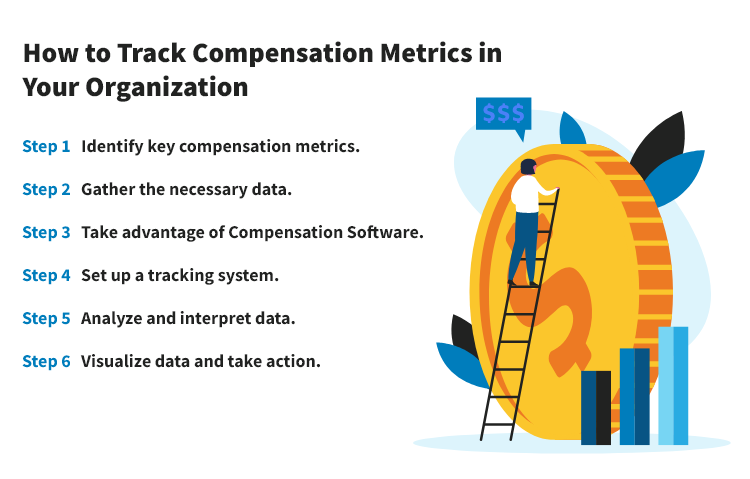
Choose pay metrics that match your organization’s goals. Examples include internal pay equity, pay compression, market competitiveness, employee satisfaction, and total compensation cost. Focusing on these metrics helps you address key areas for your organization's success.
Gather data for the chosen metrics, such as employee salaries, job grades, market salary data, performance reviews, and demographic information. Make sure the data is accurate, current, and securely stored. Use internal HR systems, salary surveys, and industry reports from reliable sources.
Use Salary.com's Compensation Software to obtain access to the largest and most reliable HR-reported compensation data set. This tool delivers faster decision making, and new insights into your pay practices.
Other useful features of Compensation Software for your organization include:
Survey management
HR technology integration
Reporting and analytics
Labor cost forecasting
Set up a system to regularly track the pay metrics. Decide how often to update the data (e.g., monthly, quarterly) and assign who will collect and analyze it. Make sure the system can adapt to changes in compensation strategy or market conditions.
Review data regularly to spot trends, outliers, and concerns. Look for patterns that might show issues like pay inequity or market misalignment. Include both numerical data (e.g., average salary by job grade) and qualitative data (e.g., employee feedback) for a full picture.
Use data visualization tools to create clear reports and dashboards for leadership. Charts, graphs, and tables can show trends and support decisions. Based on these insights, adjust salaries, revise pay structures, or update compensation policies.
Compensation metrics are a must-have for organizations. Without them, companies may imply discriminatory pay practices, mismanage labor costs, and struggle to attract and retain talent. Stay ahead of the competition by following the steps mentioned above and utilizing Compensation Software. This compensation management software empowers you with the data and insights needed to make confident pay decisions.

The latest research, expert advice, and compensation best practices all in one place.
Blog
Bringing trusted compensation intelligence and seamless planning to even more ADP users.

Blog
Learn how to train managers for effective pay conversations and build trust.

Blog
Total rewards package flexibility lets employees choose what matters - pay, perks, and benefits tailored to their needs.