Blog
Get Pay Right on ADP Workforce Now® Next Gen™
Bringing trusted compensation intelligence and seamless planning to even more ADP users.
Written by Salary.com Staff
August 29, 2025

Staying competitive requires access to real-time job posting salary data. Companies that leverage workforce pay insights from live job postings can make informed decisions, ensuring they offer salaries that attract and retain top talent.
This article explores what workforce pay is, the role of real-time salary data, and how businesses can use this intelligence effectively.
Workforce pay refers to the compensation structure businesses offer employees, including base salary, bonuses, benefits, and other financial incentives. It varies across industries, job levels, geographic locations, and skill requirements. Getting workforce pay right is crucial for attracting, motivating, and retaining skilled professionals.
Key factors influencing workforce pay include:
Industry standards – Different industries have varying compensation benchmarks.
Job role and responsibilities – Pay differs based on the complexity and demand for a role.
Geographic location – Salaries fluctuate depending on cost of living and regional economic conditions.
Experience and skills – Specialized skills and experience command higher wages.
Market demand – Competitive hiring trends influence salary adjustments.
Traditional salary surveys and historical compensation reports often become outdated quickly. Real-time job posting salary data provides immediate and accurate insights into current market conditions. This data is collected from job boards, company career pages, and public listings, giving employers a comprehensive view of compensation trends.
Key benefits of real-time salary data include:
Immediate access to market trends – Businesses can adjust pay structures as salary expectations change.
Competitor intelligence – Companies can compare their offerings with competitors in real-time.
Enhanced talent acquisition – Helps businesses set competitive salaries to attract top talent.
Better workforce planning – Enables HR teams to anticipate hiring costs and allocate budgets efficiently.
Data-driven decision-making – HR and compensation professionals can rely on accurate, real-time insights instead of outdated reports.
Businesses that use real-time job posting salary data for workforce pay gain several advantages. Here are five key benefits:
Improved salary benchmarking
Salary benchmarking is essential to ensure your pay structure aligns with industry standards. Real-time data helps businesses compare compensation levels across similar roles, preventing underpaying or overpaying employees.
Competitive hiring strategies
With access to real-time job postings, businesses can adjust salaries based on competitor trends. This ensures they attract top talent by offering competitive pay that matches or exceeds industry standards.
Informed compensation decisions
HR professionals can use real-time salary insights to make data-driven decisions on pay raises, promotions, and hiring budgets. This transparency helps companies retain talent by offering fair and competitive compensation packages.
Enhanced workforce planning
Real-time salary data allows businesses to anticipate hiring costs and create long-term workforce plans. This helps in budgeting, resource allocation, and forecasting salary trends for sustainable business growth.
Insight into market demand for skills
Analyzing job postings, companies can identify in-demand skills and adjust pay rates accordingly. This ensures businesses remain attractive to skilled professionals in highly competitive job markets.
Now that we understand the benefits, here are five effective ways to use real-time job posting salary data to optimize workforce pay:
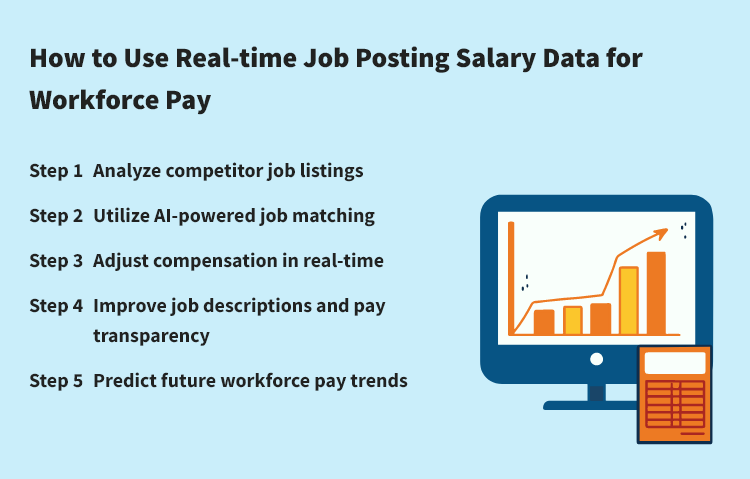
Monitoring competitor job postings provides valuable insights into pay structures, bonus incentives, and hiring trends. Companies can use this data to adjust their workforce pay and stay competitive.
Advanced AI technologies match job postings to specific roles, helping businesses benchmark salaries accurately. This ensures companies set fair pay ranges aligned with industry norms.
With real-time salary insights, businesses can adapt their workforce pay structures immediately to meet evolving market conditions. This flexibility is crucial in tight labor markets where talent demand fluctuates.
Salary data from job postings helps HR teams refine job descriptions, ensuring they include market-competitive compensation details. This enhances employer branding and attracts the right candidates.
Analyzing historical and real-time job posting data, companies can forecast salary trends and plan for future compensation adjustments. This strategic approach helps businesses maintain long-term workforce sustainability.
Real-time job posting salary data is a powerful tool that helps businesses refine their workforce pay strategies. Leveraging competitive intelligence, companies can offer salaries that attract top talent, retain employees, and stay ahead of industry trends. Whether it’s benchmarking salaries, adjusting pay in real-time, or predicting future trends, businesses that use real-time insights will maintain a competitive edge in the evolving job market.

The latest research, expert advice, and compensation best practices all in one place.
Blog
Bringing trusted compensation intelligence and seamless planning to even more ADP users.

Blog
Learn how to train managers for effective pay conversations and build trust.

Blog
Total rewards package flexibility lets employees choose what matters - pay, perks, and benefits tailored to their needs.