Blog
Get Pay Right on ADP Workforce Now® Next Gen™
Bringing trusted compensation intelligence and seamless planning to even more ADP users.
Written by Salary.com Staff
February 07, 2024

Offering competitive compensation is important for attracting and retaining employees. However, when HR creates poorly structured or broad pay scales, it may lead to minimal pay differences among employees with varying experiences or skills, known as salary compression.
Many organizations have experienced wage compression issues—a challenge that cuts across industries and company sizes. Addressing the issue quickly is critical as it can have a big negative impact on a company.
If your organization has been experiencing this challenge, stick around for a guide on preventing pay compression and utilizing Salary.com’s Compensation Software to effectively handle the situation.
Salary compression, or wage compression, refers to a situation where there's minimal salary difference between experienced employees and those with less experience in a company.
A great example of wage compression can be observed in industries or organizations that have experienced rapid growth or changes in market conditions.
For example, consider a technology startup that quickly expands its workforce to meet market demands. At first, the tech startup offers competitive salaries to attract skilled workers. However, as they expand, keeping consistent salary differences becomes hard. New hires with less experience may negotiate higher starting salaries, which makes the pay gap between them and experienced employees smaller over time. This can cause pay compression as the company finds it hard to maintain fair pay structures due to external changes.
Addressing salary compression in an organization is essential as leaving it unresolved can cause negative effects, such as:
Demotivation. Long-time or experienced employees may feel demotivated if they see newer or less experienced colleagues earning similar or higher salaries, leading to decreased morale and job satisfaction.
Retention issues. Top talent might leave if they feel their compensation doesn't match their contributions or market value, resulting in higher turnover.
Recruitment challenges. It becomes harder to attract new talent when there's not a clear progression in compensation based on skills and experience, affecting recruitment efforts.
Decreased productivity. When employees feel their efforts aren't adequately rewarded, they may become disengaged and less committed, impacting overall productivity.
Internal equity erosion. Wage compression undermines the idea that employees in similar roles should receive similar compensation, which causes dissatisfaction and potential conflicts within the workforce.
The difference between salary compression and inversion is that pay compression is when the pay gap between different experience levels or job roles gets smaller, while salary inversion is a more extreme situation where newer employees are paid more than their more experienced colleagues in the same position.
To fully understand the difference between wage compression and salary inversion, here's a quick table:
| Salary Compression | Salary Inversion | |
|---|---|---|
| Gap Change | Pay gap between experience levels shrinks. | Pay gap becomes inverted, with newer employees paid more. |
| Causes | Market changes, inflation, inconsistent pay structures, inadequate adjustments for performance/experience. | High demand for specific skills, competitive hiring market, lack of transparency in pay structures. |
| Effects | Demoralization, reduced motivation for career progression, potential turnover. | Even greater dissatisfaction, resentment, potential conflict, loss of institutional knowledge. |
| Employee Perception | Experienced employees feel undervalued and demotivated. | New employees feel privileged, existing employees feel unfairly treated. |
| Solutions | Conduct regular salary reviews, adjust pay based on performance/experience, implement transparent pay structures. | Prioritize internal promotions, create mentorship programs, address pay imbalances, improve pay transparency. |
Salary compression can arise due to a combination of internal and external factors. Here are some common causes:
When the minimum wage goes up, it can squeeze the salary structure in a company. If the lowest wages rise, there may be a need to also raise the wages of higher-level employees to keep fair pay differences.
When prices rise a lot (high inflation), the money earned buys less. If salaries don't increase as fast as prices go up, it can lead to wage compression, where the real value of salaries decreases over time.
In a tough job market, companies may have to pay more to get and keep talented employees. If they don't raise everyone's pay, it can cause salary compression, with new hires earning as much or more than current employees.
Changes in how industries pay their employees can affect salary structures. If an industry shifts its compensation standards, organizations might have to adjust their pay scales to stay competitive, possibly causing pay compression.
Using old salary data for comparison can cause pay scales to be off. If salaries aren't regularly checked and adjusted according to current market conditions, it can lead to salary compression.
Without a well-defined compensation strategy, organizations may struggle to maintain internal equity and external competitiveness. A lack of clear guidelines for salary adjustments can contribute to salary compression issues.
Inequitable or inconsistent pay practices, such as subjective decision-making in salary adjustments, can lead to disparities among employees. This lack of transparency and fairness can contribute to salary compression.
If salary ranges for job positions are too broad, there may be little distinction in pay between employees at different experience levels or with varying skill sets, causing wage compression.
Limited opportunities for career advancement or promotions within an organization can contribute to salary compression. Employees may reach a salary ceiling without clear paths for further growth.
Organizational changes, such as company growth or mergers, can impact salary structures. If adjustments are not made to accommodate changes in company size or structure, it can lead to wage compression issues.
As mentioned, unresolved salary compression can cause employee dissatisfaction, morale issues, talent loss, internal fairness problems, and recruitment challenges. Here are some clear signs to watch out for:
New employees earning as much as experienced colleagues, especially without recent raises, signals wage compression.
Minimal pay differences within the same job category, like senior and junior engineers with comparable salaries, indicate a compressed pay structure.
Managers earning slightly more than their team can demotivate them, making career progression seem financially unrewarding.
Increased complaints about unfair compensation are a common cause for grievances and exit interviews.
High turnover among experienced employees, particularly top performers leaving for better pay, is a red flag for wage compression.
Reduced motivation and engagement due to feeling undervalued from unfair pay can lead to apathy and reduced productivity.
Difficulty attracting and retaining talent may arise if your pay lags behind market rates from competitive companies.
Given the signs and impacts of this challenge, how do you avoid salary compression? Follow the steps below and learn to use tools like Compensation Software.
The Compensation Software is a topnotch tool that helps prevent salary compression by providing organizations with insights and data for informed decisions on employee pay.
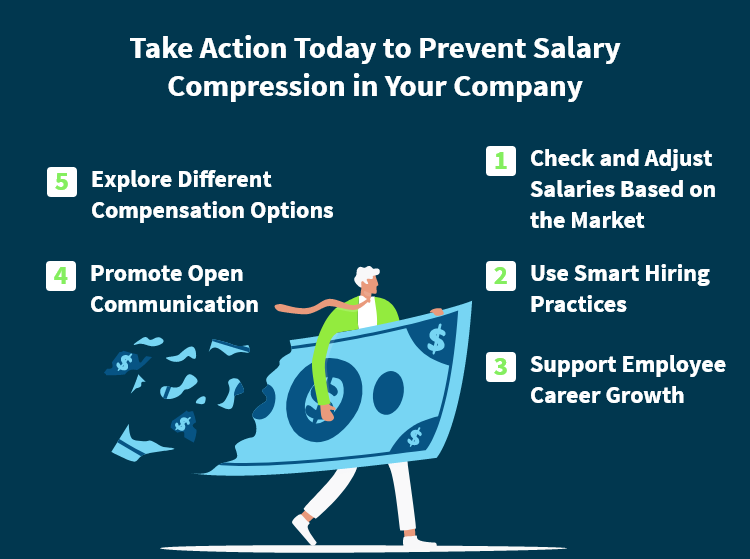
Regularly check industry and job-specific market rates using surveys and reports. Ensure fairness by comparing salaries in similar roles with different experience levels and make proactive salary adjustments based on market changes and employee performance.
Stay competitive in the job market using Compensation Software. Use its Market Pricing feature to swiftly and accurately match and price your company's jobs. This tool enables you to create market composites using survey data from CAMD, Salary.com surveys, or your third-party datasets.
The tool has a Salary Structure feature that quickly calculates the cost of adjusting employee salaries to match the market rate. It helps predict expenses related to modifying structures or individual employee pay, especially for those facing salary compression.
Hire experienced talent willing to start with lower salaries but with clear paths for career growth. Set specific salary bands for each position, implementing smaller raises for senior roles to avoid squeezing lower salaries.
Use Compensation Software to manage different pay grades, even for new hires, ensuring clear distinctions in responsibilities. Highlight opportunities for adjusting or increasing pay organization-wide. When hiring, use the tool to accurately forecast compensation for specific jobs in target markets using global market data pricing intelligence.
Create clear career paths by outlining opportunities for advancement and providing training programs. Prioritize internal promotions to encourage employee retention and growth, reducing salary discrepancies. Also, implement mentorship programs pairing senior employees with juniors for knowledge-sharing and experience.
Be transparent about compensation philosophy, share salary ranges, and provide clear metrics on adjustments and performance expectations. Regularly review employee performance, offer feedback, and discuss career goals for fair merit-based salary adjustments.
Salary.com's Compensation Software promotes pay transparency and open communication. In fact, one of its notable features includes running a Total Compensation Statement, which provides a consolidated view of an employee’s compensation, from medical insurance to taxes.
Consider offering non-monetary perks such as flexible schedules, healthcare options, ample leave, and professional development opportunities as alternative compensation options. Also, acknowledge and appreciate employee achievements to build a positive work environment.
Addressing salary compression is not an easy task. However, by combining market awareness, strategic hiring, career development, transparent communication, and leveraging Compensation Software, you can create a robust strategy to maintain a fair and competitive salary structure and prevent salary compression in your organization.

The latest research, expert advice, and compensation best practices all in one place.
Blog
Bringing trusted compensation intelligence and seamless planning to even more ADP users.

Blog
Learn how to train managers for effective pay conversations and build trust.

Blog
Total rewards package flexibility lets employees choose what matters - pay, perks, and benefits tailored to their needs.