Compare Workforce Management Platforms

Workforce management that connects the roster to the paycheck

For HR and workforce leaders staffing multi-state teams — one chain from the planned shift to the signed-off period, with pay context built in.

Workforce leader reviewing information at her laptop

Expert takeaways

What you need to know

  • Workforce management software plans the shifts a business needs covered, records the hours people actually work, administers leave policies and closes each pay period so payroll can run on final numbers.
  • Seven evaluation criteria: Demand-driven staffing standards · Credential and eligibility enforcement · Leave policy and statutory setup · Multi-state overtime rules · Time capture and exception handling · Pay-period close.
  • Workforce Management runs one audited chain from the planned shift to the signed-off period, ships statutory leave and per-state overtime already structured, and puts the resulting hours on the same platform as compensation ranges and market pay data.
  • Best suited to mid-market and enterprise HR teams managing 250+ employees with complex pay structures.
What is workforce management software?

Workforce management software is the system that plans staffing against demand, records the hours worked, administers leave policies and balances, applies overtime rules, and closes each pay period before payroll runs.

It starts before anyone clocks in — working out how many people each job needs, checking who is eligible to work it, and publishing a roster. It then captures the hours, holds the leave rules an employer writes in its handbook, applies overtime thresholds that differ by state, flags the entries that look wrong, and signs the period off so the numbers stop moving.

SalaryTalent decision framework

6 Requirements for evaluating workforce management software

Demand-driven staffing standards

“Four people on this shift” is usually a habit, not a calculation, and it stays the same size while the workload swings.

Credential and eligibility enforcement

The rule exists; it lives in a binder and gets checked from memory at 6pm by a manager who needs the shift covered.

Leave policy and statutory setup

“Ten days a year” accrues and “up to twelve weeks in any twelve-month period” is a rolling window.

Multi-state overtime rules

Federal law sets a weekly threshold; several states add a daily one, and some add double time.

Time capture and exception handling

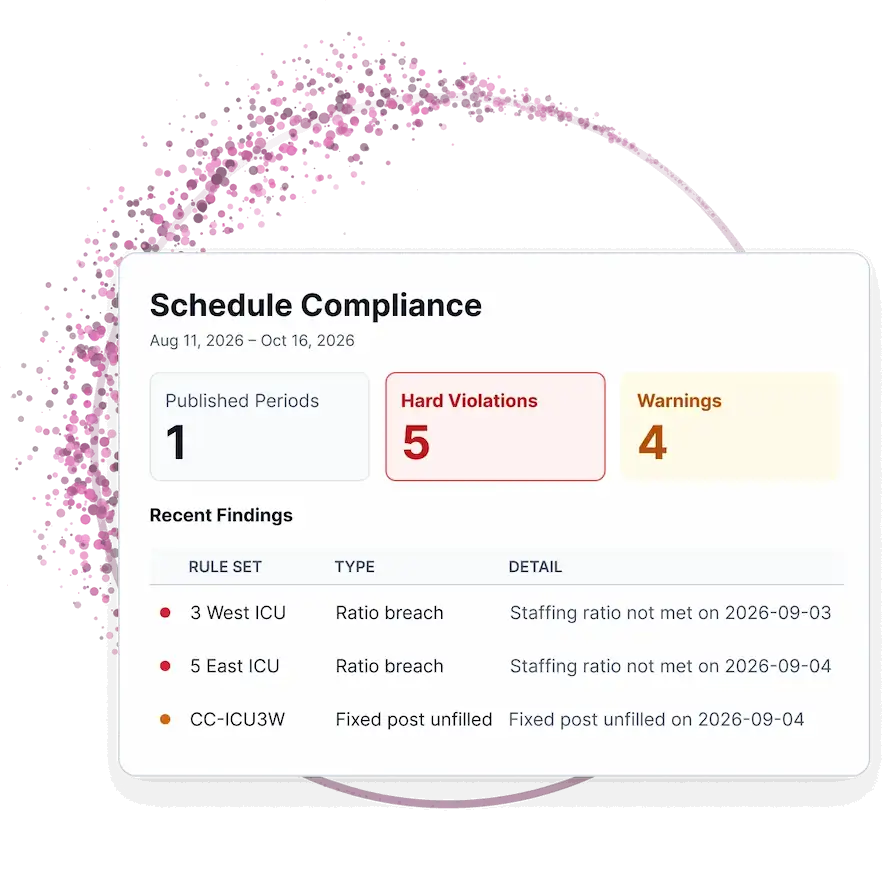
The most expensive hours are exceptions, and exceptions that surface after the period closes are costly to fix.

Pay-period close and audit trail

When the roster lives in one tool and the timesheet in another, every close starts with a reconciliation.

Why workforce management software works better on SalaryTalent™

Pay starts with hours, and the hours start a week before anyone clocks in — in the roster, in the eligibility check, and in the leave balance. On SalaryTalent, the planned shift and the worked hour are the same record, sitting alongside compensation and real-time market intelligence, so what the workforce costs is one question rather than four systems.

Competitive comparison

SalaryTalent workforce management vs. workforce management alternatives

Capability SalaryTalent Workforce Management Connecteam
Employee scheduling
Time & attendance
Mobile workforce workflows
Labor-cost visibility
Primarily hours
Compensation intelligence
Not a core platform capability
Connected talent + compensation platform
Primarily workforce operations

* As of September 2026, based on publicly available vendor documentation.

Salary.com is the only platform in this comparison that delivers full support across all six evaluation criteria. While competitors may match individual capabilities, no alternative offers the same combination of data depth, built-in equity analytics, end-to-end workflow automation, and an employee-facing total rewards portal.

Salary.com advantages

What sets SalaryTalent workforce management apart

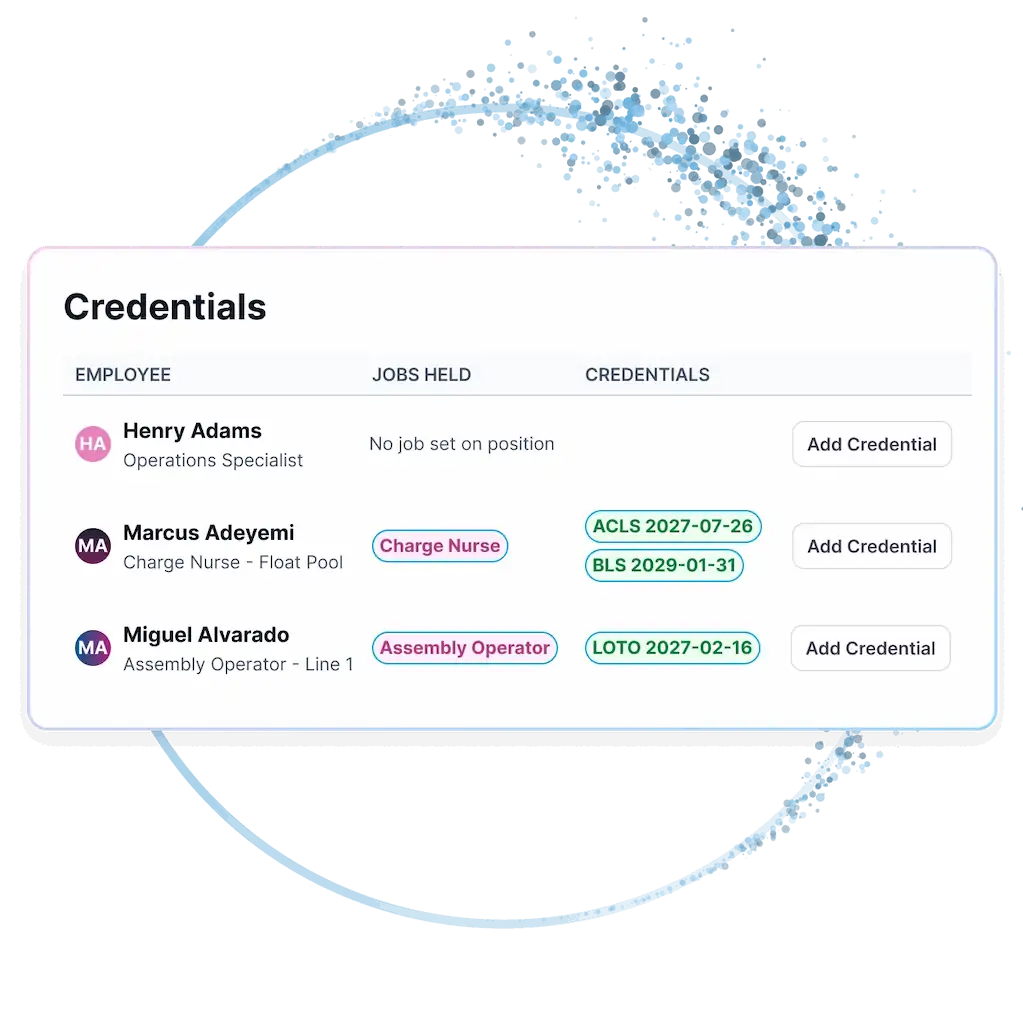
Credential Gating

Checks one credential record per employee before an assignment is possible. Verified and unexpired unlocks scheduling; pending or expired blocks, with no override.

Replaces a spreadsheet of licenses and a manager checking from memory.

SalaryTalent job matching panel showing 92 percent of jobs matched

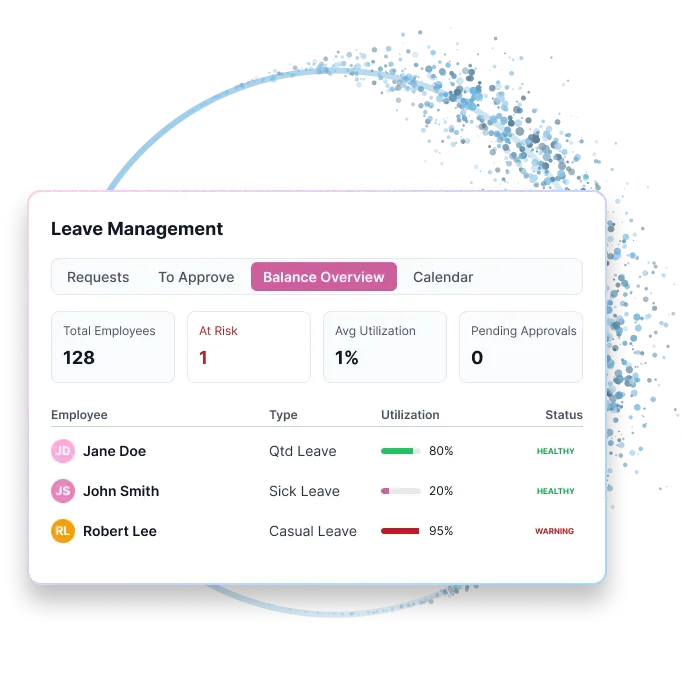
Seed Missing Handbook

Creates the statutory and near-universal leave policies in a single action, skipping any already in place — FMLA as a rolling twelve-month 480-hour window, USERRA as a lifetime cap.

Replaces building each policy from a blank form.

SalaryTalent Leave Management balance overview showing employee leave utilization

Draft Roster Cost Preview

Puts estimated labor cost and hours scheduled above forty per employee on the roster while it is still a draft.

Replaces finding overtime at close and leave liability at year end.

State minimum wage map and chart of future changes in minimum wage
customer testimonials

Real teams, real results.

How teams use SalaryTalent Workforce Management to connect reviews to pay

“SalaryTalent is a holistic solution. It has all the products you need in one. It can work for lean teams that need a one-stop solution, to an enterprise platform that can scale, but is still rooted in compensation.”

– Lorissa Martin, Sr. Manager of Development & Performance | Wills Group

“Today, our recruiting process involves separate systems, repeated paperwork, and manual data entry into the HRIS. The ability to let candidate information flow from the application through hiring — and to have pay information available in the recruiting workflow would create a much easier and efficient process for our team.”

– Emily Pokryfke, Compensation Analyst | Saint Anthony Hospital

“Having compensation intelligence built right into the talent acquisition and performance process addresses a real gap in the market. SalaryTalent puts that pay context right where you’re making decisions, which makes it much easier to have those conversations with confidence.”

– Lisa D’Acquisto, HR Consultant | Auvinsa Consulting
Market data points
10B+
Leveled job titles
1.4M
Organizations
10,000+
Customer satisfaction
95%

Vetting SalaryTalent Workforce Management

Who SalaryTalent Workforce Management is built for

Strong fit if...

  • Your organization has 250+ employees across multiple locations or pay structures.
  • You operate in more than one state, with at least one that has its own daily overtime rule.
  • Your roster changes week to week, work is credential-gated, or staffing should move with volume rather than habit.
  • Leave is tracked in a spreadsheet, FMLA is administered by hand, or the week is planned on a whiteboard.
  • You want to keep your existing HCM and payroll provider.

Consider alternatives if...

  • Your company has fewer than 50 employees with simple pay structures.
  • Most of your workforce sits outside the United States.
  • You are a small hourly team where simplicity is the buying criteria.

Insights you need to get it right

The latest research, expert advice, and compensation best practices all in one place.

Hiring a diverse workforce

How To

Hiring a Diverse Workforce: 5-Step Process and…

Hiring a diverse workforce with proven strategies to attract, hire, and retain employees.

Read more
AI in workforce planning

Blog

AI in Workforce Planning: Making Smarter People Decisions

Learn more about essential skills to succeed in the manufacturing industry.

Read more
Contingent workforce management

How To

What Is Contingent Workforce Management & How to Improve It

Learn what contingent workforce management is, why it matters, and how to improve hiring and compliance.

Read more
AI workforce planning: a compensation-first approach

Webinar

AI Workforce Planning: A Compensation-First Approach

AI is reshaping roles faster than most organizations can keep up.

Watch

SalaryTalent Workforce Management

Frequently asked questions

Workforce management software plans the shifts a business needs covered, records the hours people actually work, administers leave policies and the balances behind them, applies overtime rules, and closes each pay period so payroll can run on final numbers. It sits between the HR system of record, which holds the employee, and payroll, which issues the pay.

Setup is measured in days rather than a quarter for most teams in this segment. Statutory leave policies are created in a single action from templates that already carry the correct structure, and scheduling units are your existing Core HR cost centers rather than a second org structure to build. Two dependencies to plan for: pay periods are created in the Payroll module, and an employee needs a pay group before they can see a timesheet.

Yes. SalaryTalent Workforce Management is built to sit alongside an existing HCM and payroll provider rather than replace either. Those systems remain the system of record for the employee, and scheduling, time, and leave all work from that record. Customers keep what already works and close the gap between the roster and the signed-off period.

SalaryTalent Workforce Management plans the shift and records the hour in the same product, then puts both next to pay. Point tools center on shift coverage and punching, and a time module inside an HCM centers on feeding payroll. Here, statutory leave and per-state overtime ship already structured, a pending or expired credential blocks an assignment rather than warning about it, and the hours sit alongside compensation ranges and Salary.com market data.

Yes. The standard setup is a federal rule as the baseline plus one rule for each state whose law is stricter. A rule can carry a weekly threshold, a daily overtime threshold, a daily double-time threshold, and a seventh-consecutive-day rule, and can be restricted to FLSA non-exempt employees. Rules are effective-dated, so a change in state law is a new rule rather than a wait for a release.

Yes. Each job on the roster carries the certificates that job requires, and eligibility is checked before the assignment is possible. Only a verified, unexpired credential unlocks scheduling; a pending or expired one blocks, with no override for a manager under pressure. Expiring credentials surface as a renewal task rather than as a Monday morning problem.

Scheduling is one part of workforce management. Scheduling decides who works which shift next week; the rest of workforce management records what actually happened — hours, leave, overtime, and a signed-off period handed to payroll. A product that covers only one of the two leaves a reconciliation between the plan and the payroll record.

Get started

Get a personalized comparison

Tell us which solution you're evaluating and we'll show you where Salary.com differs.