Blog
Get Pay Right on ADP Workforce Now® Next Gen™
Bringing trusted compensation intelligence and seamless planning to even more ADP users.
Written by Salary.com Staff
July 18, 2025

Building an effective executive compensation plan in 2025 is more than just a financial strategy—it's a competitive advantage. As companies navigate evolving market conditions, regulatory scrutiny, and rising executive expectations, crafting a balanced and performance-driven pay structure becomes essential.
Whether you're a growing startup or one of the many publicly traded companies aiming to attract top executive talent, having the right plan in place can significantly influence your leadership retention and organizational success.
An executive compensation plan is a structured framework that outlines the pay and benefits provided to a company's top executives, such as the chief executive officer (CEO), chief financial officer (CFO), and other senior leaders. This plan is designed to attract, motivate, and retain executive talent while aligning their interests with the company's goals and shareholder value.
In 2025, executive compensation plans have evolved to include a mix of fixed and variable components, ensuring that executives are rewarded for both their individual performance and the company's overall success. These plans are critical for publicly traded companies, private companies, and other organizations aiming to remain competitive in the market.
To support this shift, Salary.com’s Build Hybrid Jobs allows companies to model executive roles that combine traditional and strategic functions—essential when aligning compensation with how today’s leaders actually operate across departments.
A well-structured executive compensation plan typically includes the following components:
Base salary: The base salary is the fixed yearly salary paid to an executive. It serves as the foundation of the compensation package and is determined based on factors such as the executive's experience, role, and industry standards. In 2025, base salaries for executives have seen moderate increases, reflecting the need to balance competitive pay with financial
Short-term incentives: Short-term incentives, often in the form of annual incentives or performance-based cash bonuses, are designed to reward executives for achieving specific organizational and individual goals within a fiscal year. These incentives are tied to performance metrics such as revenue growth, profitability, and other key indicators of company performance
Long-term incentives: Long-term incentives are critical for aligning executives' interests with the company's sustained success. Common forms include stock options, restricted stock, and long-term incentive programs. These incentives often come with vesting schedules to encourage long-term commitment and performance.
Benefits and perquisites: Executives often receive a range of benefits and perquisites as part of their compensation packages. These may include health insurance, deferred compensation plans, and generally noncash fringe benefits like country club memberships or relocation costs. Such perks are designed to enhance the overall attractiveness of the compensation package.
Equity compensation: Equity compensation, such as company stock or incentive stock options, allows executives to share in the company's success. By granting ownership stakes, companies can motivate executives to focus on long-term value creation and company performance.
Crafting a balanced compensation structure requires actionable data and precise execution. Salary.com’s Detailed Pricing Reports feature empower HR leaders to build data-backed salary ranges and bonus plans.
As the corporate landscape becomes more dynamic, executive compensation trends are shifting to reflect new expectations, regulations, and strategic priorities. In 2025, companies are rethinking how they design executive pay to better align with long-term growth, stakeholder demands, and a highly competitive talent market.
In 2025, several trends are shaping executive compensation strategies:
Performance-based pay: There's a growing emphasis on performance-based pay, with companies tying a significant portion of executive compensation to performance metrics like stock price, financial metrics, and company goals.
Transparency and regulation: Publicly traded companies are under increased scrutiny from the Securities and Exchange Commission (SEC) and shareholders, leading to more transparent executive compensation disclosures.
Customized compensation structures: Private companies are adopting more flexible compensation structures to attract and retain executive talent, often including unique combinations of fixed compensation and variable compensation.
Focus on long-term incentives: Long-term incentives are becoming more prevalent, with companies offering stock options and other equity-based rewards to align executives' interests with long-term company performance.
Consideration of tax implications: Companies are paying closer attention to the tax consequences of executive compensation plans, aiming to minimize tax liability for both the company and the executives.
Trends like performance-driven pay and equity-based rewards require tailored solutions. To stay ahead of shifting market conditions, Salary.com’s Scopes tool refines compensation data by geography, industry, and company size.
Developing an effective executive compensation plan involves several key steps:
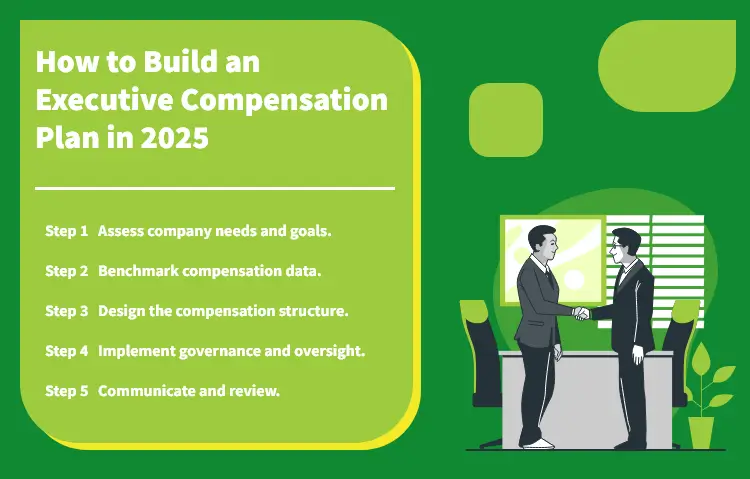
Begin by evaluating the company's strategic objectives, financial position, and organizational operations. Understanding these factors will help determine the appropriate compensation arrangement that aligns with company strategy and company culture.
Effective executive pay starts with clarity on business priorities. Use tools like Benchmark Pay Data to establish a compensation foundation that mirrors industry performance and executive expectations.
Utilize compensation data to benchmark against industry standards and competitors. This ensures that the compensation packages offered are competitive and capable of attracting executive talent.
Develop a compensation structure that balances fixed and variable components. This may include base salary, short-term incentives, long-term incentives, and other benefits. Ensure that the structure aligns with company goals and performance metrics.
Establish a compensation committee to oversee the executive compensation program. This committee should work closely with legal counsel to ensure compliance with tax law and SEC regulations.
Clearly communicate the compensation plan to company executives, highlighting how it aligns with organizational and individual goals. Regularly review and adjust the plan to reflect changes in company performance, market conditions, and regulatory requirements.
Designing a compelling and compliant executive compensation plan in 2025 requires a balance of strategy, market insight, and alignment with organizational goals. From base salary and long term incentives to equity grants and executive perks, each element must serve a purpose—attracting, motivating, and retaining top-tier executive talent.

The latest research, expert advice, and compensation best practices all in one place.
Blog
Bringing trusted compensation intelligence and seamless planning to even more ADP users.

Blog
Learn how to train managers for effective pay conversations and build trust.

Blog
Total rewards package flexibility lets employees choose what matters - pay, perks, and benefits tailored to their needs.