Blog
Get Pay Right on ADP Workforce Now® Next Gen™
Bringing trusted compensation intelligence and seamless planning to even more ADP users.
Written by Salary.com Staff
June 06, 2025

In 2025, staying ahead in recruitment means thinking long-term. Companies are no longer just filling jobs—they’re building communities. That’s where talent relationship management (TRM) steps in.
Live job scraping. Know their pay secrets instantly.
Effective talent acquisition is crucial in this context, leveraging technology like Talent CRM systems to enhance processes for attracting and retaining candidates.
Whether you’re nurturing passive candidates, strengthening your employer brand, or organizing your talent pool, a solid TRM strategy can revolutionize how you attract, engage, and retain qualified candidates.
Talent relationship management is a strategic approach focused on building relationships with job seekers, current employees, and even passive talent before a hiring need arises. It’s about proactively managing a talent community and developing personalized outreach that keeps your brand top-of-mind.
This approach enables recruiters to streamline their hiring processes and enhance candidate engagement by utilizing automation and AI to build talent pipelines and make data-driven decisions. Think of TRM as laying the groundwork to attract top talent for both current and future job openings.
Real-time Job Posting Salary Data helps recruiters offer competitive pay from the start, improving candidate relationships and setting the tone for effective talent engagement.
A strong TRM system includes:
Applicant tracking systems to store and organize candidate information.
Automated tools for interview scheduling and resume screening.
Recruitment marketing campaigns designed to attract ideal candidates.
Content strategies that support employee engagement and candidate experience.
These components enhance candidate experiences by personalizing communication and streamlining recruitment processes, making interactions more memorable and engaging.
A successful approach also focuses on tracking candidates throughout the recruitment process, using tools that help recruiters make informed decisions based on behavior, interest, and skill alignment.
To ensure your candidate relationship management strategy includes competitive compensation data, Real-time Job Posting Salary Data equips hiring teams with insights necessary for building tailored offers that resonate with qualified candidates and passive talent alike.
There are two key types of Talent relationship management (TRM): internal and external TRM. Human resources play a crucial role in both internal and external talent relationship system.
Internal TRM targets existing employees to identify leadership potential, guide employee development, and promote from within.
External TRM involves nurturing candidate relationships with individuals outside the company—including passive candidates, alumni, and those in your talent pipeline.
Integrating both ensures a healthy mix of internal growth and external innovation.
There are many benefits talent relationship system brings to the table, starting with efficiency. It streamlines the hiring process and shortens time to hire by ensuring you already have high quality candidates in your pipeline.
Other key advantages include:
Stronger employer brand: A strong employer brand is fundamental for recruitment success. A robust TRM strategy enhances this by ensuring consistent communication and care, which attracts top-tier applicants and strengthens your overall employer brand.
Nurturing relationships: TRM helps you build strong relationships with future talent, making your company a go-to for career growth.
Retention strategies: By focusing on internal talent, you reduce turnover and support succession planning.
High quality employees: You’re more likely to find the right talent when you’re constantly engaging in a curated talent pool.
Enhanced employee referral programs: A great TRM strategy can also encourage employees to refer great candidates.
In essence, TRM allows you to think beyond immediate needs and prepare for growth with the right people.
Creating an effective talent relationship system process involves both strategy and execution. Here’s how to build it:
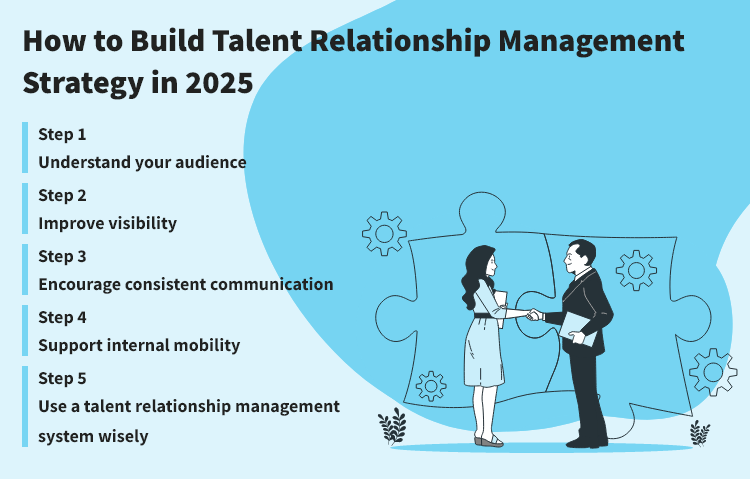
Segment your job seekers by career level, industry interest, or engagement history. Use your existing databases to categorize them into talent pools, which helps in organizing and maintaining relationships with skilled applicants for future hiring needs, ensuring no opportunity is missed.
Share compelling job descriptions across job boards, email newsletters, and social media integration tools. A well-crafted job description is crucial for attracting and engaging top talent, as it conveys your organization's values, culture, and opportunities. Make every job posting an invitation to your talent community.
Establish workflows for maintaining open lines of communication. Maintain regular contact with silver medalists or other candidates who weren’t selected—but show potential for future roles.
Help managers identify and nurture talented individuals within the organization. Offer targeted employee training and career paths for your internal talent to enhance retention and engagement.
Leverage mobile application management, automated reminders, and data analytics to identify trends and keep your strategy scalable.
Maintaining robust talent pipelines can reduce time-to-fill for roles and address talent shortages through efficient candidate engagement strategies and automation features within Talent CRM systems.
Know who's hiring, where, and for how much.
During the TRM process, compensation plays a pivotal role in keeping candidates interested. Using Real-time Job Posting Salary Data, recruiters can benchmark salary ranges during the job description and job posting phases to attract the right talent with clarity and fairness.
Building trust with talent—both internally and externally—means being intentional, consistent, and empathetic.
Personalize your approach: Don’t treat candidates like numbers—instead, focus on candidate relationship management by sending personalized messages, timely updates, and relevant feedback, using surveys and feedback loops to continuously enhance the candidate experience, and ensuring each interaction matters, whether it's with engaged candidates or individuals within your talent pipeline.
Involve your hiring teams: Train hiring teams to be active participants in TRM. They should help refine messaging, assess candidate sourcing strategies, and offer insights about candidate fit.
Stay proactive, not reactive: The strongest TRM programs don’t wait for open positions—they prepare. Keep your recruitment marketing going year-round and keep your candidate relationships warm.
Align with goals: Your TRM efforts should support larger talent management objectives, like leadership development, faster onboarding, and stronger diversity. Aligning TRM efforts with talent acquisition strategies is crucial to ensure a seamless and effective approach to attracting and retaining top talent.
A well-executed talent relationship strategy transforms recruitment from a reactive process into a proactive, people-focused journey. Whether you’re managing candidate relationships, enhancing your employer brand, or investing in internal talent, the key is to treat every touchpoint as a relationship—not a transaction.
When done right, effective talent relationship management ensures your company stays ahead of the curve—today and into the future.

The latest research, expert advice, and compensation best practices all in one place.
Blog
Bringing trusted compensation intelligence and seamless planning to even more ADP users.

Blog
Learn how to train managers for effective pay conversations and build trust.

Blog
Total rewards package flexibility lets employees choose what matters - pay, perks, and benefits tailored to their needs.