Blog
Get Pay Right on ADP Workforce Now® Next Gen™
Bringing trusted compensation intelligence and seamless planning to even more ADP users.
Written by Salary.com Staff
October 09, 2026

Employers who want to form strong teams start with a clear view of every job role in the company. Conducting a task analysis for each job will allow HR and finance team leaders to accurately describe the duties of each job role.
Thousands of compliant templates. Save hours of work.
Using these analyses, accurate job descriptions can be created.
A job task analysis involves carefully studying the tasks that people perform within a specific position. Employers use job task analysis to list the duties, skills, and knowledge required to succeed in the position. By performing a job task analysis, employers can gain a clear picture of the requirements of each job, allowing for the hiring of the right person for the job or to determine what training is required of them.
Job task analysis also involves evaluating the mental and physical requirements of a position. Each position has tasks that must be completed and individuals that have the necessary competencies to perform those tasks. Subject to matter, experts and managers can provide input during a JTA. The information gained can help the organization to continually improve their people and processes to meet best practices within their industry.
JobArchitect® supports this stage by helping organizations create, manage, and organize job descriptions so information about responsibilities and requirements can be structured consistently.
Job task analysis is essential for building strong hiring and training systems.
Such analysis helps determine which tasks and competencies are critical for the role so that selection tools remain fair and valid.
Employers can gain a comprehensive list of the physical requirements and demands of a specific job.
Conducting a JTA will significantly speed up the training process for new hires and ensure that knowledge of the company is protected when employees leave.
As industry experts say, conducting a JTA will significantly reduce the number of hiring mistakes and ensure that finance departments can assign employees their rightful pay.
Furthermore, conducting a JTA will allow employers to assess the competencies required for each job role and manage their talent effectively.
CompAnalyst® can support the compensation side of this process by matching organizational job titles and descriptions with appropriate market data and recommending survey cuts for pricing.
Employers follow a clear five step process to complete a useful job task analysis.
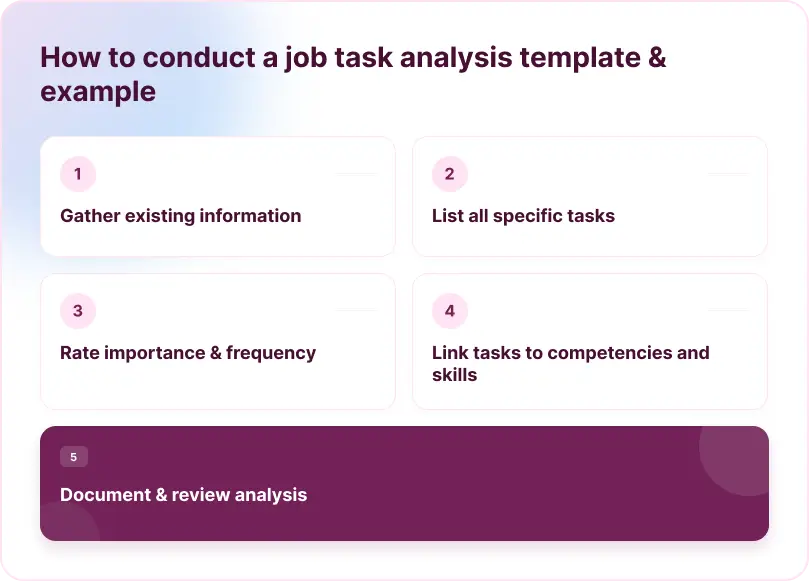
Review job descriptions, performance records, and past studies. Speak to the managers and experts in the field regarding the specific tasks that are performed by each employee. This forms the foundation for the project.
Observe employees and hold focus groups to capture all the duties associated with the job. Ensure that each duty is represented, regardless of frequency of performance. Write each job duty in a language that all employees can understand.
Ask subject matter experts to mark which tasks are essential for success. Consider the physical demands and knowledge necessary for success in each task. These tasks will be the most important for appearing in job descriptions.
Determine the specific skills, knowledge, and abilities needed to perform each task well. Use this data to support training needs and hiring decisions. The link creates a clear picture of job requirements.
JobArchitect® helps organizations manage company job information so analyzed roles can be organized within the organization's job framework.
Create a final report that lists tasks performed, physical requirements, and competencies needed. Share it with managers for final input. Update the analysis when the role changes so the organization keeps a current documented history.
A simple template keeps the JTA process organized and easy to repeat.
A list of the main duties of the job.
Based on OPM guidance, add columns for describing each task, how often the task is to be performed, the importance of the task, and the skills required to perform the task.
Research suggests including a section that describes any physical demands of the job and any tools that are to be used in the job.
Include a section that lists the knowledge required for the employee to successfully complete the job and the level of that competency.
Finally include a section for the training that is required for each job and any notes from the subject matter experts on the job.
Employers often face a few common hurdles when they start a new jta.
According to the Department of the Interior, limited time from subject matter experts can slow down the process, so schedule short, focused sessions and use surveys for extra input.
Based on industry best practices shared by ATD, outdated data creates risk, so set up a regular review cycle every two years or after major role changes.
Research notes that vague task statements reduce value, so write clear action-oriented sentences that list what the person must accomplish.
Managers may resist the extra work, so show how the analysis supports better hiring and lower training costs.
Keep the process simple and involve both HR and finance early, so everyone sees the benefits for the whole organization.
Here are some FAQs for better understanding.
Auto-matching tools for a clear, fair organization.
A job analysis studies the work in depth while a job description summarizes the findings for daily use.
| Aspect | Job Analysis | Job Description |
|---|---|---|
| Purpose | Collect detailed data on tasks performed, skills, and physical demands | Present a short ready to use summary of duties and requirements |
| Content | Full list of specific tasks, ratings, competencies needed, and knowledge needed | Key responsibilities, qualifications, and reporting lines |
| Users | HR teams, managers, and subject matter experts who conduct the study | Hiring managers, candidates, and employees who need a clear overview |
| Length | Longer document with ratings and sources | One- or two-page summary that stays current with the analysis |
A job analysis diagram illustrates the tasks of a job and the skills needed to complete those tasks. The job analysis diagram can help the employer to quickly see which skills are required for the position. Such a diagram is often used in focus groups to discuss the requirements of a specific position.
HR usually leads the process as they know the industry practices best. Managers and experts in the field will provide information on tasks and physical demands. Finance leaders will be part of the process if the project has a financial impact on the company. By involving all these individuals in the process, you are more likely to arrive at an accurate answer.

The latest research, expert advice, and compensation best practices all in one place.
Blog
Bringing trusted compensation intelligence and seamless planning to even more ADP users.

Blog
Learn how to train managers for effective pay conversations and build trust.

Blog
Total rewards package flexibility lets employees choose what matters - pay, perks, and benefits tailored to their needs.