

Blog
Get Pay Right on ADP Workforce Now® Next Gen™
Bringing trusted compensation intelligence and seamless planning to even more ADP users.
Written by Salary.com Staff
September 18, 2026

A skill gap analysis helps organizations find the difference between the skills employees have and the skills they need for their jobs. As technology and work needs change, HR professionals can use a skill gap analysis to find areas where employees need more training and support.
The results can help improve employee skills and make sure the team has the skills needed to reach company goals.
This guide explains what a skill gap analysis is, gives an example and a simple template, and shows four steps to conduct one.
A skill gap analysis is a systematic process used by organizations to evaluate the difference between the skills required for specific job roles or business goals and the employee's actual skill level. Identifying skills gaps, businesses can develop targeted training programs, refine their hiring process, or invest in employee development to close these gaps.
This process ensures that the workforce's current capabilities align with the desired skill levels needed to achieve strategic objectives and tackle future challenges.
Why is skills gap analysis important? It provides valuable insights into areas where employees may lack critical skills, such as hard skills (e.g., data analysis, coding) or soft skills (e.g., critical thinking, communication).
Key benefits of conducting a skill gap include:
Aligning employees' current skills with the skills they need can improve productivity.
Addressing skill gaps through development programs can improve morale and engagement.
Giving employees new skills can help organizations keep up with industry trends.
Preparing employees for upcoming projects or new technology can support long-term success.
A real-world example of a skills gap analysis comes from IBM, which conducted a comprehensive analysis to address its digital transformation needs. IBM identified a skills shortage in areas like artificial intelligence (AI) and cloud computing.
Assessing the workforce's current capabilities through skills assessments and performance reviews, IBM pinpointed gaps in hard skills like machine learning and soft skills like critical thinking.
IBM's approach involved:
Mapping skills to business strategy: Identifying essential skills required for AI-driven projects.
Upskilling programs: Launching targeted training programs to fill skill gaps for existing employees.
Strategic hiring: Enhancing recruitment efforts to bring in talent with specific skills.
This initiative not only helped IBM close skill gaps but also positioned the company to maintain a competitive edge in a rapidly evolving tech landscape. The case underscores how skills gap analysis helps organizations align their workforce with future demands.
A skills gap analysis template provides a structured framework for HR teams to systematically evaluate and address workforce's skill gaps. Below is a customizable template to guide the process:
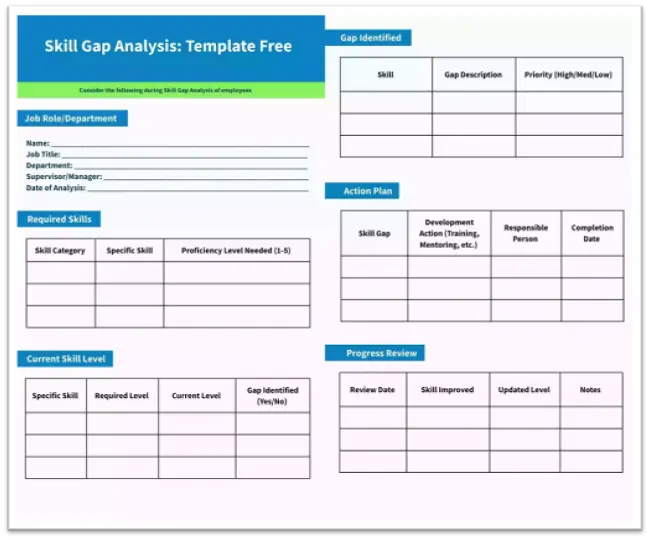
This template allows organizations to:
List job roles or departments.
Define required skills aligned with business goals and performance standards.
Assess current skill levels through performance reviews, skill assessments, or manager feedback.
Identify skill gaps and develop clear, actionable plans for closing them.
Implement targeted solutions, such as internal training, mentorship, or hiring temporary or full-time talent to fill critical gaps.
Using a template ensures consistency and clarity, making it easier to track progress and implement continuous improvement strategies.
Conducting a skills gap analysis doesn't have to be complex. Following these four streamlined steps, HR professionals can effectively identify skills gaps, align skill sets with organization's goals, and prepare their workforce for future challenges.
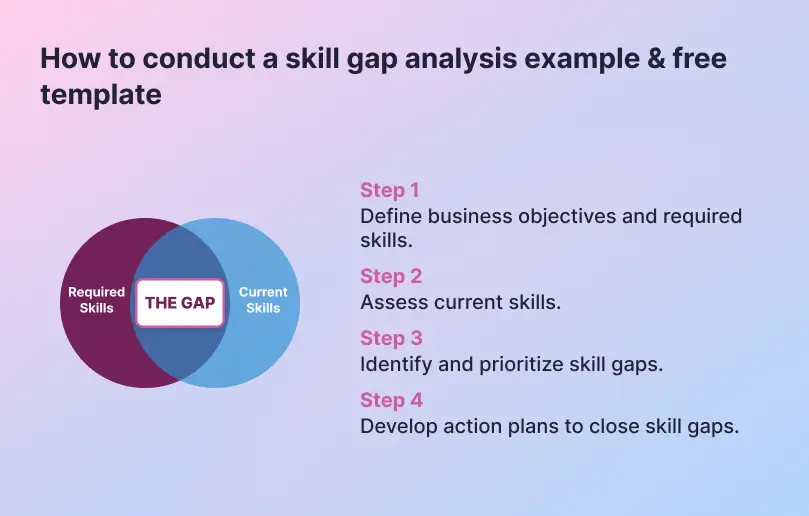
Start by aligning the analysis with your business strategy. Identify critical skills needed to achieve strategic objectives, such as launching an upcoming project or adopting new technologies. Collaborate with team leaders to map out specific skills—both hard skills (e.g., software proficiency) and soft skills (e.g., problem-solving)—required for each job role. Clearly defining needed skills ensures the analysis is focused and relevant.
Skill Library helps businesses define the skills required for each role, making it a valuable tool in the initial step of aligning job roles with necessary competencies. Using the Skill Library, HR professionals can clearly map out the skills needed to meet business objectives.
Evaluate the workforce's current capabilities using tools like skills assessments, surveys, or performance reviews. Engage existing employees and team leaders to gather data on employees' competencies, including their actual skills and skill levels. For instance, a software developer may have intermediate Python skills but lack expertise in cloud platforms. This step provides a baseline to compare desired skill levels, helping to identify gaps accurately.
Skills Model provides a detailed overview of how different job roles align with skill sets. This can be used to guide assessments by identifying the competencies associated with specific roles, ensuring that evaluations are aligned with real-world job requirements.
Analyze the data to pinpoint discrepancies between current skills and required skills. Categorize skills gaps by urgency and impact on business performance. For example, a skills shortage in cybersecurity may be critical for an IT firm, while gaps in soft skills like communication may be less urgent but still important. Prioritizing gaps ensures resources are allocated effectively to address skill gaps that matter most.
For HR teams, the Human Resources Job List can help identify the skills needed for different HR roles. This can help HR teams compare the skills employees have with the skills they need for their jobs.
Create targeted strategies to fill skill gaps, such as training programs, mentorship, or recruitment efforts. For current employees, invest in development programs to build new skills or enhance existing skills.
For critical roles, consider hiring candidates with the desired skill or leveraging a contingent workforce. Monitor progress through regular skills assessments to ensure employees' current skills align with business goals. This step fosters employee development and drives continuous improvement.
Here are some common questions about skill gap analysis:
A skill gap is the difference between the skills an employee has and the skills needed to do a job well. It shows where more training or support may be needed.
Examples include poor communication, weak leadership, poor teamwork, and weak problem-solving skills. A competency gap can cover the skills, knowledge, and behaviors needed to do a job well.

The latest research, expert advice, and compensation best practices all in one place.
Blog
Bringing trusted compensation intelligence and seamless planning to even more ADP users.

Blog
Learn how to train managers for effective pay conversations and build trust.

Blog
Total rewards package flexibility lets employees choose what matters - pay, perks, and benefits tailored to their needs.
