Blog
Get Pay Right on ADP Workforce Now® Next Gen™
Bringing trusted compensation intelligence and seamless planning to even more ADP users.
Written by Salary.com Staff
April 30, 2025

Starting a new job can be a thrilling yet nerve-wracking experience, especially for new employees. A structured and supportive new employee orientation is essential for building confidence and ensuring a smooth transition. The process goes beyond paperwork — it’s about introducing new employees to your company culture, clarifying responsibilities, and giving them a clear idea of whom they should connect with to foster better integration within the company.
In this guide, we’ll cover a complete framework to help organizations implement an effective new hire orientation that supports long-term employee success.
New hire orientation is the formal introduction of new employees to the organization. It typically occurs during the initial orientation phase, right after the candidate accepts the offer and before regular duties begin. This period is crucial for reducing confusion, building early engagement, and helping new hires gain a clear understanding of job expectations and responsibilities.
Orientation often includes completing paperwork, understanding payroll procedures, and reviewing the employee handbook. It also introduces the company’s values, providing a sense of belonging from day one. Additionally, familiarizing new hires with the company's culture fosters dedication and addresses any language barriers. Communicating the company's mission is essential for aligning new hires with the organization's overall vision and purpose.
If your business is evaluating how to structure pay packages for new hires. Salary.com new hire pay practice consulting can offer helpful strategies that align with your hiring goals.
A great employee orientation process significantly improves retention and engagement. When orientation begins, first impressions are crucial as employees learn about their roles, responsibilities, and key policies.
Proper orientation helps new hires fully participate in their responsibilities by preventing the stress that leads to overwhelming them and setting expectations clearly. It establishes connections with co-workers, introduces the new team, and walks through tools and platforms via screen sharing for remote employees or through an office tour for on-site staff.
Without a structured plan, even the most talented employees might feel lost, undervalued, or confused, which affects long-term outcomes.
An employee orientation done right can produce several benefits:
Employees feel more confident and comfortable in their roles.
Reduces early turnover, leading to a more stable team.
Gives valuable insights into values and structure.
Builds early rapport with new team members and executive leaders.
Encourages long-term employee development.
Additionally, ensuring that new employees receive essential information through structured methods like employee handbooks and knowledge bases helps guarantee a consistent experience across the organization. Aligning new hires with your culture, company rules, and overall vision early on enhances their engagement, motivation, and sense of purpose.
Tools like Salary.com’s compensation and benefits program design can help shape offerings that resonate with new employees.
Though sometimes used interchangeably, new employee's orientation and the onboarding process are different. Orientation is a short-term event — part of the administrative process that typically happens during the first week and varies in duration based on the organization's needs.
Onboarding, however, may last for weeks or even months, integrating new employees into the job and workplace culture. Orientation covers topics like tax forms, and benefits such as health insurance, and outlines pay periods, while onboarding focuses on training, mentorship, and long-term growth tailored to each new hire's specific needs.
Here are the key steps to creating an effective orientation:
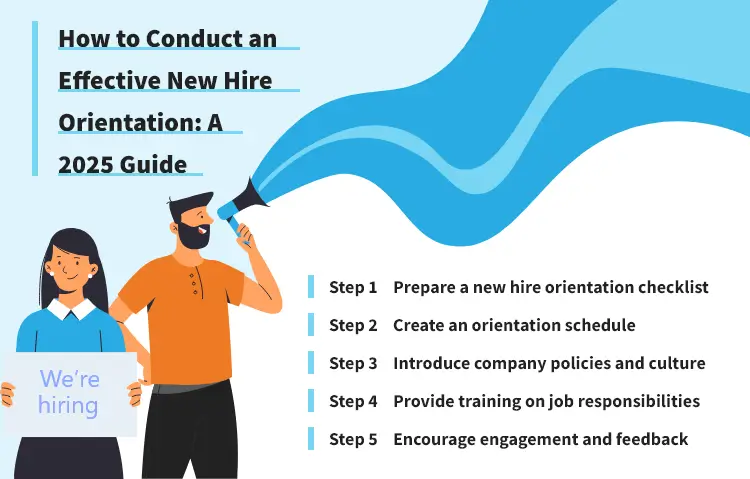
A well-prepared orientation process and employee orientation checklist ensures nothing important is overlooked. It should include equipment setup, system access, completion of new hire paperwork, introductions to the immediate team, and a review of company history, culture, and structure.
Ensuring access to tools and other resources will help new hires settle in quickly. A documented orientation checklist creates consistency across all departments, helping deliver a seamless and supportive experience for every new team member.
Design a clear orientation schedule that outlines every step of the program. This should include an overview of the process, presentations from human resources, meet and greets with executive leaders, a deep dive into the new employee orientation program, and a review of key policies including the dress code.
A structured schedule ensures every new hire receives the guidance, support, and clarity they need from day one.
Cover your company policies, procedures, and payroll procedures during the session to create a positive impression of a new company for newly hired employees. Make sure new employees understand the expectations and compliance regulations. Highlight your company culture and how it guides daily work, collaboration, and behavior.
For remote workers, include digital materials and conduct virtual training through screen sharing or pre-recorded video.
Ensure every new hire understands their responsibilities by showing examples and offering practical guidance. Emphasize the importance of understanding the employee's responsibilities to ensure they are well-prepared. Assign mentors from their team to walk through daily duties. This clarity minimizes the risk of confusion and promotes productive employee behavior.
Also, review the new employee orientation checklist to ensure the employee receives essential onboarding content tailored to their role.
Keep things interactive. Time spent on administrative tasks should be minimized to allow new hires to focus on essential activities. Include fun new hire orientation ideas like quizzes or team-building activities. An engaging orientation motivates and energizes new employees.
Follow up with surveys or quick check-ins to ensure employees feel valued and that the orientation begins positively. Feedback from the HR team will help you continue improving your hire orientation checklist.
If you're aiming to build scalable and consistent pay bands as part of the process, consider exploring Salary.com’s salary structure building services to support role clarity and transparency.
To get the most from your new hire orientation programs, implement the following:
Make it scalable and repeatable.
Customize your new employee orientation program for different departments.
Include real examples and clear takeaways.
Provide access to key contacts within the company.
Pair with ongoing learning paths during the onboarding process.
Including a section on the company’s mission and goals can boost long-term commitment.
Making sure your pay practices align with DEI values? Salary.com offers pay equity audit and certification services to help ensure transparency and fairness in the orientation and beyond.
A powerful new hire orientation doesn’t just welcome new faces — it builds relationships, sets expectations, and introduces the heart of the company. Whether you’re designing a hire orientation for office staff or creating a remote-ready orientation program, the goal remains the same: support your new hires with clarity, structure, and enthusiasm.
With the right preparation — from a detailed orientation checklist to consistent feedback — you can transform your orientation from a formality into a strategic advantage.

The latest research, expert advice, and compensation best practices all in one place.
Blog
Bringing trusted compensation intelligence and seamless planning to even more ADP users.

Blog
Learn how to train managers for effective pay conversations and build trust.

Blog
Total rewards package flexibility lets employees choose what matters - pay, perks, and benefits tailored to their needs.