Blog
Get Pay Right on ADP Workforce Now® Next Gen™
Bringing trusted compensation intelligence and seamless planning to even more ADP users.
Written by Salary.com Staff
September 18, 2026

A talent review is a critical process that helps HR teams and business leaders identify, assess, and develop employees to support company goals.
Live job scraping. Know their pay secrets instantly.
This guide explains what a talent review is, how to conduct one, and best practices to improve employee growth and workforce planning.
A talent review is a strategic process that organizations use to assess and develop their workforce. It helps HR professionals and company leaders identify high-potential employees, evaluate skill gaps, and create plans for employee growth and succession. Unlike traditional performance evaluations that focus on past achievements, it takes a forward-looking approach to workforce planning.
Talent reviews typically involve discussions among HR professionals and leadership teams about employees' potential, readiness for promotion, and areas for talent development. These meetings ensure that organizations have the right talent in place to achieve business goals. The talent management process may include assessing competencies, leadership qualities, and future career paths within the company.
As part of a talent review, HR teams may also look at pay when planning promotions and career growth. Real-time job posting salary data can give employers current market pay information to help make informed talent and pay decisions.
Using real-time job posting salary data in talent reviews can help HR teams make better decisions about employee growth, pay, and future roles. Looking at current market pay can also help companies keep pay fair and competitive. Key benefits include:
Comparing employee pay with current market rates to support fair pay.
Finding pay gaps that may cause employees to leave.
Seeing which skills are in demand and use them to plan training.
Using pay data when making decisions about promotions, pay changes, and hiring.
Although talent reviews and performance reviews are often used interchangeably, they serve distinct purposes. Below is a comparison of their key differences:
| Aspect | Talent Review | Performance Review |
|---|---|---|
| Focus | Future potential and career growth | Past work and achievements |
| Objective | Plan for future roles, succession, and employee growth | Review job performance and set improvement goals |
| Scope | Looks at employee potential across the company | Focuses on an individual employee's work |
| Frequency | Held when needed based on business needs | Usually held once or twice a year |
| Participants | HR teams, managers, and company leaders | Managers and employees |
| Outcome | Career plans, promotions, and succession plans | Improvement goals and possible pay changes |
In short, a talent review looks at an employee's future potential and career growth, while a performance review looks at past work and current job performance.
To ensure a successful talent review process, HR teams should follow these key steps:
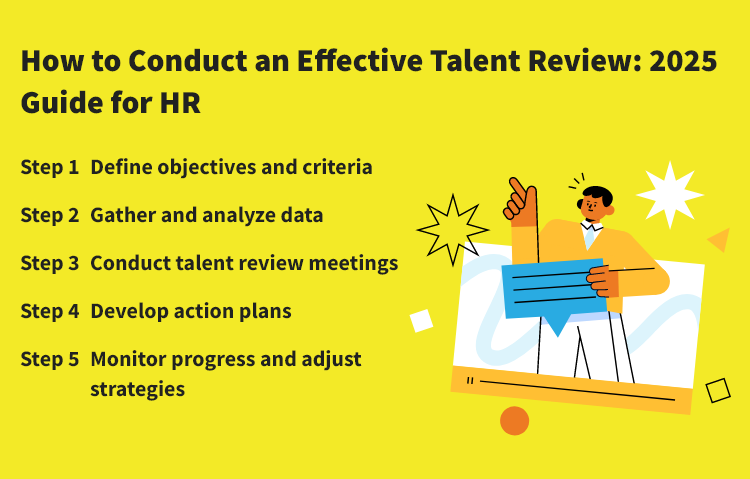
Before conducting a review, establish clear objectives. Determine what aspects of employee potential will be assessed, such as leadership capabilities, technical skills, or cultural fit. Define criteria for evaluation, including:
Job performance
Leadership potential
Adaptability and problem-solving skills
Readiness for promotion or expanded responsibilities
Collect relevant data from various sources, such as:
Performance reviews and past evaluations
360-degree feedback from peers, managers, and subordinates
Real-time salary data to benchmark compensation
Employee engagement surveys
Data-driven insights provide a comprehensive view of employees' strengths, weaknesses, and potential career paths.
Schedule meetings with key stakeholders, including HR leaders, department heads, and senior executives. Discuss employees' strengths, areas for development, and succession plans. Use tools like the nine-box grid to categorize employees based on performance and potential.
Based on the discussions, create tailored action plans for employees, including:
Career development opportunities
Leadership training programs
Mentorship and coaching assignments
Role transitions or promotions
Ensure these plans align with business goals and address both immediate and long-term talent needs.
Reviews should be an ongoing process. Regularly review progress and adjust strategies as needed. Establish follow-up meetings to ensure action plans are implemented and employees receive necessary support for growth.
To maximize the effectiveness, consider the following best practices:
Use objective data: Incorporate both qualitative and quantitative metrics to ensure fair evaluations.
Encourage open discussion: Foster a culture of transparency where leadership teams can openly discuss employee potential and career paths.
Align with business goals: Ensure reviews support the organization's long-term objectives and workforce strategy.
Invest in employee development: Provide employees with access to learning opportunities, mentorship, and leadership programs to help them grow.
Leverage technology: Utilize HR software and analytics tools to streamline data collection and decision-making.
Know who's hiring, where, and for how much.
Real-time job posting salary data is a powerful tool to support these best practices by providing accurate compensation data and analytics. Ensure your reviews are data-driven and aligned with market trends.
Here are some common questions about talent review:
During a talent review, HR and managers discuss employee performance, skills, career goals, and future potential. They may also discuss training, promotions, and future roles.
On a job application, a talent review means the company is looking at a candidate's skills, experience, and potential. It helps the company decide if the candidate may be a good fit for the job or future roles.

The latest research, expert advice, and compensation best practices all in one place.
Blog
Bringing trusted compensation intelligence and seamless planning to even more ADP users.

Blog
Learn how to train managers for effective pay conversations and build trust.

Blog
Total rewards package flexibility lets employees choose what matters - pay, perks, and benefits tailored to their needs.