Blog
Get Pay Right on ADP Workforce Now® Next Gen™
Bringing trusted compensation intelligence and seamless planning to even more ADP users.
Written by Salary.com Staff
April 25, 2025

Compensation training is an essential part of human resource management (HRM) because it helps organizations develop a strong understanding of how to structure, manage, and administer employee compensation effectively.
As businesses continue to grow and become more complex, compensation management becomes even more critical. Employees are the backbone of any company, and understanding how to reward them adequately is key to promoting a positive and productive work environment.
In this article, we’ll explore how to conduct compensation training for HR professionals and what topics should be covered to ensure effective management of employee compensation.
Compensation management refers to the strategy and processes used to determine, administer, and evaluate the wages, benefits, and other financial rewards given to employees in exchange for their work. This involves a set of practices aimed at attracting, retaining, and motivating employees by offering competitive compensation packages.
These packages can include direct pay (such as salaries and bonuses), indirect pay (benefits like health insurance and retirement plans), and non-monetary rewards (such as recognition programs or career development opportunities).
Market Pricing helps HR professionals conduct compensation research to set competitive pay structures, ensuring that the compensation packages align with industry standards and reflect competitive pay strategies for employee attraction and retention.
Compensation can be categorized into several types based on the nature of the rewards provided to employees. Understanding these different kinds of compensation is essential for HR professionals when conducting compensation training. Here are the most common types:
Direct compensation
Base salary: This is the fixed, agreed-upon amount of money an employee receives for their work, typically paid annually or on a monthly basis. It can vary based on job responsibilities, experience, and the employee’s skills.
Bonuses: Additional monetary rewards given based on performance or meeting specific goals, often provided as annual or quarterly incentives.
Incentives: These are payments linked directly to an employee's performance or the achievement of company-wide objectives. Incentives can be structured as commissions for salespeople, profit-sharing for management, or goal-oriented awards for employees in various departments.
Indirect compensation
Health and welfare benefits: These include medical, dental, and vision insurance, paid sick leave, and life insurance. Providing these benefits is not only a way to support employees but also an attractive element for recruiting new talent.
Retirement plans: Such as pensions or 401(k) plans, which allow employees to save for their retirement. Companies may offer matching contributions to these plans as an incentive.
Paid Time Off (PTO): Paid vacation days, holidays, and sick leave are considered part of indirect compensation.
Work-life balance programs: Flexible working hours, remote work options, and paid parental leave fall into this category, contributing to employee satisfaction and productivity.
Non-monetary compensation
Recognition and awards: While not directly paid, recognizing employees for their efforts and accomplishments can significantly boost morale. Employee of the Month awards, public shout-outs, or personalized thank-you notes are common methods.
Career development and growth opportunities: Training programs, mentorship, and opportunities for advancement are non-financial compensation types that foster employee loyalty and satisfaction.
Salary Structure assists HR professionals in creating structured salary ranges for different job roles, ensuring fair and competitive pay practices for direct compensation.
Compensation training is crucial for HR professionals because it equips them with the skills and knowledge needed to manage employee compensation effectively. When designing a compensation training program for HRM, the following key topics should be included:
Compensation philosophy and strategy
Every organization needs a clear compensation philosophy to guide its effective compensation program, outlining whether it will lead, match, or follow the market while considering the company’s budget, industry standards, and location.
Market research and benchmarking
Competitive pay analysis is key to setting pay structures. Training should teach HR professionals to gather data from surveys, competitors, and market trends, ensuring the compensation plan is competitive enough to attract and retain top talent.
Legal and Regulatory Compliance
HR professionals must understand labor laws, wage and hour regulations, and compensation-related laws like the FLSA and Equal Pay Act. Training should emphasize staying updated on any legal changes.
Pay structure and job evaluation
HRM training should cover building a fair pay structure using job evaluation methods to determine job worth. A well-structured pay scale ensures internal pay equity, ensuring fair pay for similar roles and responsibilities.
Performance management and link to compensation
HR professionals should learn to align compensation with performance, linking performance reviews, merit-based pay raises, and bonuses to employee achievements. Training should also cover sales compensation, such as commissions and performance bonuses.
Benefits and incentives administration
Compensation training should cover administering employee benefits, from health insurance to retirement plans, and how to communicate their value to ensure employees appreciate the full compensation and benefits program.
Employee communication
HR professionals must communicate compensation information clearly and transparently, emphasizing the importance of discussing changes, incentives, and benefits empathetically and professionally.
Conducting compensation training effectively requires a structured approach that ensures all HR professionals fully understand the processes and best practices involved. Below are six essential steps for conducting compensation training:
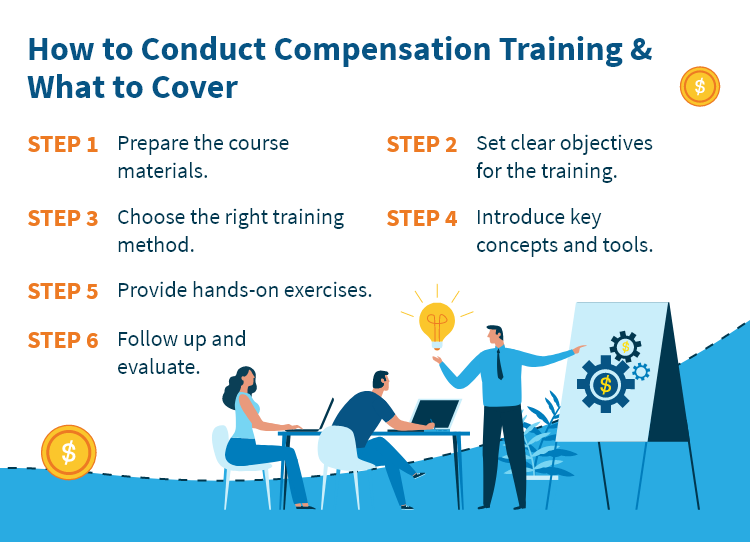
Gather all necessary resources, including industry reports, compensation surveys, legal documents, and internal policies. This will allow for a comprehensive and informative training session.
Analytics helps HR professionals evaluate compensation data and trends to ensure they have accurate and up-to-date resources for their training.
Define what you want the participants to learn. Clear objectives might include understanding compensation structures, mastering pay benchmarking, or becoming familiar with the legal aspects of compensation. These objectives should guide the content of the training.
Compensation training can be delivered through in-person seminars, online courses, or a blended approach, depending on the HR team's size and organizational needs. Interactive workshops and case studies are also valuable for demonstrating real-world scenarios.
Start with the basics: explain compensation strategy, types of compensation, and the principles behind each type. Then introduce the tools and software systems used to manage compensation.
Create realistic scenarios where HR professionals must evaluate compensation packages or adjust salaries based on market trends and company goals. These exercises help participants apply what they’ve learned and enhance their decision-making skills.
Assess the effectiveness of the training through surveys or feedback. Regularly evaluate how well HR professionals are implementing compensation practices in their roles and offer additional training if needed.
Compensation training is essential for HR professionals to manage an effective compensation system. Understanding compensation types, legal requirements, market benchmarking, job analysis, and performance-based pay is key for success. A structured approach, including clear objectives, interactive methods, and feedback, ensures HR teams can attract, retain, and motivate top talent.

The latest research, expert advice, and compensation best practices all in one place.
Blog
Bringing trusted compensation intelligence and seamless planning to even more ADP users.

Blog
Learn how to train managers for effective pay conversations and build trust.

Blog
Total rewards package flexibility lets employees choose what matters - pay, perks, and benefits tailored to their needs.