Blog
Get Pay Right on ADP Workforce Now® Next Gen™
Bringing trusted compensation intelligence and seamless planning to even more ADP users.
Written by Salary.com Staff
September 04, 2026

Starting a new management role can be quite overwhelming. A 30-60-90 day plan for managers helps managers navigate their first three months with clear goals and priorities.
Thousands of compliant templates. Save hours of work.
Whether you are the new hire taking on management responsibilities or you are the hiring manager creating such a process, this will help everybody get on the same page.
Such a plan is inherently strategic and provides for the division of onboarding into three clear phases. The goals are established for new hires within the first 30, 60 and 90 days within the new role. Each phase follows the previous phase to establish a clear path from learning to executing and owning these initiatives.
This plan creates early business impact and builds team trust. It helps new employees reduce stress within a new environment. According to research, organizations with strong onboarding processes see an 82% improvement in new hire retention rates and over 70% improvement in productivity.
| Phase | Timeline | Primary focus | Key outcome |
|---|---|---|---|
| Phase 1: Learn | Days 1 to 30 | Understanding the business, team, and processes | Build relationships and gather feedback |
| Phase 2: Plan | Days 31 to 60 | Aligning priorities, setting SMART goals, and collaborating | Identify areas for quick wins and process improvement |
| Phase 3: Execute | Days 61 to 90 | Owning initiatives, leading projects, and delivering results | Track progress toward performance goals and company objectives |
To set clear expectations during onboarding, organizations leverage JobArchitect® to create, manage, and standardize market-aligned job descriptions. Centralizing job architecture ensures new managers and their teams start with total clarity on roles, duties, and core competencies from Day 1.
Strong plans include business goals, people's goals, learning goals, and the support needed to succeed, key goals and metrics relating to business outcomes. The best plans go beyond task lists but instead align employee goals with company objectives, team goals, and personal development goals.
Here are the key components to include:
Business goals: revenue targets / process improvement initiatives / plans aligned with company objectives.
People goals: building relationships with direct reports / key stakeholders / cross functional partners through 1 on 1 meetings.
Learning goals: understanding company culture and job description elements and dynamics through relevant resources.
Performance metrics: SMART goals (specific, measurable, achievable, relevant, time bound) with clear review points.
Support needs: find a mentor and schedule check in meetings with leadership and stakeholders to gain buy in.
Quick wins: small improvements that demonstrate value and create a positive impression during initial weeks.
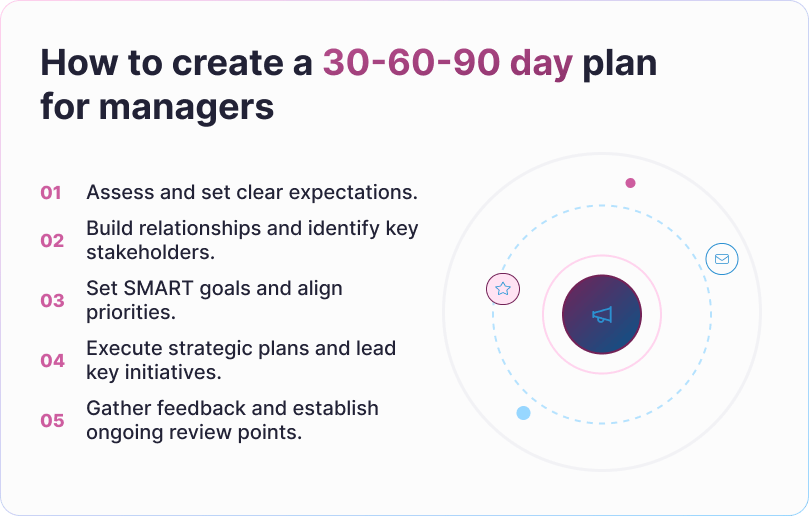
Building an effective plan involves a step-by-step approach from learning to leading. Here are five steps which will help managers make the most of their first three months.
First, it takes time to understand the new organization. Review the job description, meet with your hiring manager, and clarify key responsibilities. During this first phase, focus on listening and learning rather than making sweeping changes. Use structured 1 on 1 meetings to learn about team dynamics and challenges from your direct reports.
The first 30 days should center on building trust with team members, key stakeholders, and cross functional partners. Schedule introductory meetings with everyone from direct reports to C suite executives. Seeking input from existing employees helps you understand the real challenges the team faces and establish regular communication patterns.
Building trust requires meaningful 1-on-1s. Tools like Elevate® give managers and direct reports a unified portal to explore compensation transparency, benefit structures, and personalized career growth paths during onboarding check-ins.
During days 31 to 60, shift from observing to planning. Collaborate with your team to set goals that are specific, measurable, achievable, relevant, and time bound. Align personal goals with team performance targets and broader company objectives.
Quick wins are important during this phase because they build trust and show you are a valuable team member. Identify areas where small improvements make a meaningful difference.
The final 30 days are about execution. Take ownership of key initiatives you identified during the planning phase and guide the team toward new targets with a clear vision. Move from seeking input to leading with constructive feedback and driving results. Begin implementing process improvement ideas and tracking progress using the metrics you established.
Moving from planning to execution often requires making critical budget or headcount decisions. CompAnalyst® gives managers access to real-time market data, pay structure modeling, and internal equity analytics, ensuring team scaling, pay adjustments, and strategic resource allocations align with competitive market standards.
Regular check-ins are essential for tracking progress and adjusting goals. Schedule formal review meetings at each 30-day milestone and gather feedback from your team, peers, and leadership. This ongoing loop allows you to refine your approach, address talent development needs, and stay aligned with company objectives.
Auto-matching tools for a clear, fair organization.
Gallup's report found that manager engagement dropped from 30% to 27% in 2024, costing the global economy $438 billion in lost productivity, which underscores why structured plans with consistent feedback matter.
Even the most well-intentioned plans can fall short without considering common pitfalls. Understanding these mistakes helps new managers maintain momentum towards long term success.
Skipping the learning phase: rushing to make changes before understanding the business leads to poor decisions. The first 30 days should focus on learning and observing.
Setting vague or unrealistic goals: goals that are not specific or time bound make it impossible to track progress. Always use the SMART framework to set clear, realistic goals.
Ignoring team dynamics: failing to build relationships with direct reports, cross functional partners, and key stakeholders undermines trust and limits collaboration.
Overloading the plan with too many priorities: trying to accomplish everything at once spreads focus too thin. Prioritize key goals in each phase and focus on achieving meaningful results.
Neglecting personal development: a good plan balances performance goals with personal development goals. Managers who invest in their own growth become stronger leaders over time.
Failing to schedule regular check ins: without consistent review points, it is easy to drift off track. Regular check ins enhance performance feedback and keep everyone aligned.
Not connecting the plan to company objectives: a plan that exists in isolation fails to demonstrate strategic value. Every phase should tie back to broader company objectives.
Here are the frequent questions about 30-60-90-day plan for managers:
A good plan divides the onboarding process into three phases, with suitable goals at each stage. The first phase looks at learning the business and understanding company culture. The second phase focuses upon collaboration efforts and goals that are SMART and aligned with company objectives.
The last phase considers executing these strategic plans and results. The best plans associate each phase with business outcomes whilst also including regular check ins.
A strong 90-day plan includes business goals, people's goals, and learning goals. The initial weeks focus upon understanding the environment and identifying strengths and challenges within the team. On day 60 you begin contributing to key initiatives and quick wins. The final 30 days focus upon guiding the team towards new targets with a clear vision. This strategy works for sales roles or technical teams, whatever the management capacity might be.
The management plan is not limited to managers. It helps new hires, existing employees taking on a new position and job interview candidates. Hiring managers look at such plans during the interview process to gauge whether candidates will make strong starts to their roles. Even suite executives and individual contributors see value in this first three months approach.

The latest research, expert advice, and compensation best practices all in one place.
Blog
Bringing trusted compensation intelligence and seamless planning to even more ADP users.

Blog
Learn how to train managers for effective pay conversations and build trust.

Blog
Total rewards package flexibility lets employees choose what matters - pay, perks, and benefits tailored to their needs.