Blog
Get Pay Right on ADP Workforce Now® Next Gen™
Bringing trusted compensation intelligence and seamless planning to even more ADP users.
Written by Salary.com Staff
August 21, 2026

Building a pipeline of strong leaders does not happen by accident. For HR professionals looking to close capability gaps, a leadership development plan is the most practical tool in the talent strategy toolkit.
A leadership development plan is a structured document that outlines the specific skills, experiences, and competencies an individual needs to grow into a more effective leader. It bridges the gap between current capabilities and future strategic goals by setting clear development priorities, timelines, and success measures.
Thousands of compliant templates. Save hours of work.
Unlike a generic leadership development program, a personalized plan is tailored to the individual's role, career aspirations, and business priorities.
| Component | Description |
|---|---|
| Competency framework | Defines the specific skills required at each leadership level, including strategic thinking, decision making, and coaching skills. |
| Assessment tools | Identify individual strengths and development gaps through 360 degree reviews and manager evaluations. |
| Development goals | Clear, measurable outcomes aligned with organizational needs and career aspirations. |
| Action plan | A roadmap of targeted training, stretch assignments, mentoring, and coaching conversations. |
| Success indicators | Metrics and methods used to measure progress, such as engagement scores and performance outcomes. |
A competency framework is the backbone of any effective plan. It ensures that development efforts focus on the leadership behaviors and key competencies that matter most.
When explaining how a competency framework defines the skills and expectations for different leadership levels, JobArchitect® can be introduced as a tool that helps organizations maintain consistent job and role information.
Leadership development matters because it directly impacts employee engagement, retention, and bottom line performance. Research shows that 77% of organizations lack sufficient leadership depth across levels. Even more alarming, 40% of stressed leaders have considered leaving their roles entirely.
Stronger succession pipelines: Robust succession pipelines reduce panic when senior leaders depart and lower reliance on expensive external hires.
Higher engagement and retention: Leadership development positively impacts employee engagement and retention. Managers influence 70% of team engagement variance, so better trained leaders directly lift morale.
Improved business outcomes: Organizations that invest in leadership development report a 25% increase in business outcomes.
Reduced turnover costs: Development reduces costly turnover by improving manager skills, conflict resolution, and the capacity to build psychological safety.
Cultural transformation: Leadership development builds a high performance culture by aligning leadership behaviors with business strategy.
The most successful programs move beyond classroom training to real business situations. A strong development plan looks different depending on the leadership level, organizational context, and business objectives.
First time manager plan: Focuses on foundational leadership skills like communication skills and team management. Development resources include formal training, a mentoring relationship with an experienced leader, and guided coaching conversations.
Mid level leader plan: Targets strategic thinking, cross functional collaboration, and the ability to collaborate effectively across departments. Includes stretch assignments and executive coaching support.
Senior leader plan: Centers on business strategy alignment and developing leadership talent below. Involves board exposure, external education, and leading transformation projects tied to key business priorities.
High potential accelerator plan: Designed for emerging leadership talent identified through assessment tools. Combines experiential learning with mentorship from seasoned executives and immediate application of new skills to actual challenges.
Effective plans are tailored to individual roles and aspirations, ensuring participants apply new skills immediately for lasting results.
Use this template to build a comprehensive, personalized development plan. Fill in each section to create a structured roadmap for leadership growth.
Employee Information
| Employee Name | |
| Job Title / Role | |
| Department | |
| Manager / Supervisor | |
| Plan Start Date | |
| Target Completion Date | |
| Date Prepared |
Current Leadership Assessment
Rate each competency area on a scale (e.g., 1–5 or Emerging / Developing / Proficient / Advanced / Expert) and identify priority gaps.
| Competency Area | Current Level | Target Level | Gap / Priority |
|---|---|---|---|
| Strategic Thinking | |||
| Decision-Making | |||
| Communication & Influence | |||
| Team Building & Talent Development | |||
| Emotional Intelligence | |||
| Change Management | |||
| Innovation & Vision | |||
| Accountability & Results |
Development Goals
Define SMART goals aligned to the competency gaps identified above.
| Goal # | Development Goal | Success Metrics | Timeline | Status |
|---|---|---|---|---|
| Goal 1 | ||||
| Goal 2 | ||||
| Goal 3 | ||||
| Goal 4 | ||||
| Goal 5 |
Action Plan
Detail the learning activities, experiences, and interventions that will drive each development goal forward.
| Action / Activity | Description | Resources Needed | Target Date | Owner |
|---|---|---|---|---|
| Formal Training / Courses | ||||
| Coaching / Mentorship | ||||
| Stretch Assignment | ||||
| Cross-Functional Project | ||||
| Reading / Self-Study | ||||
| Networking / Conferences | ||||
| Job Shadowing | ||||
| Feedback & Reflection |
Milestones & Timeline
Outline key check-in points and the expected progress at each stage.
| Phase | Key Milestones | Expected Outcomes |
|---|---|---|
| First 30 Days | ||
| Days 31–60 | ||
| Days 61–90 | ||
| 6-Month Review | ||
| 12-Month Review |
Support & Resources
Identify the people, tools, and budget that will support this development journey.
| Support Type | Details | Contact / Provider |
|---|---|---|
| Executive Sponsor | ||
| Mentor | ||
| Coach | ||
| HR Business Partner | ||
| Peer Accountability Partner | ||
| Budget / Funding |
Progress Review Log
Use this log to document periodic check-ins and track ongoing progress.
| Review Date | Progress Summary | Challenges / Barriers | Adjustments / Next Steps |
|---|---|---|---|
Acknowledgment & Sign-Off
By signing below, all parties acknowledge the development plan and commit to supporting the employee's leadership growth.
| Role | Name & Signature | Date |
|---|---|---|
| Employee | ||
| Manager / Supervisor | ||
| HR Representative | ||
| Executive Sponsor |
There are four steps to creating an effective leadership development plan that optimizes business and team
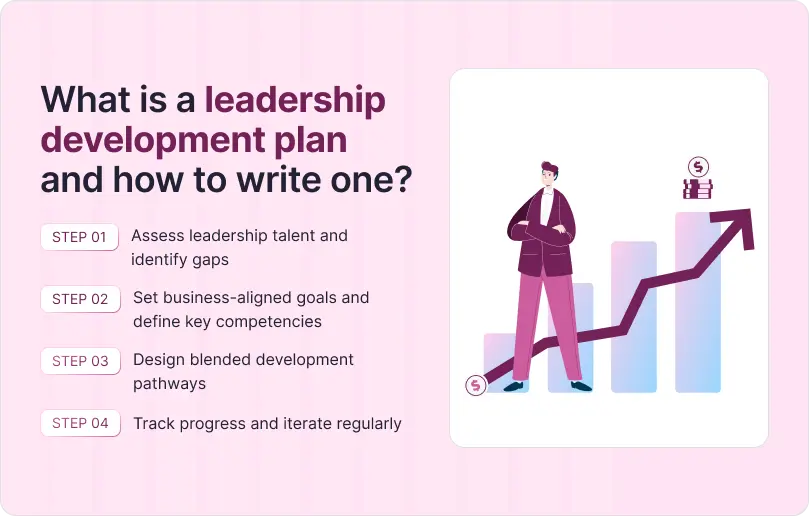
Assessing leadership talent is the first step in the development plan process. By using tools like 360 degree feedback surveys and competency assessments, HR teams can identify leadership development gaps within individuals. This allows them to understand what skills each manager lacks and what training they require to optimally lead their teams.
Auto-matching tools for a clear, fair organization.
Before identifying development gaps, HR teams should make sure leadership roles are clearly defined and consistently evaluated. CompAnalyst® Job Matching can help match company jobs with comparable market roles, giving HR a stronger foundation for evaluating job responsibilities and expectations.
Leadership development plans should align with the business and its goals. Teams can define the goals that the leadership development program will aim to achieve and the key competencies that each leader within the organization should have. According to a recent report, global employee engagement dropped to 20% in 2025.
Furthermore, engagement with managers dropped to 22%. Since managers are responsible for the engagement of 70% of their teams, aligning leaders with business goals and creating a leadership development program for them is a necessity for the organization to thrive.
Leadership development programs should go beyond the classroom and place candidates into various business situations. These training opportunities can include mentored opportunities with executives, leadership simulations, and team based projects with employees from various functions within the company. Creating a blended learning curriculum can provide a continuous learning environment for those in leadership positions.
Leadership development should also connect individual growth with longer-term career opportunities. Elevate® gives employees and managers a centralized view of pay, benefits, and career paths, helping make career progression more visible.
Feedback and evaluating the progress of those being developed for leadership positions is crucial to the program. Establish indicators of the success of the development plan and evaluate the plan using one-on-one meetings with the coaches and updated individual development plans every quarter.
Regularly assessing the plan will enhance the effectiveness of the program. This step is crucial as the leadership development process is an ongoing process and not a one time event.
Here are the frequent questions about the topic:
Most organizations will see results within the period of three to twelve months. Changes in the behavior of the leaders are visible within the first quarter, while results in engagement scores and other aspects will take twelve months or so to show improvement.
A leadership training program will focus on a group of leaders and deliver training to them. A development plan will be customized for individuals, with training as part of the program along with coaching, mentoring, and other aspects according to the individual leaders' needs.
It works for all sizes. Small companies often benefit more because they have fewer leadership layers and can act faster on development priorities. The key is scaling the plan to fit available resources while aligning with business strategy.
It should be owned by the individual leader themselves, but with the support of HR professionals and managers. Ultimately, the executives who make the company's strategic decisions need to have some buy-in with the plan.
The plan should be reviewed every three months with a complete review of the plan every year to ensure that it is up to date with the company's priorities and needs.

The latest research, expert advice, and compensation best practices all in one place.
Blog
Bringing trusted compensation intelligence and seamless planning to even more ADP users.

Blog
Learn how to train managers for effective pay conversations and build trust.

Blog
Total rewards package flexibility lets employees choose what matters - pay, perks, and benefits tailored to their needs.