Blog
Get Pay Right on ADP Workforce Now® Next Gen™
Bringing trusted compensation intelligence and seamless planning to even more ADP users.
Written by Salary.com Staff
May 23, 2025

With 1 in 4 Americans working from home and 60% of the workforce looking for remote jobs, creating an effective remote onboarding process allows employees to start their professional journeys right from the comfort of their own homes.
That’s why it’s become paramount for companies to start creating their own work-from-home onboarding process to ensure that new employees can catch up to an organization’s current workforce.
Continue reading to learn more about the remote onboarding process, its importance to the new normal in workforce trends, and how to create an effective one for companies.
Remote onboarding is when companies prepare their new employees for their potential workload virtually. This includes providing them with documents, company policies, login credentials, and everything else that they may need to start their journey within a company.
For some companies, this includes informing employees about how the company operates, some specific policies that are unique to the company, and anything that employees need to know to ensure a smooth transition within the company.
Since the typical onboarding process can take some time, from a couple of days to two weeks, it’s highly suggested to get an experienced consultant to help smooth out the entire process. Not only that, but the right consultant can also help them with their overall growth in the long run.
The online onboarding process became the new norm after COVID-19. Even though it’s been around for longer than that, the number has jumped from 1 in 14 in 2019 to the aforementioned 1 in 4.
The pandemic allowed companies to try out and discover new ways to do their work from home, and one of those is onboarding remote workers that companies have hired after the pandemic.
The remote environment combined isn't easy for new remote employees, but as time goes on, clear communication and HR teams have adjusted to remote work being the new norm.
Onboarding remotely is important for those working in a WFH (work-from-home) setup as it allows them to get up to speed on what their company does from the comfort of their own homes.
Admittedly, it does reduce the amount of in-person interaction that new employees have with their other colleagues within the company. But if done right, it can foster a healthy, stress-free workplace environment where both new hires and older employees can work.
The right onboarding process also helps set clear expectations and boundaries among new employees as well.
Doing so remotely poses plenty of challenges for companies, but the right consultants can help provide companies with the right tricks to ensure that all new hires can perform at the level that their company has for them.
Add a consultant’s professional opinion to the mix, and you can rest assured that new employees can work efficiently.
There are 5 things that companies should consider before onboarding remote workers:
Create a positive image to ensure a positive working environment.
Make the new employees feel welcome.
Build strong relationships within the organization.
Properly explain the work and how it’s done.
Set clear expectations regarding technical skills and ensure that new hires can cater to the organization’s overall goals, mission, and vision.
These 5 factors can help new employees capture the feel of what the company and what they can do to contribute to its overall growth, while maintaining a positive first impression which can help boost productivity and even help with referrals if that’s what the company is looking for. This can even help with employee retention and employee engagement in the long run.
Listed below are the steps that can help companies with onboarding remote workers.
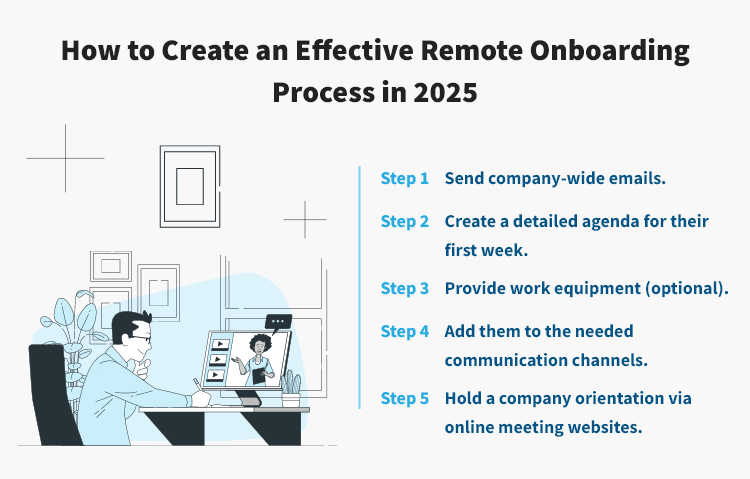
Sending company-wide emails welcoming new employees to their new responsibilities helps inform them of their primary responsibilities moving forward. Additionally, it provides current employees with a heads-up idea of whether or not they’re responsible for training the new hires.
The first email from your company that new hires will receive should contain their start date, their immediate heads, and their contact information, and what they’ll be doing within their first couple of weeks after starting.
Since the remote onboarding program can take a week or two, new hires should have a detailed agenda of what the new hires are expected to do for their first couple of weeks at work.
It can be a calendar invite to on-boarding meetings, a simple brochure that includes the company’s mission and vision statements, along with some training pamphlets or training programs that they need to pass.
Although completely optional, companies can also provide their new remote workers with the necessary equipment that’s best suited for the company’s needs. This can help employees get a better head start within the company, along with ensuring that they’re properly equipped for their new role within the company. Almost 58% of companies provide new employees with new gear, and most of them have all the applications and programs that the company requires.
Yes, it’s an optional step; however, providing employees with their own gear via their IT team ensures a better work-life balance in the long run. This is because they no longer have to use their own personal equipment to work, and they can fully relax after work by turning off the company-provided device.
Companies can also get their IT department to fully set up tracking tools for remote team members and collaboration software that employees might need in their new job. This is to ensure that managers can track their progress and to ensure that technical issues can be properly tracked.
Adding new employees to the company’s communication channels ensures that they can properly communicate with everyone within the company, like their direct manager, whom they need to reach beforehand, along with allowing them to meet their new team members and build relationships.
Lastly, companies should hold a company orientation to formally onboard remote employees to the organization via video call or team meeting software. It can be done via different online meeting websites like Zoom, Google Meets, or Teams – it doesn’t matter which, as long as it allows new hires to meet their new coworkers and for the latter to answer questions new employees may have.
The online meeting allows employees to hit the ground running even within their first week and ensure that their training sessions run efficiently. If done correctly, the orientation can help with relationship building for new hires and create a smoother overall project management.
Providing new employees with an onboarding buddy on their first day is also an effective tool to help provide their new colleagues with a warm welcome to the team. Creating a buddy system is one of the best practices for new coworkers as it allows them to offer support to each other, which can boost productivity.
Welcoming employees for remote work can be difficult but successfully onboarding them isn't impossible. Everything should be factored into ensuring that they have full onboarding experience. Yes, the right consultant can help alleviate the stress, but it's highly recommended for companies to come up with an onboarding plan of their own to ensure that everyone in their remote roles can fully grasp the overall company culture.

The latest research, expert advice, and compensation best practices all in one place.
Blog
Bringing trusted compensation intelligence and seamless planning to even more ADP users.

Blog
Learn how to train managers for effective pay conversations and build trust.

Blog
Total rewards package flexibility lets employees choose what matters - pay, perks, and benefits tailored to their needs.