Blog
Get Pay Right on ADP Workforce Now® Next Gen™
Bringing trusted compensation intelligence and seamless planning to even more ADP users.
Written by Salary.com Staff
June 12, 2026

An incentive program is a type of compensation that pays employees when they achieve specific goals for the company. These incentives can be used to motivate employees and attract and retain quality employees for the company. These are part of the total rewards required for the human resources and compensation departments of the company.
This guide will help you create an incentive program that has a positive impact on your company. Many of the techniques mentioned in this article have been used successfully by other companies. Following these steps will help to create a reward program that motivates your employees and aligns with your company's goals.
An incentive program rewards employees with additional pay or benefits when they meet predefined targets. This is beyond the salary offered to employees. Organizations implement reward programs to increase employee productivity and encourage innovation. There are many types of reward programs out there for organizations to choose from.
Compensation teams create incentive programs that suit the company. They seek to find a balance between cost and motivation for employees. Reward programs include various metrics to suit the company's needs. Additionally, these programs are regularly reviewed to ensure they still meet the company's current needs.
HR teams frequently use CompAnalyst® to build compensation structures aligned with incentive opportunities. This tool helps organizations determine fair pay ranges tied to performance incentives.
Pay-for-performance ties a portion of compensation to measurable individuals, team, or company results.
Setting specific and achievable goals at the beginning of a performance period.
Employees will only earn their variable rewards if they achieve these goals.
Organizations have more control over their labor costs with this program.
Implementing a program that allows employees and organizations to regularly track the employee's progress towards the established goals ensures that they remain engaged and allows for adjustments to be made to the goals halfway through the performance period.
Variable pay refers to the non-fixed portion of compensation that fluctuates based on performance or results.
Includes short-term (annual) bonuses and long-term (performance share/cash) plans
Allows companies to share the financial success of the organization with employees while maintaining a baseline salary
Helps to retain employees due to the potential for higher earnings through variable pay compared to the maximum earnings offered by a fixed salary
Often targeted between 80-90% base pay for non-sales positions and a higher percentage of variable pay for sales and managerial positions
Effective reward program design begins with clear business alignment and follows a disciplined process.
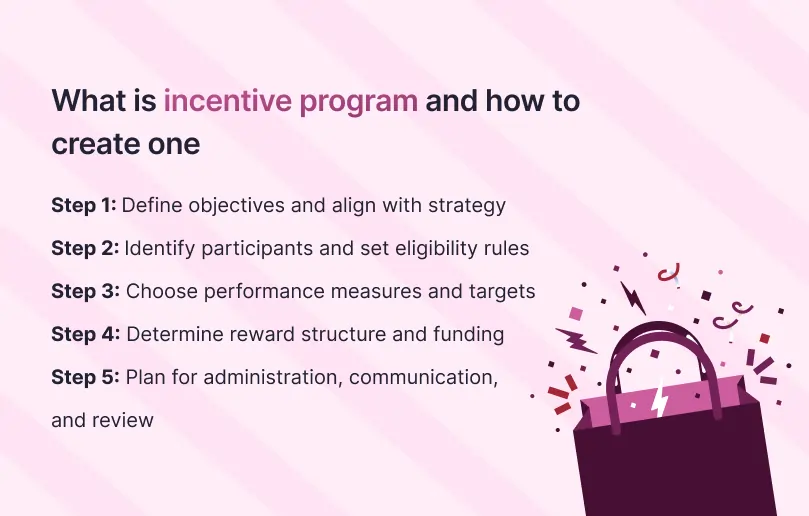
Identify the outcomes that you want to achieve from your program. Involve company leadership in this process to ensure that your program contributes to company goals. Ask stakeholders what they believe are the best goals for the program to achieve.
Decide which roles or levels of employees will participate in the program based on their ability to influence the results. Create clear eligibility criteria for participation. Consider different plan designs for different groups of employees if needed.
Organizations often use JobArchitect® to maintain accurate job records and participant classifications. This helps ensure proper incentive eligibility management.
Select a mix of financial and non-financial metrics that your employees can impact. Use historical data to establish goals that are challenging yet attainable. Limit the number of metrics you track.
Decide on payout levels. Establish a funding formula based on company performance if appropriate. Balance cash, equity, and other non-cash rewards based on what will motivate the audience.
Organizations frequently use CompAnalyst® to simulate compensation increases and incentive funding scenarios. This tool is relevant because modeling supports sustainable reward planning.
Define the governance processes, timelines, and tools for tracking the project. Build a communication plan from the start. Schedule regular evaluations of the project to assess its effectiveness and make improvements.
Strong governance keeps incentive programs fair, compliant, and effective over time.
Create a committee to oversee the design of the program, any changes, and the payouts.
Create documentation for all aspects of the program to ensure transparency.
Regularly review the program to adjust to changes in the business.
Ensure that the program is affordable by regularly reviewing and monitoring its costs.
Incentive plan governance is the framework of rules, oversight, and processes that guide program administration.
It reduces compliance risks and protects against legal or reputational issues.
Good governance builds trust with employees.
It allows the company to make adjustments to the plan as needed.
Regular audits and clawback provisions ensure that any misstatements or misconduct are addressed.
Paying equity in reward programs means providing equal opportunities for rewards regardless of gender, race, or other protected characteristics.
Conduct regular pay equity audits that include variable pay components.
Use objective criteria for performance goals and evaluations to avoid biases.
Provide training to managers regarding fair assessment of employees and monitor pay distributions by demographic groups.
Adjust the program as needed to remove any barriers to equal pay for all demographic groups.
Effective communication helps employees understand how their actions connect to rewards.
State the goals and metrics for the success of the communication plan.
Use multiple communication channels.
Include updates on the progress towards the stated goals.
Obtain feedback for the communication plan on a regular basis to improve future communications.
Success measurement focuses on both financial returns and behavioral impacts.
Track achievement rates against targets and payout levels.
Monitor employee engagement and retention within the participating groups.
Compare business metric values before and after the implementation of the program.
Collect feedback from the participants and managers.
ROI calculation compares the financial benefits generated by the program against its total costs.
Identify the incremental value that your program creates for the company - revenue, margin, etc.
Sum all of the costs associated with the program.
Apply the following formula: (Incremental Benefits - Total Costs) / Total Costs x 100
Consider both the short and long-term returns of the program (financial and non-financial)
Here are some FAQs for better understanding.
Yes, bonuses paid through reward programs are also taxable for supplemental wages. The flat rate for federal income taxes will be 22% for bonuses up to $1 million and 37% for any amounts above that threshold. Additionally, Social Security, Medicare, and any state taxes will also be withheld. Employees should review their taxes and filing requirements for their returns.
Risks include failing to withhold taxes, misclassifying employee payments, and not meeting reporting requirements on W-2 forms. Companies must follow the FLSA, tax codes, and equal pay laws. Poor company governance can cause penalties for employees. The compensation team must work with legal and tax experts to maintain proper documentation.
Stock options and share awards often have taxes applied at vesting or exercise (rather than at grant) at ordinary income rates based on the stock's market value at that time. This defers to the tax payment relative to bonuses. The gains from those shares may be taxable at capital gains rates in some instances.

The latest research, expert advice, and compensation best practices all in one place.
Blog
Bringing trusted compensation intelligence and seamless planning to even more ADP users.

Blog
Learn how to train managers for effective pay conversations and build trust.

Blog
Total rewards package flexibility lets employees choose what matters - pay, perks, and benefits tailored to their needs.