Blog
Get Pay Right on ADP Workforce Now® Next Gen™
Bringing trusted compensation intelligence and seamless planning to even more ADP users.
Written by Salary.com Staff
April 30, 2025

Mastering the essential core HR skills is more than just helpful—it’s crucial. Whether you’re overseeing employee engagement strategies, refining core skills, or improving daily HR practices, success depends on developing the right management skills. As businesses become more people-focused, an HR professional needs to be both strategic and adaptable to keep their teams thriving.
Effective HR management is critical to driving organizational success, and HR professionals must be equipped with the necessary skills and competencies to align HR strategies with business objectives.
Human resources skills and competencies are the foundation of any thriving human resource's function. These are the knowledge areas, behaviors, and abilities that allow HR professionals to effectively perform across various HR roles—from recruitment to employee development and organizational planning.
The HR field is an evolving domain that requires professionals to develop a diverse skill set, including both technical knowledge and strong interpersonal capabilities.
Important HR skills, such as communication and onboarding processes, are crucial for effectively bridging the relationship between a company and its employees, as well as facilitating the integration of new hires into the organizational culture.
At their core, HR competencies fall into three major categories:
Technical skills: Technical knowledge allows HR practitioners to manage systems and tools efficiently. This includes working with HR technology, handling data analytics, and staying informed about labor laws to ensure compliance.
Familiarity with tools like HRIS, applicant tracking systems, and digital performance tracking platforms is critical for modern HR effectiveness. Additionally, leveraging technical skills to align HR initiatives with the overall business strategy can significantly enhance organizational success.
Soft skills: Essential interpersonal qualities like communication skills, active listening, empathy, and conflict resolution help HR professionals resolve employee concerns and promote strong employee relations. These abilities contribute to a positive work environment and a healthy organizational culture, forming a critical part of every HR expert’s toolkit.
Strategic acumen: To truly shine, HR professionals develop the capacity for long-term planning. HR business partners play a crucial role in this by addressing challenges such as The Great Resignation and monitoring employee behavior. This means being able to align HR strategies with larger organizational goals, support workforce planning, and create systems that enable continuous improvement and organizational growth.
Automation might streamline some work, but administrative tasks and core decision-making still rely on sharp, proactive thinking. Creating a strong HR skills structure starts with defining key roles and required competencies. Salary.com's Skills & Competency Model provides the blueprint to develop those foundational abilities across HR functions.
In a people-centric profession like human resources, the ability to understand and manage emotions—your own and others’—along with strong interpersonal skills, is key. It empowers HR managers, HR leaders, and team members to navigate difficult conversations, promote inclusion, and manage crises with empathy and grace.
Demonstrating high EI builds respect and trust, both of which are essential to meaningful employee engagement. HR’s role in shaping culture hinges on these nuanced emotional cues.
HR professionals can benefit from exploring how EI fits into organizational success. Salary.com’s interactive Job Skills Model Tour shows how interpersonal competencies impact different HR roles.
Today’s human resources professionals wear many hats. From tech expert to culture coach, here are some key HR skills you need to succeed:
HR team members play a crucial role in various functions, including recruitment and onboarding processes, ensuring strategic alignment with organizational goals.
HR responsibilities like talent acquisition, onboarding, and engagement tracking are central to maintaining productive teams and addressing change.
Data analytics: Data analytics allows HR teams to identify patterns and create strategies for improvement. Metrics on turnover, satisfaction, and diversity inform better hiring and retention decisions. It also fuels evidence-based HR strategies that impact the bottom line.
HR technology: Smarter systems like self-service portals, LMS platforms, and HRIS make work more efficient. With streamlined HR processes, HR teams can focus on strategy rather than repetitive tasks. Mastering HR technology ensures smoother workflows and better reporting.
Performance management: Evaluating and guiding employee growth is a core HR responsibility. Whether through feedback systems or goal alignment, performance management plays a key role in organizational development. Ensuring the right people are developing in the right direction leads to stronger outcomes.
Workforce planning: Forecasting skills allow HR to meet future needs. Effective workforce planning ensures organizational resilience by aligning skills supply with demand, helping develop agile employees who adapt as goals shift.
Business acumen and strategy: Strong business acumen allows HR to think beyond compliance. Understanding budgets, long-term growth plans, and workforce needs enables HR to address organizational challenges and contribute meaningfully to business success.
Embedding organizational values in HR strategies, such as compensation and benefits, employee engagement, and fostering inclusive cultures, ensures alignment with broader company objectives.
Salary.com’s Human Resources Job List maps skills for each position, enabling focused upskilling and better job alignment.
Whether you’re an aspiring human resource professional or a seasoned director, building a solid HR skills list helps chart your growth. Here’s how:
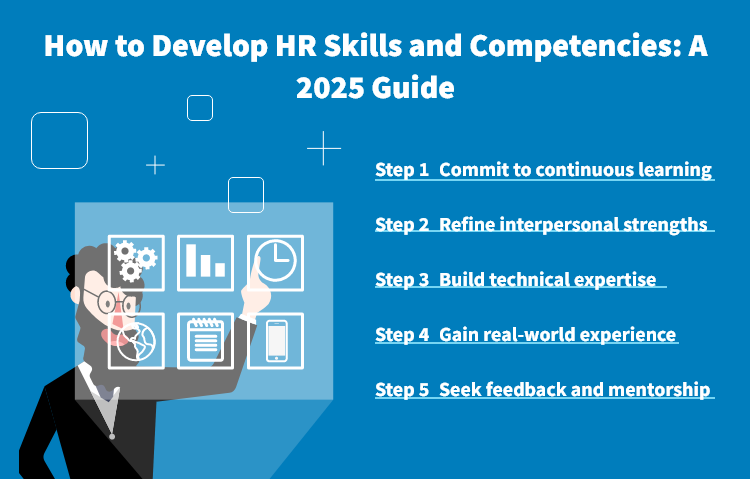
Human resource professionals must stay informed on evolving practices in human resource management. Enroll in relevant training programs, attend webinars, and read HR research. Skills like project management, digital onboarding, and diversity training are now vital.
Work on human connections. Practice active listening, give meaningful feedback, and model transparency. These actions are powerful in building a respectful, collaborative workplace.
From dashboards to compliance tools, technical fluency pays off. Know your systems and understand how to use data analysis and reports to influence business decisions.
Apply what you learn by supporting key projects. From writing handbooks to managing onboarding or helping with HR initiatives, experience builds judgment and leadership. The HR department plays a crucial role in facilitating these experiences, ensuring that training programs and initiatives align with broader business goals.
Ask mentors and experienced HR specialists for input. Engaging with peers improves your core competencies and keeps your career goals aligned with market trends.
HR management requires multiple proficiencies, including the most important HR skills, to work well across roles and teams. Below are examples of practical competencies that matter
Strategic Thinking: Thinking ahead and connecting daily work to big-picture organizational objectives drives impact.
Conflict Resolution: Effective resolution skills help preserve relationships and keep morale high.
Organizational Skills: Being detail-oriented and process-driven supports smoother workflows and more reliable outcomes.
Legal and Ethical Skills: Following labor laws and ethical principles helps avoid issues and supports fairness.
Leadership Skills: Inspiring and directing teams creates alignment, motivation, and excellence in delivery.
Each of these human resources qualifications and skills helps shape a responsive, ethical, and efficient HR team. For HR professionals in client-facing or sales-driven environments, Salary.com’s Sales & Relationships Job List offers the competency maps needed to thrive.
Developing HR skills and competencies is about more than knowledge—it’s about influence. HR isn’t just about filling roles; it’s about shaping workplaces where people thrive, and goals get met. As expectations grow, so must your capacity to meet them.
From advancing employee engagement to supporting strategy and growth, HR’s influence is bigger than ever. And the HR professionals who continue to learn, adapt, and lead will shape the future of work itself. A positive workplace culture is essential for enhancing employee engagement, productivity, and overall organizational success.

The latest research, expert advice, and compensation best practices all in one place.
Blog
Bringing trusted compensation intelligence and seamless planning to even more ADP users.

Blog
Learn how to train managers for effective pay conversations and build trust.

Blog
Total rewards package flexibility lets employees choose what matters - pay, perks, and benefits tailored to their needs.