Blog
Get Pay Right on ADP Workforce Now® Next Gen™
Bringing trusted compensation intelligence and seamless planning to even more ADP users.
Written by Salary.com Staff
November 08, 2024

For an HR professional, few things can disturb workplace harmony like dealing with a disgruntled employee. Supporting someone who is upset can be challenging, and staying calm during these situations can be even harder.
Auto-audit pay gaps. Eliminate bias before it strikes.
These uncomfortable interactions can stay in your mind, making it difficult to focus on your next task or support other team members. If you are wondering how to handle a disgruntled employee, it is important to create a positive work environment while addressing their concerns.
A disgruntled employee refers to someone who is unhappy or dissatisfied with their job, workplace, or employer. This can happen when they feel undervalued, overworked, underpaid, or when their expectations do not match their actual experiences.
Disgruntled or dissatisfied employee behavior can vary, but often a disgruntled employee behaves in ways such as becoming withdrawn, demonstrating poor performance, or, worst of all, engaging in workplace violence. They might start complaining frequently, criticizing their colleagues or superiors, or even sabotaging work projects.
To identify a disgruntled or unhappy employee, consider these telltale signs:
Noticeable drop in work output or missed deadlines.
Consistently complaining or expressing pessimism.
Frequent absences or arriving late without valid reasons.
Reduced participation in team activities and social interactions.
Displaying anger, frustration, or engaging in conflicts.
Organizations that prioritize pay equity see 13% higher engagement levels and are 19% more likely to exceed productivity averages, which helps reduce disgruntled employees. Salary.com's Pay Equity tool offers a complete solution for addressing the gender pay gap, pay raises, and pay inequality, helping organizations achieve pay equity.
Disgruntled employees can greatly affect workplace morale, productivity, and overall success. A study found that one unhappy employee can negatively impact other employees. This can result in lower job satisfaction, higher turnover rates, and decreased productivity.
According to a report, more than half of employees say they’re not very productive at work. Every disengaged employee has a reason for their negative attitude, like lack of recognition, noncompetitive pay, toxic company culture, negative working environment, or too much work. Additionally, these disengaged employees cost the world $8.8 trillion in lost productivity, according to another report.
Replacing an employee can be expensive as well. Research shows it can cost 50%-60% of an employee's annual salary. So, for a disgruntled employee with a $60,000 annual salary, the replacement cost could range from $30,000 to $36,000.
With this in mind, organizations should address employee disengagement and prioritize employee satisfaction and well-being. Managing disgruntled or unhappy employees effectively can lead to several benefits, such as:
Getting more work done
Keeping employees longer and spending less on hiring
Making the team feel better and work better together
Keeping employees happy and staying with the company longer
Handling a disgruntled worker can be tough, but knowing how to handle a disgruntled employee is important for maintaining a positive work environment. Here are the steps to take:
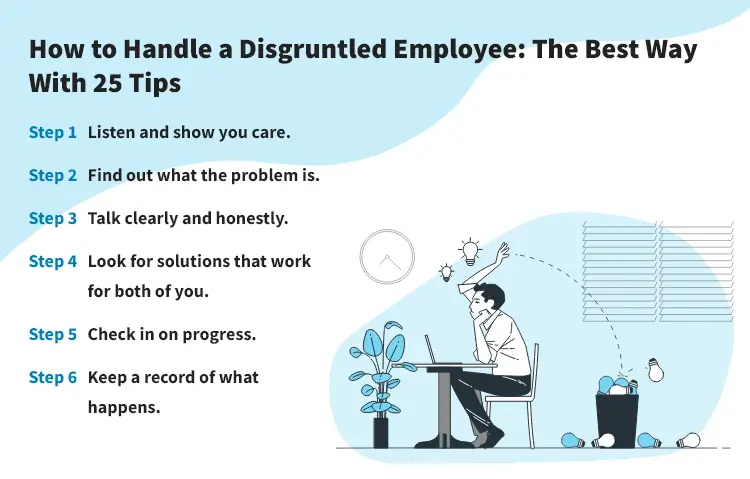
Listening to an employee's concerns in a private office or conference room is important to ensure confidentiality and create a safe space for open dialogue. Focus on them, avoid interruptions, and show empathy. Acknowledge their feelings to build trust and demonstrate that you care. Use techniques like nodding and repeating what they say to show you are engaged.
After building rapport, find out the specific issue that contributes to employee dissatisfaction. Ask open-ended questions to help them share their thoughts. Stay neutral and let them explain in their own words, clarifying any misunderstandings that may have contributed to their feelings.
If your organization has pay gaps causing disgruntled employees, a pay gap assessment can help you evaluate your compensation practices and ensure they align with your business goals and DE&I initiatives.
Once you understand the problem, talk openly about it. Be clear about any policies, decisions, or changes that may have affected the employee. Be honest about what you can and cannot change. Clear communication sets realistic expectations and can reduce frustration.
Work with the employee to find solutions to their concerns, such as professional development if they seek growth opportunities, or provide work-life balance if they are overwhelmed with their workload. Encourage them to share their ideas and be open to negotiation. Aim for solutions that meet both the employee's needs and the organization's goals.
After implementing solutions, check in with the employee to see how they feel and monitor their progress. Regular follow-ups show your commitment to resolving their concerns and help catch any remaining issues before they get worse.
If they feel disgruntled due to poor communication about pay and career advancement, provide solutions like Total Compensation Statements or clear information on career progression.
Keeping a record of the entire process, including discussions, solutions, and follow-up actions, is important. This documentation helps in the future, especially if similar issues arise or disputes occur. It also shows accountability and helps evaluate how effective the resolution strategies were.
Now that you know how to handle a disgruntled employee, here are some additional tips to improve your approach:
Practice active listening to fully understand the employee's perspective and find a solution.
Show empathy to build trust and make communication easier.
Respond promptly to prevent the issue from escalating and show respect.
Seek the underlying cause of the problem for a more effective solution.
Keep communication confidential to build trust and encourage openness.
Escalate to upper management if the issue cannot be resolved at the supervisor level.
Offer support and resources like coaching or counseling to help the employee improve.
Address the issue in a more private setting to avoid public confrontations and maintain a respectful environment.
Review company policies to ensure you handle the situation in a professional manner.
Remain professional by staying calm, even if the disgruntled or angry employee is behaving unprofessionally.
Acknowledge the employee's feelings to validate their concerns and make them feel heard.
Stay neutral to avoid taking sides and maintain objectivity during discussions.
Clarify expectations by ensuring the employee understands their role and responsibilities clearly.
Provide constructive feedback to help the employee improve in areas that need attention.
Stay patient and give the employee time to process the situation without rushing them.
Encourage self-reflection by asking the employee to consider how their actions may be affecting the situation.
Recognize progress by acknowledging any positive changes the employee makes along the way.
Use positive reinforcement to encourage good behavior and performance improvements.
Promote a positive work environment to help reduce employee frustration and prevent future issues.
Be consistent in your approach to ensure fairness and build trust with the employee.
Set clear goals and follow-up actions to ensure both parties know the next steps.
Promote open communication by encouraging employees to express concerns early on.
Involve HR when needed for guidance on how to address sensitive or complex situations.
Keep emotions in check to avoid reacting impulsively to the employee’s behavior.
Learn from the situation to improve your approach for handling future concerns more effectively.
One-click compliance reports for state pay equity laws.
Learning how to handle a disgruntled employee can be rewarding, especially when it resolves conflicts, improves communication, and creates a better work environment. If disengagement is due to uncompetitive pay, it's time to review your compensation strategy. Salary.com's Pay Equity tool helps you analyze and fix pay gaps, ensuring fair and competitive pay to boost engagement and retention.

The latest research, expert advice, and compensation best practices all in one place.
Blog
Bringing trusted compensation intelligence and seamless planning to even more ADP users.

Blog
Learn how to train managers for effective pay conversations and build trust.

Blog
Total rewards package flexibility lets employees choose what matters - pay, perks, and benefits tailored to their needs.