Blog
Get Pay Right on ADP Workforce Now® Next Gen™
Bringing trusted compensation intelligence and seamless planning to even more ADP users.
Written by Salary.com Staff
October 09, 2026

Organizational change affects more than systems, policies, or processes. A new HR platform, restructuring effort, compensation program, or performance-management process can also reshape employee responsibilities, workflows, expectations, and daily routines, which is why a clear change management plan is essential.
Without a structured approach, teams can face inconsistent communication, unclear responsibilities, employee confusion, and resistance that slows implementation. A well-designed plan gives your organization a framework for preparing people, supporting the transition, and measuring adoption, and this article covers its meaning, key elements, creation steps, and practical change management plan examples.
A change management plan is a structured document or framework that outlines how an organization will prepare, support, and guide employees and stakeholders through change. Effective change management focuses on helping people understand the transformation, adapt to new expectations, and sustain the behaviors needed for successful implementation.
Here, the focus is on the people and organizational side of the change process, rather than project change-control activities involving scope, budgets, or technical requests. A strong plan sets clear goals and responsibilities, coordinates communication and training, identifies resistance and risks, and supports the employee adoption and sustained behavior change needed to achieve measurable outcomes.
For example, a new HRIS may change workflows, responsibilities, and everyday HR tasks. Planning for communication, manager preparation, employee support, and implementation barriers can help reduce disruption and improve adoption.
Organizational change may also reshape job responsibilities and reporting structures. JobArchitect® Max helps HR teams standardize job content and manage role-related workflows as workforce structures evolve, making role clarity one important element of an effective plan.
An effective change management plan brings the major people, communication, implementation, and measurement activities into one structured framework. A strong plan typically addresses workforce impact, stakeholders, communication, training, implementation, resistance, and evaluation so teams can coordinate the different parts of the change.
Change objectives: Define the proposed change, why it is needed, and the desired outcomes.
Scope and impact: Identify affected employees, roles, teams, systems, workflows, and new processes, using a gap analysis where needed to compare current and future requirements.
Stakeholders and responsibilities: Clarify the change sponsors, senior leaders, change leaders, managers, and others responsible for implementation and employee support.
Communication plan: Determine what key stakeholders need to know, when messages should be shared, and which channels will support transparent communication through a clear communication plan.
Employee support and training: Plan training sessions, coaching, job aids, manager support, and other resources needed to close skill gaps.
Changes to roles can also create new skill requirements. Salary.com's Skills and Competency Library helps HR teams define competencies, identify capability gaps, and connect changing job expectations with employee development.
Timeline and milestones: Establish realistic timelines for preparation, implementation, launch, and follow-up.
Resistance and risk management: Anticipate employee resistance, potential risks, and actions for addressing issues.
Measures of success: Track adoption, feedback, behavior changes, productivity, and other measurable outcomes.
The exact elements will vary depending on the scale and complexity of the change. Once these components are defined, your team can turn them into a practical action plan using a structured step-by-step process.
The level of detail will vary by initiative, but most organizations can follow the same core change management process. The goal is to turn the proposed change into practical actions that employees, managers, and change leaders can follow.
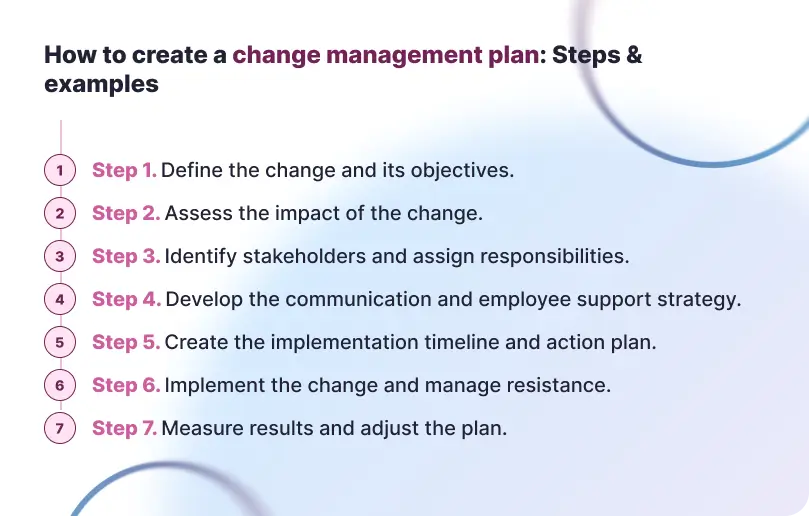
Start by describing the current state, the desired future state, and the business reason for the change, then establish a shared vision for where the organization is going. Set specific desired outcomes and measurable success criteria early so later metrics can show whether the initiative achieved successful outcomes.
Conduct an impact assessment to identify affected teams, roles, workflows, systems, and employee experiences. Consider readiness, workload changes, skill gaps, and potential barriers because groups experiencing greater disruption may need more communication, training, or support throughout the transition.
Identify executive sponsors, HR, project managers, people managers, subject-matter experts, employees, and other key stakeholders involved in the change. Assign clear responsibilities for decision-making, communication, training, employee support, and monitoring rather than simply listing names, with particular attention to managers who provide day-to-day guidance.
Plan what each stakeholder group needs to know, when messages should be delivered, which channels to use, and who should communicate them. Use effective communication and feedback opportunities to strengthen employee engagement, while providing FAQs, training sessions, job aids, coaching, and manager resources.
Communication, training, stakeholder engagement, and resistance planning should work together throughout the change process. Coordinating these activities helps employees understand what is expected, build confidence, and prepare for new processes before implementation.
Turn the strategy into an action plan that organizes specific tasks across preparation, launch, and follow-up, with owners, milestones, dependencies, and realistic timelines. Coordinate communications, training, manager preparation, and system changes so teams understand the implementation process and what must happen when.
Technology changes may also require careful coordination between HR systems and employee data. Salary.com's HRIS and HCM integrations connect existing HR platforms with Salary.com solutions, helping maintain more consistent employee and job data during implementation.
Launch planned communications, training, coaching, and manager support while collecting employee feedback and monitoring adoption. Key organizational change management practices include stakeholder communication, addressing barriers, building workforce skills, assessing readiness, and measuring results.
Treat confusion, low participation, workarounds, or recurring concerns as signals for the change management team to investigate underlying causes and focus on addressing resistance through communication, training, or other support rather than assuming all employee resistance reflects unwillingness to change.
Measure progress against the objectives and milestones established in Step 1 using indicators such as training completion, system adoption, process compliance, employee feedback, productivity, or business results. Compare actual outcomes with targets and adjust communication, manager support, training, or processes where needed to keep the change management plan on track.
Practical change management plan examples can look very different depending on the type of organizational change involved. Stakeholder impact, communication needs, training requirements, employee concerns, and implementation timelines should shape the priorities in each plan.
| Change scenario | Key plan priorities | Example actions |
|---|---|---|
| HR technology implementation | Adoption, training, process transition | Assess affected workflows, prepare role-Assess affected workflows, prepare role-specific training, equip managers or change agents, provide go-live support, and track employee questions and system adoption. |
| Organizational restructuring | Role clarity, communication, manager support | Map affected employees and positions, document new reporting relationships, prepare manager talking points, explain role changes, and identify any communication or training needs created by the new structure. |
| New compensation or performance process | Understanding, consistency, manager capability | Explain the new process, train managers, provide FAQs and talking points, clarify how performance and pay decisions connect, and monitor recurring employee questions. Salary.com's 2026 pay communication research reinforces the importance of manager preparation and consistent communication. |
Organizations should adapt the same core framework to the workforce impact, complexity, and scope of each change. A larger or more disruptive initiative will typically require more detailed communication, training, stakeholder engagement, and follow-up.
A few common questions can help clarify how a change management plan works in practice. The answers below cover its typical contents, ownership, and how it differs from a broader change management strategy.
A change management plan should include clear objectives, scope and employee impact, key stakeholders, roles and responsibilities, a communication plan, employee training and support, an implementation timeline, resistance and risk management, and measures of success. Larger or more complex changes may also require separate communication, training, or stakeholder-management plans to support successful implementation and adoption.
Responsibility depends on the organization and initiative, but a change manager, HR professional, transformation lead, project leader, or cross-functional team may coordinate the plan. Effective change management also relies on shared responsibilities across sponsors, managers, functional leaders, communications teams, and other stakeholders involved in implementation and adoption.
A change management strategy defines the broader direction for managing the people side of organizational change, including how change efforts support business goals. A plan turns that broader approach into specific actions, responsibilities, timelines, communications, training, and measurements for an individual initiative.
Organizational changes that affect roles, responsibilities, or reporting structures also require accurate job information throughout the transition. JobArchitect® Max helps HR teams maintain consistent job architecture, clarify role expectations, and keep workforce structures aligned as organizational needs change.

The latest research, expert advice, and compensation best practices all in one place.
Blog
Bringing trusted compensation intelligence and seamless planning to even more ADP users.

Blog
Learn how to train managers for effective pay conversations and build trust.

Blog
Total rewards package flexibility lets employees choose what matters - pay, perks, and benefits tailored to their needs.