Blog
Get Pay Right on ADP Workforce Now® Next Gen™
Bringing trusted compensation intelligence and seamless planning to even more ADP users.
Written by Salary.com Staff
May 16, 2025

As businesses continue to navigate a rapidly changing landscape, talent management becomes a key driver of success. Companies are increasingly leveraging internal platforms to promote careers, employee development, and organizational growth, promoting career growth, internal mobility, and overall workforce agility.
This 2025 guide explores how to implement an internal system successfully, highlighting the benefits, steps, and real-world examples of companies excelling in this area.
A talent marketplace is a platform that connects employees with available job opportunities, projects, and skills development options within their organization. It allows for a more dynamic and agile approach to matching skills with suitable projects and roles.
Talent platforms are built to improve workforce agility by providing employees with visibility into internal job opportunities that match their skills and aspirations. These systems enable organizations to tap into existing talent pools, reducing the need for external hiring and supporting the internal mobility of employees.
If your company is focused on aligning compensation with talent strategies, Salary.com’s compensation and benefits program design helps ensure rewards and recognition are aligned with the talent strategy.
Implementing a system that connects employees to internal opportunities offers several key benefits.
1. Improving employee engagement and retention
An internal platform empowers employees to take ownership of their career growth by providing access to development opportunities.
2. Facilitating internal mobility and cross-departmental collaboration
It is crucial for organizations that want to retain top talent and maintain a flexible workforce by offering employees the chance to explore roles in different departments.
3. Supporting innovation through diverse skills
An internal talent platform enables organizations to access a broader range of skills and knowledge across the business. Talent marketplaces facilitate experiential learning by matching workers with projects that allow them to put their skills into practice.
4. Reducing external hiring costs and developing internal talent
Using an internal talent marketplace allows employers to reduce the costs associated with external hiring by developing and promoting their existing employees.
5. Building a culture of career growth and skills advancement
Implementing a talent marketplace encourages a culture of continuous learning and career advancement. With employees gaining easy access to new projects and developmental programs, they can build new skills, take on diverse roles, and grow within the organization.
To build clear career paths and enhance internal progression, Salary.com’s career frameworks consulting assists organizations in structuring employee development effectively.
If your organization is experiencing any of the following challenges, it may be time to consider implementing a system for internal mobility:
High turnover rates due to lack of career development: Employees may leave if they perceive limited opportunities for growth and advancement within the company.
Skills gaps in critical business areas: If certain roles or projects are consistently underperformed due to a lack of qualified internal talent, it may be a sign that internal systems are needed. This can help address the evolving demand for skills and job roles, allowing organizations to quickly adapt.
Inefficient allocation of projects: Without visibility into employees’ skills and interests, organizations may struggle to assign the right people to the right projects.
Lack of talent visibility: If managers are unaware of employees’ full capabilities, they may miss out on internal resources that could be crucial for business success.
To further uncover hidden workforce opportunities and challenges, Salary.com’s HR analytics and benchmarking consulting provides powerful data insights to drive smarter talent decisions.
Implementing an internal talent marketplace requires careful planning and execution. Below are the key steps to ensure its successful implementation:
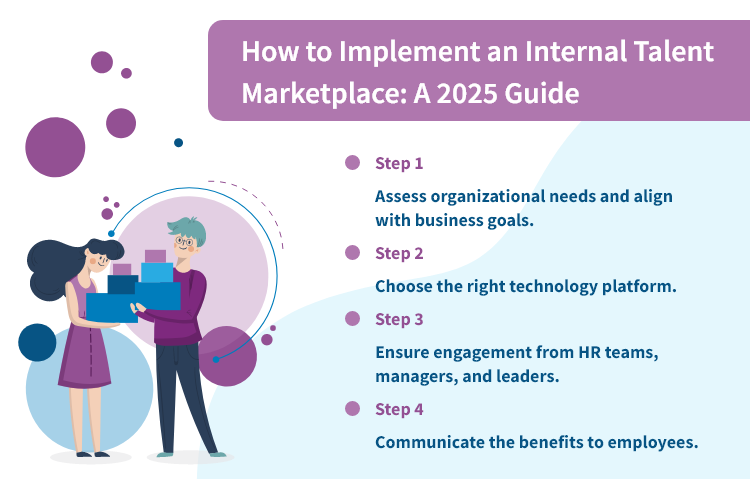
Before implementing an internal talent marketplace, assess your organization’s specific needs and goals. Executives play a crucial role in supporting the initiative by promoting agility and accessing skilled internal candidates quickly.
Consider factors such as current talent gaps, internal mobility challenges, and the organizational culture. Align the system’s objectives with the company’s strategic goals to ensure it supports business growth and employee development.
The technology platform used to host the system is important for its success. Choose a platform that offers a complete transformation of HR practices, ensuring it is user-friendly, scalable, and integrates well with your existing HR systems. Look for features such as skill tracking, personalized recommendations, and easy navigation to enhance employee engagement.
For the internal talent marketplace to succeed, HR teams, managers, and organizational leaders must actively support it. HR should play a central role in driving the initiative and ensuring that managers understand the benefits of internal mobility. Leaders should encourage participation and promote the platform as a tool for fostering career growth.
Effective communication is key to the success of the internal talent marketplace. Employees need to understand how the platform can benefit their career development and how they can use it to explore new opportunities. Provide clear instructions on how to set up profiles, browse opportunities, and engage with the platform.
To ensure that your internal talent platform thrives, consider the following best practices:
Encourage continuous training and development: Provide employees with the tools and resources they need to continuously develop new skills and stay competitive in the market.
Offer a user-friendly platform: The system should be intuitive and easy to use, enabling employees to quickly explore career and project opportunities.
Ensure clear visibility into available roles: Create transparency around job openings, project needs, and the skills required, so employees can make informed decisions about pursuing new opportunities.
Prepare employees and management for changes: Emphasize the importance of strategic planning, effective communication, and skill development to ensure a smooth transition and ongoing adaptability in the workforce.
If your company needs better role visibility, Salary.com’s job evaluation consulting ensures job roles are defined clearly, improving visibility and alignment.
Several leading companies have successfully implemented internal systems, providing valuable insights into their benefits.
Unilever: Unilever connects both internal and external talent, enabling employees to join new roles and projects that align with their skills. The system promotes internal mobility and supports employees’ career growth, while also helping the company access a diverse pool of talent.
IBM: IBM uses its internal platform to provide employees with personalized development opportunities where they can learn new skills based on their aspirations. The system enhances employee engagement and fosters a culture of internal mobility, where employees can pursue new roles across the organization.
Mastercard: Mastercard has leveraged its internal talent marketplace to address evolving talent needs, creating direction in an uncertain environment. By utilizing AI-powered platforms, Mastercard has been able to connect employees with new roles and projects that align with their skills, leading to significant cost savings and improved workforce productivity.
Implementing an internal talent marketplace is a powerful strategy for fostering career growth, improving workforce agility, and increasing organizational success. Connecting employees with opportunities for development helps organizations retain and attract new talent, improve innovation, and ensure that their workforce is always aligned with business goals.

The latest research, expert advice, and compensation best practices all in one place.
Blog
Bringing trusted compensation intelligence and seamless planning to even more ADP users.

Blog
Learn how to train managers for effective pay conversations and build trust.

Blog
Total rewards package flexibility lets employees choose what matters - pay, perks, and benefits tailored to their needs.