Blog
Get Pay Right on ADP Workforce Now® Next Gen™
Bringing trusted compensation intelligence and seamless planning to even more ADP users.
Written by Salary.com Staff
July 17, 2026

A DEI audit examines an organization's current DEI practices. It aims to find opportunities to build a more equitable workplace for everyone in the organization. This audit benefits the HR and compensation departments as it can create systems that are fair for all employees.
This guide will walk you through the definitions, importance, steps, and connections of DEI to compensation. You will come away with ideas about how to improve your organization's diversity, equity, and inclusion strategy.
A DEI audit looks at how an organization supports diversity, equity, and inclusion. It examines the organization's hiring, pay, promotion, and culture practices to determine how to create a more inclusive work environment for all of the organization's employees.
Professionals collect demographic data and information about the organization's policies from various demographic groups within the organization. They use surveys, focus groups, and analytical tools to gather this information to gain a holistic view of the organization and its practices. The outcome of a DEI audit includes insights that can guide an organization to make real changes.
A comprehensive diversity, equity, and inclusion audit goes beyond the surface level to examine how an organization's cultures and practices support diversity and inclusion. The HR and organizational leaders use an equity lens to examine their organization to attract diverse employees and to avoid reputational damage.
A DEI audit helps organizations build stronger, fairer teams and support better business results through equitable practices.
It identifies the gaps in representation and the challenges that underrepresented groups may face.
It promotes equal opportunities for all employees by reviewing policies that impact job satisfaction and retention.
It reduces the risk of lawsuits by ensuring that federal contractors follow the federal laws regarding fair treatment of employees.
It takes feedback from employees and creates a plan to bring about positive change and create a thriving workplace for all employees.
It promotes equal opportunities for all employees by reviewing policies that impact job satisfaction and retention. Organizations conducting compensation fairness reviews may use CompAnalyst® Pay Equity Suite, which evaluates pay practices and helps employers demonstrate their commitment to equity.
A DEI audit improves decision-making by revealing hidden patterns and biases in data. It gives HR teams clear facts to guide smarter choices.
Provides a holistic view of how to impact people of diverse backgrounds and prioritize.
Uncover any biases in hiring or promotions through feedback from the employees.
Discovers which DEI initiatives provide the best results.
Develop better relationships with employees by including their diverse perspectives in decision making.
Diversity, equity and inclusion shape audit frameworks by providing standards for fairness and belonging. These principles guide the entire review process.
They ensure that the audit process examines the representation of different demographic groups at every level.
They focus on creating an equitable workplace for individuals of different backgrounds.
They use equality impact assessments to evaluate how specific changes will affect different groups within the company.
They work to strengthen the culture of inclusion by ensuring that all individuals feel included.
DEI frameworks use specific metrics to track progress and find problems. These numbers turn goals into something measurable.
Representation rates of different demographic groups within each department and at different levels of leadership
Pay equity gaps according to gender, race, and other factors
Engagement and job satisfaction survey results according to different demographic groups
Promotion and retention rates of underrepresented groups compared to other employee groups within the company
DEI influences compensation fairness by highlighting pays differences across groups. It drives organizations toward truly equitable pay practices.
Requires conducting thorough analysis of pay equity and demographic data to fix existing gaps
Base pay according to performance and the role rather than the applicant's background
Promote transparency in pay structures
Link DEI programs to total rewards for attracting diverse employees
Promotes transparency in pay structures. Organizations can support this objective with CompAnalyst® which helps create consistent salary ranges and compensation frameworks
Implementing a diversity, equity, and inclusion audit uses a clear, step-by-step approach that gathers data and leads to action. Each step supports lasting improvement.
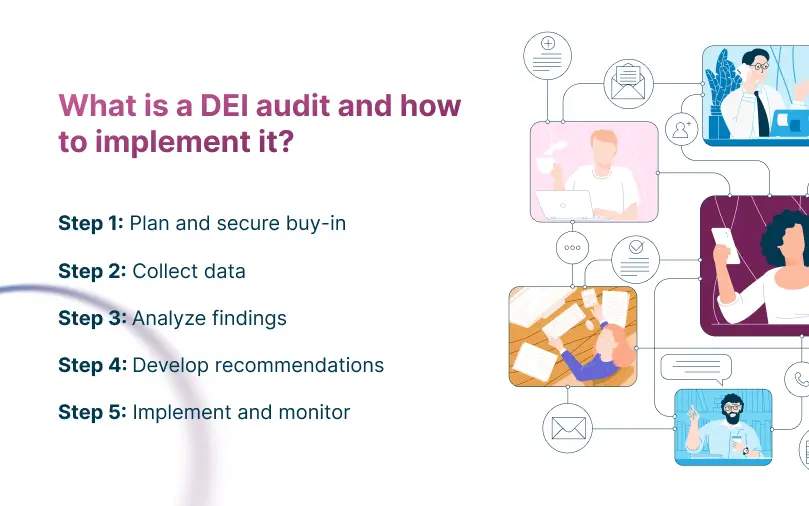
Begin with establishing goals and gaining support for leadership. Form the team and establish timelines. Gather demographic data and establish confidentiality rules. These steps will gain the commitment of the organization to the project.
Survey employees, focus groups within employee resource groups, and review HR records. Review company policies, compensation structures, and workplace culture. Ask for input from several different employee groups to ensure diverse perspectives are obtained. Ensure that all sensitive information is protected during the audit process.
Look for patterns within each of these elements using an equity lens to analyze the team. Identify areas for improvement and existing biases within the company. Use these findings to make recommendations for improving the company's current practices.
HR teams can leverage CompAnalyst® to evaluate workforce trends, compensation patterns, and demographic data more effectively.
Build a detailed plan with specific steps to address the problem. Consider which solutions will best help underrepresented groups within the company. Ask the HR department and employees what solutions would be most effective for the company overall.
Launch with good communication and training. Use updated metrics to track the success of your efforts. Collect feedback from your employees and adjust accordingly. Celebrate your successes in creating an inclusive work environment.
HR analytics and compensation benchmarking give solid data support for DEI audits. They help compensation professionals turn numbers into useful insights.
To show patterns in pay and promotions across different demographics
To allow for fair comparisons between companies and market standards
To monitor the success of DEI initiatives
To demonstrate commitment to equity in attracting diverse employees
HR analytics improves DEI audit accuracy with precise, timely data. It removes guesswork and reveals actual issues.
By demographic groups for better visibility.
Tracks changes over time to measure the impact of efforts to improve inclusion.
Combines employee feedback with metrics for a balanced view.
Identifies risks early on through trend analysis.
Compensation benchmarking plays a vital role by comparing internal pay to external markets. It keeps practicing competitively and fairly.
Identifies pay gaps for specific groups and fixes them.
Ensures that employee rewards align with the latest strategies in the field.
Strengthens the overall DEI strategy.
Gives leaders the evidence they need to make changes.
Here are some FAQs for better understanding.
A DEI audit focuses on building an inclusive culture while a compliance audit checks legal rules. Here is a simple comparison
| Aspect | DEI audit | Compliance audit |
|---|---|---|
| Focus | Diversity, equity, inclusion, and culture | Meeting laws and avoiding penalties |
| Scope | Practices, culture, and employee experience | Policies and regulatory documentation |
| Outcome | Actionable insights and positive change | Legal compliance confirmation |
| Approach | Surveys, focus groups, and metrics | Records review against federal laws |
HR departments often face challenges such as data privacy and receiving feedback on performance. Other challenges include limited resources and changing legislation. The HR department must continue to adapt to these challenges while focusing on providing employees with fair practices.
Some of the most popular tools include survey platforms, analytics software, and compensation benchmarking databases. These allow organizations to process demographic data and create reports. Many organizations use HR systems with AI support to cut the processing time for HR data.

The latest research, expert advice, and compensation best practices all in one place.
Blog
Bringing trusted compensation intelligence and seamless planning to even more ADP users.

Blog
Learn how to train managers for effective pay conversations and build trust.

Blog
Total rewards package flexibility lets employees choose what matters - pay, perks, and benefits tailored to their needs.