Blog
Get Pay Right on ADP Workforce Now® Next Gen™
Bringing trusted compensation intelligence and seamless planning to even more ADP users.
Written by Salary.com Staff
August 09, 2024

Improving your auditing skills is essential for staying competitive in the business environment. Competitive audit skills help you secure a job and ensure the financial integrity of your employer's organization.
With Salary.com's Skills Library, you will have a convenient way to expand your industry knowledge as you will gain access to a collection of skills and competency frameworks that can help you improve your auditing skills.
Our Skills Library helps with skills-based pay by quickly grouping similar jobs with the same skills.
Auditing skills are the abilities to accurately examine and verify a company's financial records. These include fundamental skills like critical thinking and analytical thinking that ensure the reliability of financial reporting.
Improving and refining basic skills must be consistent to maintain their effectiveness. Auditors need to add new skills like business acumen to stand out in the field and compete in the developing business environment.
Salary.com's Skills Library is the industry's most comprehensive Al-powered software and data collection of skills that enable HR teams to hire, evaluate, and develop top talent.
Here are the common types of audits that you should focus on improving:
Internal audit
Ensure internal control and risk management through analyzing financial records, policies, and operations as an internal auditor.
Operational audit
Work in an internal auditors committee to evaluate the internal audit process, identify discrepancies, and make recommendations for operational improvements.
External audit
Verify financial statements and regulatory compliance to ensure transparency and accountability for stakeholders as an independent auditor.
Financial audit
Work in an external auditors committee to assure stakeholders of the reliability of financial reports by verifying the audit data.
Compliance audit
Ensure that operations and practices comply with legal standards and organizational guidelines as either an external or internal auditor.
Tax audit
Refer financial records, audit evidence, and regulatory scrutiny to ensure accurate tax reporting and compliance with tax laws as an Internal Revenue Service (IRS) agent.
Developing your audit skills is important for you to handle the field's high demands and stand out among competitors. Staying relevant in the industry can boost your marketability as 58% of auditing firms struggle to find skilled auditors that meet their needs.
Thanks to Job Skills Model, your organization can acquire a competency framework to guide their job architecture, career pathing, and skill-based hiring initiatives so you can hire with confidence.
Auditors who improve their auditing skills can expect the following benefits:
Enhanced analytical skills
Sharpens ability to analyze financial data and identify patterns to make informed decisions.
Improved business acumen
Enhances understanding of business processes and financial health to provide valuable insights for company's operations.
Increased professional skepticism
Helps question financial statements and assess risks to audit quality and accuracy.
Better communication skills
Improves capacity to convey complex audit findings in a clear and understandable manner to other financial professionals.
Greater organizational skills
Boosts ability to manage financial reports that leads to an organized audit.
Continuous learning and adaptation
Allows update with the latest accounting standards, technology tools, and compliance knowledge to perform complex audits.
Salary.com's Competency Library provides talent management, learning and development, and HR with a common language and set of expectations for success.
Here are the top examples of auditing skills that are crucial for the auditing profession:
Top hard skills for auditing
Hard skills are specific and teachable abilities or knowledge sets that are often job-specific. Here are the top examples of hard skills for auditing process:
Analytical skills
Possess strong analytical skills to interpret complex financial data like a company's financial statements during a payroll audit to ensure financial scrutiny.
Critical thinking skills
Examine compliance knowledge and corporate governance issues to assess internal controls and enhance auditing processes.
Technical expertise
Conduct comprehensive audits and internal audits by having technology skills and a comprehensive understanding in audit software and data analytics tools.
Top soft skills for auditing
Soft skills are interpersonal and behavioral auditor skills that affect how effectively someone works with others. Here are the top examples of soft skills for auditing process:
Communication skills
Clearly explain the findings and recommendations to audit teams and external audit stakeholders to ensure effective communication.
Problem-solving skills
Identify issues in financial statements, propose process improvement solutions, and ensure compliance with accounting principles during internal and external audits.
Leadership skills
Guide audit teams, manage the demands of the auditing profession, and promote a collaborative audit environment to ensure that all audit processes are conducted efficiently.
Add skills and competency data from our Skills Library to attract the right candidates.
Honing and developing essential skills in auditing helps you to become a valuable auditor in the market. Here are some simple steps you can do to improve your auditing skills:
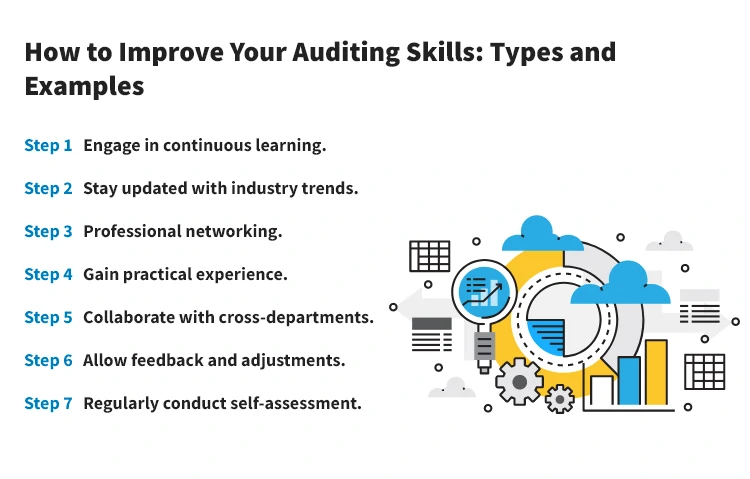
Take part in ongoing education by pursuing data analytics or acquiring advanced certifications such as Certified Internal Auditor (CIA), Certified Information Systems Auditor (CISA), or Certified Fraud Examiner (CFE). You can also take audit simulations, participate in case study discussions, and attend training or workshops. These activities help you stay updated with industry trends and best practices as they deepen your expertise and recognition in the field.
Stay informed about the latest developments and changes in auditing standards, regulations, and best practices. This includes new data analytics platforms, automated auditing software, and other technological resources that you need to learn to keep up in the modern market.
With Job Competency Model, organizations can acquire up-to-date skills and competency data for hiring, assessing, and developing top talent to fill the skills gap.
Build connections with peers and mentors within the auditing community. Link yourself with the experienced auditors you met through the training, workshops, certifications, and auditing classes you attended. This provides you opportunities to gain insights on audit efficiency and learn from their experiences in dealing with complex financial audits.
Gain hands-on experience by applying your learnings and advice you receive. Seek internships or apply for part-time and full-time jobs at auditing firms or any other related organizations. This enhances your ability to manage real-world financial complexities efficiently.
Understand the roles and operations of other departments by initiating discussions and meetings with them. Observe how audits are influenced by their functions and vice versa.
Send your audit reports to the shareholders and the board of directors for review. Collect any feedback or comments provided, document any issues or discrepancies noted, and make the necessary adjustments. This process helps you continuously improve as an auditor and meet the organization's audit standards.
Evaluate your auditing performance regularly by reflecting on your strengths and weaknesses. Use your critical thinking abilities to address any gaps for your ongoing skill enhancement and professional growth.
Auditors deal with the vast financial data analytics of organizations which in itself is no easy task. External and internal auditors need skills that would enable them to handle high job demands in the competitive auditing industry. Thanks to Salary.com's Skills Library and its comprehensive data collection of skills and competency frameworks, you can improve your auditing skills easier than ever.

The latest research, expert advice, and compensation best practices all in one place.
Blog
Bringing trusted compensation intelligence and seamless planning to even more ADP users.

Blog
Learn how to train managers for effective pay conversations and build trust.

Blog
Total rewards package flexibility lets employees choose what matters - pay, perks, and benefits tailored to their needs.