Blog
Get Pay Right on ADP Workforce Now® Next Gen™
Bringing trusted compensation intelligence and seamless planning to even more ADP users.
Written by Salary.com Staff
May 16, 2025

One powerful tool that HR professionals can leverage to achieve this is a realistic job preview (RJP). By offering job candidates a transparent view of what a role entails, companies can set realistic expectations, reduce employee turnover, and promote higher job satisfaction.
This article dives deep into the concept of a realistic job preview, its benefits, and how to create one, and it provides realistic job preview examples to guide HR professionals in 2025.
Based on OPM, a realistic job preview is a recruiting tool that offers prospective applicants a realistic picture of a role by going beyond the job description. It highlights both the exciting and positive aspects while also addressing the negative aspects of the job duties, work environment, company culture, and team dynamics.
RJPs can include a realistic job preview video, employee testimonial videos, written content, virtual tours, or job shadowing to give job candidates a comprehensive understanding of the actual job. These tools help set more realistic expectations and job expectations, reducing unrealistic expectations and allowing candidates to make an informed decision.
Leverage a multi-faceted Job Content Library to build and standardize job descriptions, incorporating both positive and challenging aspects of roles
Implementing a realistic job preview helps improve the hiring process by giving job seekers a clear view of the role. This boosts candidate experience, strengthens the employer brand, and makes the recruiting process more efficient for everyone involved.
Reduces employee turnover: When new hires understand the job requirements and work environment, they feel more prepared and are less likely to leave.
Increases job satisfaction: When expectations match reality, RJPs lead to greater job satisfaction. Candidates aware of both positive and negative aspects feel more fulfilled and employee satisfaction surveys often reflect this honesty.
Attracts the right candidates: While RJPs may lead to fewer applicants (since some self-select out after seeing the bad aspects), those who apply tend to be better suited for the role. This makes the hiring manager’s job easier, as they’re working with a more qualified and motivated talent pool.
Enhances employer brand: Transparency in the recruitment process builds trust and credibility.
Improves work-life balance perception: Addressing work-life balance in an RJP, employers can clarify expectations around hours, flexibility, and demands, helping candidates assess whether the role fits their lifestyle.
Creates a win-win scenario: RJPs help employers hire for real-world scenarios and allow employees to make an informed decision with confidence.
Crafting an effective realistic job preview requires careful planning and collaboration between the hiring team, current employees, and recruiting teams. Below are six actionable steps to create an RJP for the specific job that resonates with job applicants and supports your hiring process:
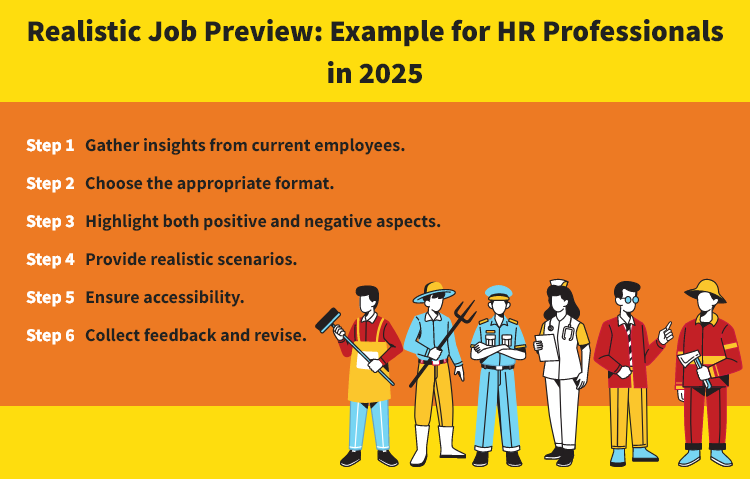
Start by interviewing current team members to get a realistic picture of what the job entails day-to-day. Ask about both positive and negative experiences—this will form the backbone of your RJP content.
Decide on the format that best conveys the job's realities. This could be a written description, video job preview, interactive simulation, or job shadowing opportunity. Consider the resources available and the nature of the job when selecting the format.
Manage all job descriptions through a Centralized Command Center, ensuring consistency and ease of access.
Ensure that the RJP presents a balanced view by including both the benefits and challenges of the role. This honesty helps candidates make informed decisions and sets realistic expectations, highlighting the key takeaways from their experience.
Align job descriptions with Market Pricing to accurately reflect compensation and role expectations.
Incorporate real-life scenarios that candidates may encounter in the role. This could include problem-solving tasks, customer interactions, or team collaborations. Realistic scenarios help candidates assess their ability to handle job demands, reflecting the day to day reality of the role.
Make the RJP easily accessible to potential candidates. Integrate it into job postings, career websites, and social media platforms to reach a wide audience and enhance the recruiting process.
After implementing the RJP, gather feedback from candidates and new hires to assess its effectiveness. Use this feedback, along with data from employee satisfaction surveys, to make necessary revisions and improve future RJPs.
To illustrate how RJPs work in practice, here is a realistic job preview example in an organization. These examples demonstrate how organizations can use RJPs to provide realistic details before extending the job offer and improve employee experience:
Example 1: Customer service role in retail
A large retail chain creates a realistic job preview video for its customer service associates. The video features employee testimonials from current workers who describe a typical day, including assisting customers, restocking shelves, and handling returns. The video also addresses negative aspects, such as dealing with upset customers or standing for long periods.
To make the RJP interactive, the company includes a virtual tour of the store and a skills assessment where candidates respond to a mock customer complaint. This approach helps job applicants understand the job expectations and assess their fit for the role.
Example 2: Waste management technician
The RJP outlines the job duties, such as operating heavy machinery, working in various weather conditions, and adhering to safety protocols. It highlights positive aspects like competitive pay and a strong sense of teamwork, as well as bad aspects like early morning shifts and physical demand.
The company also offers job shadowing opportunities, allowing prospective applicants to observe a typical day. This RJP, alongside employee interviews, has reduced employee turnover by ensuring candidates are fully aware of the role’s challenges.
Example 3: Restaurant server
In the restaurant industry, a popular chain creates a virtual reality RJP for its server positions. Candidates use VR headsets to experience a simulated shift, including taking orders, managing multiple tables, and handling rush hours. The RJP includes real-world scenarios, such as dealing with a difficult customer or coordinating with the kitchen staff.
Employee testimonials emphasize the exciting aspects (e.g., earning tips, building customer relationships) and negative aspects (e.g., high-pressure environments, late-night shifts). This immersive RJP helps job seekers make an informed decision and has led to higher job satisfaction among new hires.
Example 4: Tech support specialist
A tech company uses a combination of video job preview and written content to create an RJP for its tech support team. The video follows a support specialist through a typical day, showing how they troubleshoot customer issues, collaborate with team dynamics, and use specialized software.
The written RJP details the job requirements, such as technical expertise and patience, and addresses bad aspects like repetitive tasks or handling frustrated clients. By providing a better understanding of the role, the company has seen improved employee satisfaction and fewer unrealistic expectations.
HR professionals can create an RJP that not only enhances the candidate experience but also streamlines the interview process by attracting candidates who are prepared for the role’s demands.

The latest research, expert advice, and compensation best practices all in one place.
Blog
Bringing trusted compensation intelligence and seamless planning to even more ADP users.

Blog
Learn how to train managers for effective pay conversations and build trust.

Blog
Total rewards package flexibility lets employees choose what matters - pay, perks, and benefits tailored to their needs.