Blog
Get Pay Right on ADP Workforce Now® Next Gen™
Bringing trusted compensation intelligence and seamless planning to even more ADP users.
Written by Salary.com Staff
June 20, 2025

Resilience training is essential for building emotional strength and mental well-being in today's demanding world. Whether it's managing stress, overcoming challenges, or bouncing back from adversity, a solid resilience training program equips individuals with the skills needed to thrive.
In this guide, we explore how to create an effective program that boosts resilience, enhances emotional intelligence, and helps individuals handle life's challenges with confidence.
In an era filled with constant change and challenges, a resilience training program is essential for improving an individual's ability to cope with stress, adversity, and daily pressures.
This program focuses on equipping participants with the tools and techniques they need to bounce back from difficulties and maintain their mental health and well-being.
A resilience training program is designed to help people develop the skills needed to handle stress effectively, overcome obstacles, and build both physical resilience and emotional resilience.
It teaches participants how to stay positive and focused, even in the face of stress or traumatic events. By fostering resilience, individuals are better equipped to navigate both personal and professional challenges.
To build an effective resilience training program, it’s essential to first understand the core competencies involved. The Salary.com Skills Model helps organizations map out resilience-related skills across various job functions, forming a strong foundation for emotional and physical development.
Mental health improvement: Participants can reduce feelings of stress, anxiety, and depression.
Increased productivity: Resilient individuals tend to be more focused and perform better at work.
Enhanced emotional intelligence: Learning how to regulate emotions leads to better interpersonal relationships.
Organizations seeking measurable benefits from resilience training—like improved mental health and productivity—can use the Skills Model Tour to link training outcomes to job-specific competencies, supporting fair and targeted development strategies.
A well-rounded resilience training program focuses on key resilience skills that help individuals manage stress, recover quickly, and maintain their mental well-being.
These skills are essential not only for personal development but also for business continuity and managing operational risk in stressful situations.
The HR Job List Skills Model offers detailed insights into the emotional intelligence and stress management skills essential for HR professionals, helping shape training modules that focus on adaptability, communication, and conflict resolution.
One of the core components of a resilience training program is teaching stress management techniques. Learning to manage stress effectively is crucial for maintaining both physical health and mental health in the face of everyday pressures.
Some common stress management strategies include:
Mindfulness meditation: Focusing on the present moment helps reduce anxiety and stress.
Relaxation response: Techniques such as deep breathing and progressive muscle relaxation can help activate the body’s natural relaxation system.
Cognitive reframing: This involves changing negative thoughts into more balanced, positive ones, thus improving emotional strength and mental well-being.
By teaching participants how to apply these techniques, resilience training helps them remain calm and focused during stressful situations. In high-pressure environments like manufacturing, stress management is crucial. Salary.com's Manufacturing & Operations Skills Model helps tailor training to the unique stressors and operational demands of production roles.
Building a resilient workforce is a strategic move for any organization. A resilience training program enhances the social support network within a company, fostering better communication and collaboration.
Employees who develop resilient people skills are more likely to thrive in challenging work environments, manage stress effectively, and stay engaged with their tasks.
Building resilience in customer-facing or sales teams requires targeted interpersonal skill development. The Sales & Relationships Skills Model aligns perfectly with this goal, guiding companies in developing relationship management and emotional regulation within their workforce.
Practical tips for effective implementation:
Tailored programs: Design training sessions that address specific workplace challenges and are relevant to the team’s needs.
Supportive leadership: Train managers and team leaders to encourage and model resilience-building behaviors, offering feedback and guidance when needed.
Incorporating wellness initiatives: Complement resilience training with physical activity, relaxation techniques, and healthy habits to promote both emotional health and physical resilience.
A key aspect of workplace resilience training is teaching employees how to deal with stressful situations, whether it’s an increase in stress or a traumatic event. This allows businesses to ensure continuity and manage stress response in a productive way.
Conducting a resilience training program requires planning, effective training materials, and engaging delivery methods.
Here’s how to design an impactful program that enhances emotional resilience, builds stress management skills, and promotes personal resiliency.
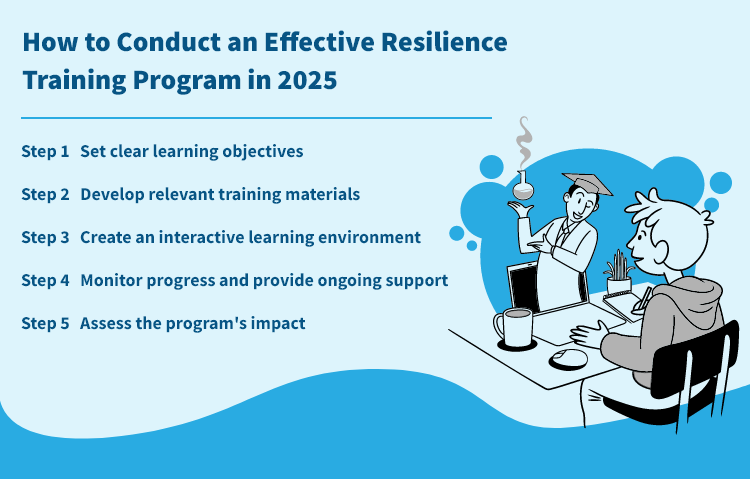
Start by defining the learning objectives of the program. These should include teaching participants on how to develop skills for managing stress, build emotional strength through self-awareness and emotional regulation, enhance physical health through resilience-based physical activities and cultivate a positive attitude in the face of adversity.
Effective training requires high-quality materials that reinforce key concepts. These may include case studies that highlight successful applications of resilience, interactive workshops where participants can practice stress management and cognitive skills and videos or demonstrations that model relaxation response and other techniques for managing stress.
Incorporating positive psychology in the materials will also motivate participants to focus on their strengths and growth, rather than just coping with challenges.
To ensure maximum engagement, make the program interactive. Use group discussions, role-playing exercises, and simulations of stressful situations to allow participants to apply what they’ve learned in real-world contexts.
This hands-on approach will help them build resilience and feel more confident when faced with adversity.
Implementing a resilience training program doesn’t end after the last session. It’s important to provide ongoing support, like regular check-ins to assess how participants are managing stress in their daily lives, offering continued access to resilience tools and resources and creating a space for feedback and suggestions on improving personal resiliency.
To determine the success of the resilience training, use metrics such as self-reported stress levels before and after training, improvement in workplace performance and engagement and feedback from participants regarding their ability to handle stressful situations.
As we move into 2025, prioritizing resilience training is a forward-thinking approach that can benefit organizations and individuals alike, preparing them to face the challenges of a rapidly changing world.
Whether it’s through cognitive skills, physical resilience, or emotional strength, every person can build resilience and use it to thrive in both life and work.

The latest research, expert advice, and compensation best practices all in one place.
Blog
Bringing trusted compensation intelligence and seamless planning to even more ADP users.

Blog
Learn how to train managers for effective pay conversations and build trust.

Blog
Total rewards package flexibility lets employees choose what matters - pay, perks, and benefits tailored to their needs.