Blog
Get Pay Right on ADP Workforce Now® Next Gen™
Bringing trusted compensation intelligence and seamless planning to even more ADP users.
Written by Salary.com Staff
August 21, 2026

Knowing how to manage underperforming employees is a vital skill for every HR and compensation professional. Underperforming employees drain the energy out of your team members. By acting at the first sign of underperformance, the manager can protect both the employee and the company.
This guide is for HR and management professionals looking to better handle underperforming employees. It also provides managers with steps and tools to handle these challenging employees effectively.
An underperforming employee is one who does not meet the expectations of the role they currently hold. Their provided work falls short of the quality that is required of them.
This is not indicative of an employee who has bad days producing their work; such days are to be expected of even the best performers. An underperforming employee indicates that the individual is not meeting the standards required for their position.
Recognizing the signs of an underperforming employee allows the company to provide support to that employee prior to their performance deteriorating further.
Acting quickly on performance issues protects the team and the business.
Early action will stop the decreased productivity of a team from negatively impacting the other members of that team.
It provides the underperforming employee with a chance to improve.
Early action will minimize the amount of time that a manager has to deal with issues created by an underperforming employee.
According to research, delaying feedback from employees will result in higher turnover and engagement within the team as a whole.
Employees underperform for many reasons that managers can identify and address.
Unclear expectations from management make it hard for employees to know how to succeed in their roles.
Insufficient training or a lack of skill set makes it hard for employees to meet the demands of their current role.
Problems in their personal lives or a lack of balance in their work and personal lives can impact an employee's dedication to their work.
A poor management style or work environment can also impact the motivation and work ethics of employees.
Common root causes of poor performance include a lack of resources or a lack of fit between the job and the employee.
Clear role expectations help employees understand their responsibilities and performance standards. JobArchitect® enables HR teams to create and maintain consistent job descriptions, making expectations easier to communicate across the organization.
Managers spot underperformance through clear, repeated patterns in daily work.
Employee is not producing as much as the others who share the same role.
Employee is missing meetings or shows up late to work.
Employee is producing work that is of poor quality.
Employee avoids feedback from managers yet shows no progress after providing feedback to the employee.
Other team members must pick up the slack for the employee's missed expectations from their role.
Identifying performance trends requires reliable data. CompAnalyst® provides reporting tools that help HR analyze workforce and compensation data, supporting more informed performance decisions.
Managers should act as soon as a clear pattern appears rather than wait for formal reviews.
Act after two or three documented examples of missed targets or quality gaps.
Step in when the underperformance starts to affect other team members or project timelines.
Move quickly if the employee ignores earlier informal feedback and shows no improvement.
Address the issue before it becomes a serious problem that requires formal discipline under internal policies.
How to manage underperforming employees follows a structured process that focuses on support, clarity, and accountability.
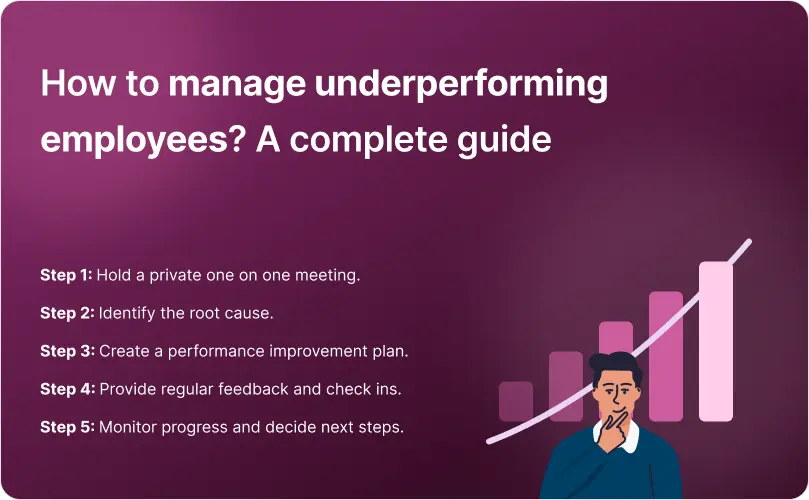
Schedule a private one-on-one meeting with the employee and share examples of the issues with the employee using facts and dates. Listen to the employee to hear their perspective on the issues and any issues with their personal life. Keep the conversation calm and focus on the job to show respect for the employee.
Ask open-ended questions to investigate the issue. Ask about the expectations of the job. Ask about the employee's skills. Ask about their workload. Ask if they would benefit from additional training. Find an agreement about what is preventing the employee from meeting their expectations of the job.
Create a performance improvement plan. This should include performance goals, timelines, and measures of success. Include the support that the company will provide for the employees. Both parties should sign the performance improvement plan to ensure that the employee understands the expectations of their position.
A successful improvement plan starts with clear expectations and fair job benchmarks. CompAnalyst® helps HR benchmark positions against market data to support consistent performance and compensation decisions.
Provide regular feedback and check ins on the employees. Holding regular meetings (weekly or biweekly) to review the employee's progress and providing feedback that focuses on the employee's strengths and areas of improvement. Maintaining open lines of communication with each employee to ensure they feel supported in their role and building their confidence.
Monitor the results of the plan to decide on the next steps. If the employee is meeting the goals, celebrate the employee's progress and return to normal management procedures. If there are still serious issues after the plan has ended, follow the internal policies regarding performance issues. Termination should be the last resort after all other options have been tried.
This process will ensure that both the employee and the business benefit from the situation.
Here are some FAQs for better understanding.
I have noticed some gaps in meeting the targets that we have set for ourselves. I would like to understand what is getting in the way in order to make a plan to address those particular issues and to incorporate you into that plan. It is important to have a private and respectful conversation about these topics to allow for any necessary improvements to be made.
Some managers feel threatened by high performers and, therefore, employ uneven standards for their subordinates under pressure. Such behavior is linked to status concerns and poor accountability systems within the organizations. Managers who do not have coaching skills tend to focus on the weaker performers in their teams while ignoring or defeating those who perform better.
Document every interaction with dates and facts. Always abide by company policies and avoid any personal conflicts. Focus on job expectations from all interactions. In the case of problematic behavior, escalate the issue to HR as soon as possible to protect the company and team members involved in the conflict.

The latest research, expert advice, and compensation best practices all in one place.
Blog
Bringing trusted compensation intelligence and seamless planning to even more ADP users.

Blog
Learn how to train managers for effective pay conversations and build trust.

Blog
Total rewards package flexibility lets employees choose what matters - pay, perks, and benefits tailored to their needs.