Blog
Get Pay Right on ADP Workforce Now® Next Gen™
Bringing trusted compensation intelligence and seamless planning to even more ADP users.
Written by Salary.com Staff
June 13, 2025

Data-driven recruitment has become essential for companies aiming to make smarter, faster, and more strategic hiring decisions. Leveraging recruitment data from multiple sources, companies can gain actionable insights to improve the recruitment process, attract qualified candidates, and make bias-free hiring decisions.
According to a recent study , 88% of HR leaders believe that data-driven recruiting helps in identifying the most qualified talent by reducing unconscious biases and enabling informed decisions based on analytics.
The use of data has transformed how recruitment is conducted, shifting from gut-feeling-based hiring to strategic, evidence-based talent acquisition. Whether you're optimizing your recruiting funnel, enhancing the onboarding process, or refining your recruitment marketing, data can make each stage more efficient and effective. The goal is to ensure manager satisfaction, minimize the hiring cost, and boost retention rates.
Data-driven recruiting is the use of data analytics and data points to improve and optimize the entire recruiting process. This includes everything from sourcing to onboarding. Instead of relying solely on traditional methods like resume screening and subjective interviews, it incorporates various data points to optimize each stage of recruitment.
Key features of a data-driven recruitment strategy:
Utilizes candidate data to analyze personal characteristics, skills, and experiences.
Tracks recruitment channels and communication channels to identify the most effective sources.
Uses historical data to predict future hiring needs and success rates.
Improves candidate experience by streamlining the screening process.
Measures hiring manager satisfaction and aligns hiring goals with broader business goals.
Involves data collection methods that ensure data hygiene and accuracy.
Empower hiring teams to evaluate applicants based on relevant qualifications and match them to specific roles.
This data-driven approach allows recruiting teams and hiring managers to confidently advise stakeholders and make more informed decisions.
To support this, tools like Compensation Software can automate the process of aligning internal job roles with market data, ensuring accurate benchmarking for even unique or hybrid positions. This enhances the ability to evaluate applicants based on relevant qualifications and match them to roles effectively.
Several leading companies are already leveraging data-driven hiring to great success:
Unilever: Combines neuroscience-based games and AI-analyzed video interviews to assess cognitive traits and communication skills. This approach improves objectivity, reduces bias, and enhances the overall hiring process.
Chipotle: Uses an AI assistant named “Ava Cado” to interact with applicants, answer questions, and schedule interviews. This improves response time, candidate experience, and increases the pool of qualified applicants.
Google: Applies predictive analytics to evaluate past hiring success and rank candidates based on fit and future performance. It helps streamline the recruiting funnel and optimize recruitment channels.
These examples highlight how data collection methods and recruitment software can be used to identify the best candidates, reduce hiring time, and ensure manager satisfaction. They also prove that a data-driven hiring model leads to better qualified applicants and an overall improved candidate experience.
To further enhance such strategies, tools like Analytics provide advanced analytics to identify pay trends and flight risks, helping companies ensure competitive compensation that supports retention and candidate fit.
To build an effective data-driven recruiting strategy, consider implementing the following tactics:
Track Metrics that Matter:
Monitor hire cost, turnover rate, how many candidates apply per position, and conversion rates.
Use assessment tools to evaluate candidate fit beyond the job description.
Consider metrics such as sourcing channel effectiveness, qualified candidate ratios, and recruitment budget utilization.
Optimize Your Recruitment Marketing:
Analyze job seekers' engagement with your careers page and job boards.
Improve job listings with SEO and targeting to attract more qualified candidates.
Use recruitment channels strategically based on data.
Implement Smart Technologies:
Use an applicant tracking system (ATS) and integrated recruitment software for effective data collection.
Maintain data hygiene to ensure that employee data and candidate data are accurate and up to date.
Explore automation for the screening process, scheduling, and communication.
Evaluate Channel Performance:
Track performance across communication channels like email, SMS, and social media.
Assess which channels produce highly qualified candidates and allocate your recruitment budget accordingly.
Study candidate demographics to refine targeting and messaging strategies.
Here are the steps to help you implement a successful data-driven recruitment approach and optimize your hiring outcomes.
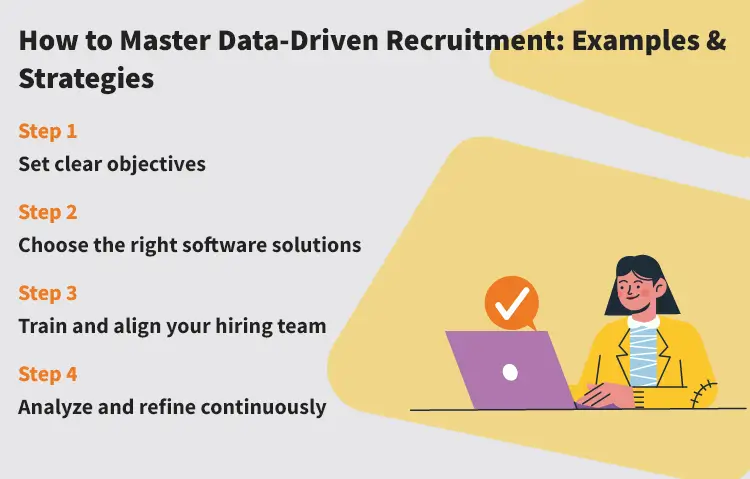
Start by identifying the purpose of your data-driven recruitment process. Is it to lower hire costs, reduce hire time, or improve qualified applicant rates? Having defined KPIs will help you track success and guide your strategy meetings. Align objectives with your broader business goals and involve hiring managers in these discussions.
Tools like Reporting and Analytics can generate customizable reports to track these KPIs and share insights with stakeholders in presentation-ready formats.
Use reliable recruitment software and applicant tracking system to automate and streamline the hiring process. These tools will help you collect data, analyze candidate data, and generate data-driven insights. Some tools offer features like automated resume screening, candidate scoring, and pipeline tracking that enhance data-driven hiring.
Additionally, Survey Management simplifies participation in compensation surveys, centralizing data to benchmark salaries and ensuring competitive offers, which supports data-driven hiring decisions.
Ensure your hiring team understands how to interpret recruitment data and utilize it to improve the interview process. Provide training on data collection, data hygiene, and ethical use of data for bias-free hiring decisions. Encourage regular strategy reviews and knowledge sharing within the team.
Use data analysis methods to refine your recruitment strategy. Leverage historical data and relevant data to continuously enhance your recruiting funnel and improve outcomes. Evaluate sourcing channel effectiveness, measure manager satisfaction, and continuously optimize job roles, requirements, and descriptions.
For strategic planning, Labor Cost Forecasting predicts future labor costs based on market trends and hiring plans, helping align recruitment budgets with long-term goals.
Mastering data-driven recruitment requires commitment, the right tools, and a focus on data-driven insights that enhance both efficiency and fairness. Implementing a solid data-driven recruitment strategy, companies can confidently navigate the modern hiring process, attract highly qualified candidates, and align recruitment efforts with overarching business goals. This comprehensive, data-backed approach ensures a better experience for both recruiters and candidates alike.

The latest research, expert advice, and compensation best practices all in one place.
Blog
Bringing trusted compensation intelligence and seamless planning to even more ADP users.

Blog
Learn how to train managers for effective pay conversations and build trust.

Blog
Total rewards package flexibility lets employees choose what matters - pay, perks, and benefits tailored to their needs.