Blog
Get Pay Right on ADP Workforce Now® Next Gen™
Bringing trusted compensation intelligence and seamless planning to even more ADP users.
Written by Salary.com Staff
December 05, 2025

Accrued compensation represents a critical component in accrual accounting, where businesses record employee compensation that has been earned but not yet paid out, ensuring accurate financial reporting. This accounting term helps companies align expenses with the periods in which they are incurred, providing a clearer picture of the company's financial health and obligations.
According to U.S. Department of Veterans Affairs, accrued compensation includes amounts owed for employees' wages, bonuses, salaries, and entitlement benefits such as retirement plans and health insurance, which are recognized as liabilities on the balance sheet.
This guide is designed to break down the essentials of accrued compensation, from its definition to practical calculations, helping business owners and accountants track expenses effectively. It also explores related concepts like accrued payroll, payroll accrual important for cash flow management, and how it impacts financial statements, drawing on recent guidelines to support better business strategy and legal compliance.
Accrued compensation is the employee's compensation that a company incurs during an accounting period but has not yet paid, recorded as an expense incurred and a liability on the company's balance sheet. In accrual basis accounting, which follows generally accepted accounting principles, this ensures that all the expenses related to labor costs are matched with the revenues they help generate, even if cash transactions haven't occurred yet.
For instance, if employees earn wages at the end of a pay period that spans two fiscal years, the portion belonging to the prior period is accrued to reflect the business incurs those costs accurately.
Accrued compensation often includes hourly wages, overtime pay, and accrued wages for work performed.
It also covers employer payroll taxes, payroll taxes like social security, and employee benefits such as vacation pay.
This practice is essential for financial health, as it prevents understating liabilities and supports accurate income statements and balance sheet reporting.
It ensures accrual calculations meet legal wage requirements by using Minimum Wage Data, which provides up-to-date minimum wage rates and planned increases across U.S. states, cities, and municipalities—including tipped wages—to prevent understating hourly or overtime liabilities.
A federal regulation emphasizes that compensation for personal services includes all remuneration, paid currently or accrued, for services rendered, highlighting its role in expense account management.
Accrued payroll refers to the accumulated wages and related expenses that employees have earned, but the company pays in a subsequent period, forming a key part of accrued compensation.
Accrued wages and salaries: These are the basic employee's wages or annual salary earned during the accounting period but not disbursed, such as hourly wages multiplied by hours worked.
Accrued payroll taxes: This includes payroll taxes like social security and Medicare, where employer payroll taxes are calculated on wages earned but not yet remitted to government agencies.
Accrued bonuses and commissions: Performance-based pay that employees earn but awaits approval or payout, impacting the company's obligations.
Accrued employee benefits: Covers items like health insurance premiums, retirement plans contributions, and vacation pay that accrue over time.
Accrued expenses and prepaid expenses are both adjusting entries in accrual accounting, but they handle timing differences in opposite ways: accrued expenses record costs incurred before payment, while prepaid expenses account for payments made before the expense is incurred.
To illustrate the differences:
| Aspect | Accrued expenses | Prepaid expenses |
|---|---|---|
| Definition | Expenses incurred but not yet paid, like accrued compensation or utilities. | Expenses paid in advance but not yet incurred, such as insurance premiums. |
| Balance sheet impact | Recorded as accrued liabilities under current liabilities, increasing obligations. | Recorded as assets, like accounts payable reversed, until expensed. |
| Journal entry | Involves debiting an expense account and crediting a liability, such as accrued payroll journal entry. | Debits an asset account and credits cash, with later adjusting journal entry to expense. |
| Timing | Align expenses with the period they are earned, supporting accurate financial reporting. | Defers recognition to future periods, aiding in cash outflow management and cost control. |
| Example | Wages earned by employees but paid for next month. | Rent paid for the next year in advance. |
Calculating accrued compensation is a straightforward process that helps businesses record accrued payroll accurately, ensuring compliance with generally accepted accounting principles and reflecting true labor costs on financial statements.
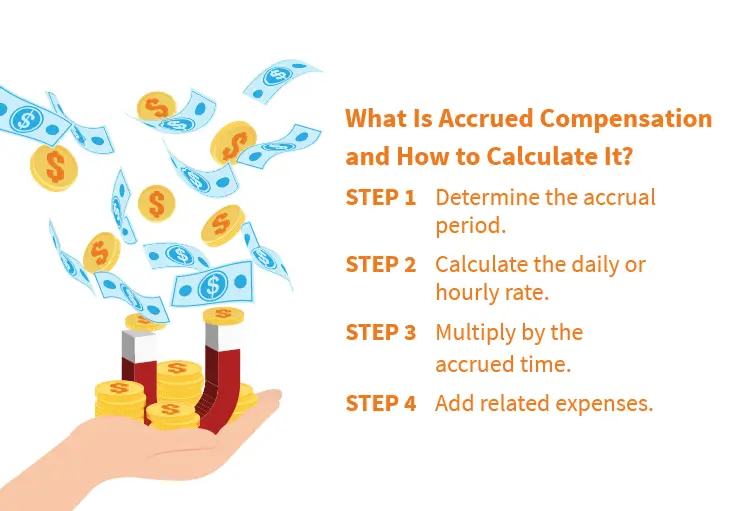
Identify the days or hours worked in the accounting period that fall outside the regular pay period, such as the last few days of the month. This step ensures you're capturing wages earned but unpaid, like overtime pay or regular hourly wages.
Divide the employee’s annual salary by the working days in a year or use the hourly wage directly giving a per-day or per-hour figure to apply to the unpaid period.
For setting pay ranges, the Job Range Wizard benchmarks roles to current market rates, maintains equitable job ranges, and identifies needed to pay corrections to support accurate accruals.
Take the rate from step 2 and multiply it by the hours worked or days in the accrual period to get the base accrued wages. Add any overtime pay or bonuses earned at that time for a complete picture.
Include accrued payroll taxes, employee benefits like health insurance, and other costs such as retirement plan contributions. This total represents the full accrued compensation, often entered via an accrued payroll journal entry or reversing entry in the next period.
To support comprehensive compensation management—including accrued liabilities—businesses can use Compensation Software, which provides market data, AI-driven role grouping, and pay equity analysis to price jobs accurately and manage accrued wages and benefits.
Accrued compensation examples illustrate how businesses track and record various forms of employee compensation that are earned but not yet paid, providing insight into its significant impact on financial reporting and cash flow.
Bi-weekly payroll overlap: If a pay period ends mid-month, the company accrues wages for the remaining days, such as an employee with a $50,000 annual salary accruing about $192 per day (calculated as annual salary divided by 260 working days), multiplied by five unpaid days equaling $960 in accrued compensation.
Bonus accrual: A sales team earns a quarterly bonus based on performance, but it's paid out the following month; the company records this as accrued liabilities to reflect the expense in the correct fiscal year, supporting the company's balance sheet accuracy.
Vacation pay accumulation: Employees accrue vacation pay over the year, like 10 days at their daily rate; if unused, it's recorded as accrued payroll, ensuring the business strategy accounts for future cash outflow.
Overtime and taxes: For hourly staff working extra hours at the end of a period, calculate accrued payroll by adding overtime pay to base wages, then including accrued payroll taxes like social security, which the employer payroll taxes cover as part of all the expenses.
Here are some FAQs for better understanding:
Accrued compensation involves amounts earned by employees during a period but not yet paid, creating a liability for the company under accrual accounting. In contrast, deferred compensation refers to pay that is voluntarily postponed to a future date, often for tax advantages.
Yes, accrued compensation is typically classified as a current liability because it represents obligations expected to be settled within one year or the operating cycle, such as unpaid wages or benefits. This classification, as per U.S. Department of Veterans Affairs policy, ensures accurate reflection in accounting records and supports the company's financial health by showing short-term commitments on the balance sheet.
For businesses using the accrual method, tax is generally paid on accrued income when it is earned, not when received, though deferrals may apply for certain prepaid items as per IRS guidelines. Individuals, however, typically report on a cash basis, paying tax only upon receipt, avoiding immediate taxation on unpaid amounts like interest.

The latest research, expert advice, and compensation best practices all in one place.
Blog
Bringing trusted compensation intelligence and seamless planning to even more ADP users.

Blog
Learn how to train managers for effective pay conversations and build trust.

Blog
Total rewards package flexibility lets employees choose what matters - pay, perks, and benefits tailored to their needs.