

Blog
Get Pay Right on ADP Workforce Now® Next Gen™
Bringing trusted compensation intelligence and seamless planning to even more ADP users.
Written by Salary.com Staff
October 30, 2026

Evaluating an employee's first few months can be difficult without a clear structure. A 90-day review template helps managers organize feedback, assess job performance and role expectations, address challenges, and identify development needs and future goals.
Thousands of compliant templates. Save hours of work.
A standardized template also makes the review conversation easier to prepare for and more useful for both managers and employees. This guide explains what to include, how to build the template step by step, and how to use it effectively.
A 90-day review is a structured opportunity for a manager and new employee to discuss the first three months of employment. It gives both sides time to assess early progress, clarify expectations, discuss the onboarding experience and training, and identify where additional support may be needed.
The discussion should also give employees space to offer feedback, raise concerns, and talk about development needs and future goals. MIT Human Resources similarly describes performance reviews as part of an ongoing manager-employee dialogue that covers accomplishments, expectations, development opportunities, and future priorities.
Clear role information makes this evaluation more consistent. JobArchitect® helps HR teams create and maintain standardized job descriptions, responsibilities, and role requirements that give managers a stronger foundation for meaningful performance conversations.
A 30-60-90-day plan looks ahead by setting goals and priorities for the employee's first three months. A 90-day review looks back at progress against those expectations, then helps the manager and employee agree on next steps.
A useful 90-day review template should support a consistent performance evaluation without turning the review process into a checklist exercise. Each section should connect early performance with role expectations, feedback, development needs, and future priorities.
| Template section | What to capture |
|---|---|
| Employee information | Employee name, role, department, manager, start date, and review date. |
| Role expectations | Key responsibilities, objectives, and priorities established during onboarding. |
| Performance criteria | Job knowledge, work quality, reliability, communication skills, team collaboration, time management, problem solving abilities, and role-specific competencies. |
| Rating scale | A clear method such as exceeds expectations, meets expectations, or needs improvement. |
| Accomplishments and improvement areas | Key contributions, training completion, progress, challenges, and skills requiring support. |
| Manager and employee feedback | Specific manager observations, employee comments, questions, and self-reflection. |
| Development goals and next steps | Professional development, new skills, future goals, priorities, actions, resources, and follow-up expectations. |
Role-relevant competencies make performance criteria more useful. Salary.com's Skills and Competency Library helps HR teams connect structured skills with job requirements and development planning.
A simple 90-day review template can follow this flow: Employee information → Role expectations → Performance criteria → Accomplishments → Areas for improvement → Employee feedback → Development goals → Next steps. This structure creates a clear written record while leaving room for a meaningful two-way conversation.
A useful 90-day review template should make the review process consistent while allowing enough flexibility to reflect the employee's role, responsibilities, and onboarding period.
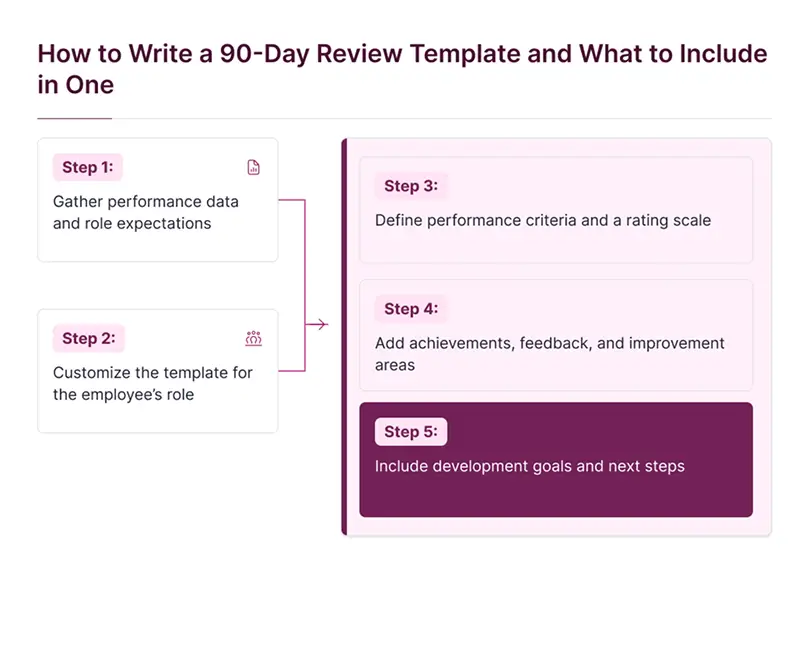
Start with information that shows what the employee was expected to accomplish and how they performed against those expectations. Review the job description, role responsibilities, onboarding goals, training completion, earlier check-ins, project results, and relevant performance metrics.
Managers may also gather feedback from colleagues or stakeholders with meaningful exposure to the employee's work. Focus on specific examples and documented expectations rather than general impressions that are difficult to explain during the review conversation.
Keep common criteria such as communication skills, reliability, team collaboration, time management, and goal progress where they apply, but add measures tied to the actual job. A customer-facing team member might be assessed on service quality, while a technical employee may need technical competency or problem-solving abilities.
Customization improves relevance without giving up consistency across your organization. Salary.com's 2024 Workforce Skills Gap Survey highlights the value of structured skills frameworks for identifying workforce capabilities and skill development needs.
Choose criteria that support a fair performance appraisal and are observable, evidence-based, and reasonable for someone only three months into the role. Criteria might cover work quality, job knowledge, communication, performance expectations, goal progress, or role-specific competencies.
If your organization uses a rating scale, define what each level means instead of relying on numbers alone. University of Iowa Human Resources recommends using defined performance descriptors and supporting evaluations with specific examples tied to established expectations.
JobArchitect® and Skills and Competency Library can help HR teams connect job responsibilities with relevant skills and competencies when building review criteria.
Create space for accomplishments, strengths, progress toward goals, challenges, and areas that need further development. Managers should provide constructive feedback with specific examples, so employees understand both what is working and what needs attention.
Employee input matters because employees should be able to reflect on their own performance. A self-assessment or employee comments section can reveal onboarding, workload, resources, company culture, or role-clarity issues.
Finish with clear actions for the next review period, including new skills, training or coaching, short-term goals, manager support, and follow-up checkpoints. Where useful, add target dates so both sides can track progress.
Development goals should connect directly to the strengths, challenges, and growth opportunities discussed during the review. Doing so turns the evaluation process into a bridge between onboarding, career development, and ongoing performance management.
A well-designed template provides structure, but the quality of the 90-day review still depends on how managers prepare and communicate. These practices can make the review meeting more useful.
Auto-matching tools for a clear, fair organization.
Prepare in advance. Review the employee's performance expectations, goals, training completion, work examples, and earlier check-in notes so the discussion is based on relevant evidence.
Give the employee time to prepare. Share key questions beforehand or ask for a brief self-assessment so the employee can reflect on accomplishments, challenges, and support needs.
Use specific examples. Connect feedback to observable work and results rather than vague impressions or personality judgments. UW–Madison HR recommends tying review comments to specific behaviors, expectations, and examples of actual performance.
Make the discussion two-way. Ask about the onboarding process, workload, role clarity, available resources, working relationships, and manager support.
Discuss strengths and gaps. Recognize progress and contributions while providing constructive feedback on areas that need improvement.
Keep expectations realistic. Consider that new hires are still building knowledge, confidence, and familiarity with company values and team goals.
Address meaningful concerns clearly. Explain performance gaps directly and clarify expectations for what improvement should look like moving forward.
Document next steps. Record agreed goals, responsibilities, support, and follow-up actions so managers and employees can track progress after the review meeting.
Here are a few common questions can help clarify how to prepare for, conduct, and follow up on a 90-day review.
Include progress against role expectations, key accomplishments, strengths, areas for improvement, employee feedback, and development needs. Goals and next steps should reflect the employee's actual responsibilities and expectations established during onboarding.
Ask what accomplishments the employee is most proud of, which responsibilities need clarification, and what challenges they have faced. You can also ask whether they have the right support, which skills they want to develop, and what their next priorities should be.
Review job responsibilities, initial goals, performance information, and specific examples. Gather feedback from relevant stakeholders where appropriate, consider potential next steps, and give the employee enough notice to prepare their own perspective.
Discuss what is going well, where improvement is needed, and how the employee views their first three months. Use clear, constructive language to address development needs, provide constructive feedback, and clarify expectations and priorities moving forward.
Finalize goals, provide training, growth opportunities, or resources, clarify responsibilities, and follow up on performance gaps or employee concerns. Future check-ins should connect the conversation with ongoing performance management.
Clear roles should continue beyond onboarding as employees develop and responsibilities evolve. JobArchitect® Max brings job descriptions, skills frameworks, and job architecture together so HR teams can maintain consistent role expectations and support long term success at scale.

The latest research, expert advice, and compensation best practices all in one place.
Blog
Bringing trusted compensation intelligence and seamless planning to even more ADP users.

Blog
Learn how to train managers for effective pay conversations and build trust.

Blog
Total rewards package flexibility lets employees choose what matters - pay, perks, and benefits tailored to their needs.
