2025 Hotshot Trucking Guide: What You Need to Know
Written by Salary SpecialistNovember 20, 2025
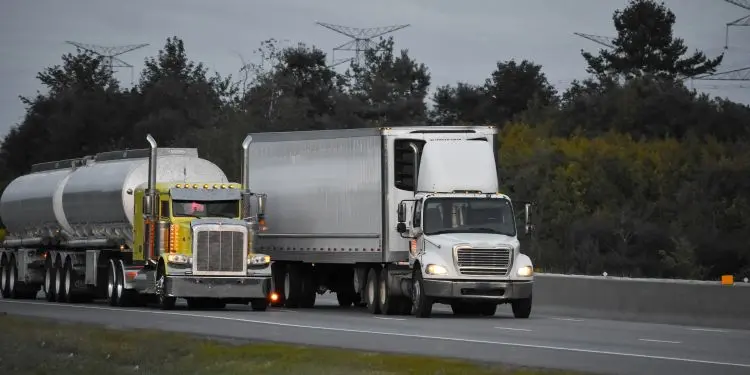
Hotshot trucking continues to gain traction across the logistics industry, offering fast and flexible transport solutions for time-critical deliveries. It's an attractive career path for drivers seeking independence, lower startup costs, and steady demand in sectors that value speed and reliability.
What is hotshot trucking?
Hotshot trucking is a specialized and increasingly popular sector of the logistics industry that focuses on the rapid, often urgent transport of smaller, less-than-truckload (LTL) shipments.
Unlike traditional long-haul trucking, which relies on large semis hauling full loads, hotshot trucking focuses on urgent, direct deliveries of essential materials. This service is especially valuable in industries like construction, oil and gas, and agriculture, where getting parts or equipment on-site quickly can prevent costly project delays.
Understanding the hotshot trucking requirements, equipment needs, and market trends is essential for anyone looking to start or grow a successful career in this fast-moving field
Hotshot trucking requirements you must meet
To start a profitable career in hotshot trucking, prospective drivers must meet a series of regulatory and operational hotshot trucking requirements. These rules are primarily set by the Federal Motor Carrier Safety Administration (FMCSA) and depend on the vehicle's weight and the scope of operations (intrastate or interstate).
Licensing and medical certification
One of the most common questions is whether a Commercial Driver's License (CDL) is required. The simple answer is that it depends on your Gross Combination Weight Rating (GCWR), which is the combined weight rating of the truck and trailer.
- Non-CDL hotshot trucking: If your truck and trailer's GCWR is 26,000 pounds or less, and you are not hauling hazardous materials, you typically do not need a CDL. This non-CDL path is a lower-barrier entry point into hotshot trucking.
- CDL Hotshot Trucking: If the GCWR of your setup exceeds 26,000 pounds, a Class A CDL is mandatory. Many experienced drivers choose this route because a CDL allows them to haul heavier, higher-paying loads, increasing the earning potential in hotshot trucking.
Regardless of CDL status, if your vehicle's Gross Vehicle Weight Rating (GVWR) is over 10,000 pounds and you engage in interstate commerce (crossing state lines), you are generally required to pass a Department of Transportation (DOT) physical exam and carry a valid Medical Examiner's Certificate (MEC). This medical certificate is a fundamental part of the overall hotshot trucking requirements.
Operating authority and compliance
All commercial vehicles weighing over 10,000 pounds and operating in interstate commerce must register for a USDOT number from the FMCSA. Furthermore, if you are transporting property for hire across state lines, you will need an MC (Motor Carrier) number, which grants you the necessary operating authority. These are critical regulatory hotshot trucking requirements.
Beyond registration, continuous compliance is non-negotiable for hotshot trucking:
- Insurance: Federal law mandates a minimum of $750,000 in liability coverage for interstate, for-hire carriers transporting non-hazardous freight in vehicles over 10,000 pounds. However, most shippers and brokers require a higher minimum of $1,000,000 in liability coverage. Cargo insurance is also highly recommended or required by clients.
- Hours of Service (HOS): Hotshot drivers must adhere to FMCSA HOS regulations, which limit driving to 11 hours within a 14-hour window after 10 consecutive hours off duty.
- Electronic Logging Device (ELD): An FMCSA-approved ELD is typically required to track driving hours for commercial vehicles manufactured after 2000.
Equipment
The right equipment is essential. A reliable, heavy-duty pickup truck and a robust trailer (often a 40-foot gooseneck trailer) are necessary for effective hotshot trucking. Adhering to all weight limits and properly securing cargo are additional hotshot trucking requirements for safety and legal compliance.
Hotshot trucking salary: how much can you make?
The potential income from hotshot trucking is highly variable because most drivers operate as independent owner-operators. Unlike a salaried position, your earnings are directly tied to your business acumen, the consistency of loads, and the control of operating costs.
While salaries fluctuate based on economic factors, location, and experience, the average annual pay for a hotshot driver in the United States is around $44,549 with the top earners reporting salaries up to $54,307 or more per year.
Several factors influence the actual take-home income in hotshot trucking:
- Operating expenses: Fuel, maintenance, commercial insurance, and the cost of the truck and trailer significantly reduce gross revenue. Hotshot drivers must meticulously track expenses to maximize profit.
- Freight rates and load consistency: Securing high-paying loads consistently is the biggest challenge. Rates can fluctuate based on market demand and competition.
- Deadhead miles: Driving empty miles between drop-offs and new pickups (known as deadhead miles) severely cuts profits. Successful hotshot trucking operators minimize this by planning efficient routes.
Pros and cons of a hotshot trucking career
Like any owner-operator venture, hotshot trucking presents a unique set of advantages and disadvantages. Evaluating these factors is important before committing to the career.
Pros of hotshot trucking
- Lower startup costs: Compared to a traditional Class 8 semi-truck operation, the investment in a heavy-duty pickup and trailer for hotshot trucking is considerably less.
- Flexibility and ndependence: Hotshot drivers often set their own schedules, choose their routes, and decide which loads to accept, offering a high degree of control over their work-life balance.
- High demand for expedited freight: Industries rely heavily on expedited, urgent deliveries, creating a consistent need for hotshot trucking services.
- Maneuverability: Smaller trucks are easier to navigate and park in tighter spots, such as job sites or urban areas, which can be an advantage over larger trucks.
Cons of hotshot trucking
- Inconsistent income: Income relies on the availability of loads. Seasonal slowdowns and market fluctuations can lead to periods of low revenue.
- High operating costs: Despite lower startup costs, fuel, maintenance, and insurance costs are significant ongoing expenses that can eat into profits.
- Physical and mental strain: Long hours on the road, managing logistics, and the stress of securing the next load can be physically and mentally demanding.
- Significant competition: The relatively low barrier to entry for non-CDL hotshot trucking requirements means the market can be highly competitive, especially for the most profitable loads.
FAQs
Get clear answers to the most common questions about hotshot trucking, from the best truck setup to finding steady loads and building a lasting career.
What is the best truck size for starting hotshot trucking?
Most beginners use Class 3-5 trucks.
- Class 3 (10,001-14,000 lbs GVWR): e.g., Ram 3500, Ford F-350 - strong, often non-CDL.
- Class 4-5 (14,001-19,500 lbs GVWR): e.g., Ford F-450, Ram 5500 - higher capacity, may need CDL.
A 40-ft gooseneck trailer is most popular for stability and heavy loads.
How do hotshot truckers find loads consistently?
Securing consistent, high-paying loads is the key to success in hotshot trucking. Drivers use a combination of strategies:
- Load boards like DAT or Truckstop.
- Freight brokers who find loads for drivers.
- Direct shippers for higher-paying, repeat work.
- Government contracts with less competition.
What are the long-term career opportunities after hotshot trucking?
Experience in hotshot trucking is an excellent foundation for various long-term career paths within the logistics and transportation sectors.
- Grow from owner-operator to fleet manager.
- Move into traditional trucking with a Class A CDL.
- Transition to logistics, dispatch, or freight brokering.
- Work in safety and compliance roles.
The Bureau of Transportation Statistics reports trucking moves 72% of all U.S. freight, ensuring steady demand and career growth.

Learn how to become a voice actor. From building your demo reel to finding voice acting jobs and understanding pay rates, this guide got you covered.

Discover how long does it take to become a pharmacist, the average salaries in the US, and answers to common questions in this guide.

Learn what a quality engineer does, the average salary ranges, key responsibilities, and how to become one.

Copywriting is about writing words that sell and persuade. Learn what copywriters do, essential skills, and how beginners can get started in 2025

Learn about essential management skills and why they are crucial for building productive, engaged, and successful teams.

Learn about assistant manager duties, required skills, and career path.