
Find Growth Opportunities by Assessing Your Skills
Written by Salary SpecialistJanuary 23, 2026

Assessing your skills is a critical step toward job searching.
Every job requires skills. Understanding your full range of skills will help you identify target companies where you can excel and open new doors to uncover occupational options that utilize your complete skillset.
At times, even jobs you may never have considered.
This introspective process will give you the foundation to understand where you want to go next and tailor your resume accordingly.
The harder you examine these skills, the more prepared you will be to update your resume and present your talents in interviews.
Before you begin this skills inventory, it is first important to identify what a skill is. A skill is a combination of knowledge, ability, and confidence. How those correlate and align is a measure of fluency with that skill.
In a career, skills develop over time and evolve into various levels and categories based on our experiences and previous work. The more specialized your role, the more unique your skills are.
Skill Types
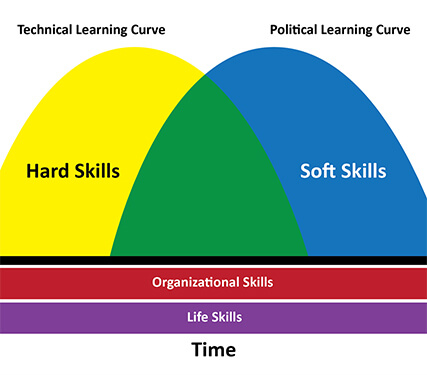
There are four skill categories: technical skills, political skills, organizational skills, and life skills. Each is vital to success in the workplace and learned over time.
We often discuss skills in the context of technical (hard) and political (leadership/soft) skills.
You need hard skills to get your job done correctly, such as machine operation or administrative skills. They are often the skills we learn first in our careers.
Soft skills come next. Once you've mastered the technical aspects, it's essential to understand the relationships and politics of working within a team to achieve success, like adaptability or critical thinking.
Hard and soft skills are foundational to succeeding at work, but there are two additional skill types you'll need to excel - organizational and life skills.
Organizational skills are applied in a structured and efficient way, such as planning and goal-setting. Your basic life skills, like cooperation and perseverance, are essential to helping you thrive in your daily life and work.
Skills evolve as you continue to use them. You'll start your career on a student level, still acquiring basic knowledge about the craft. Over time you'll gain experience to become an apprentice.
Once you begin applying this knowledge to work, you become a specialist at that skill. Experts have been working with a skill long enough that they can solve problems with them. Finally, the most advanced within a skill, craftsmen, can create new ideas with them.
You'll rank every skill you identify within this scale: student, apprentice, specialist, expert, or craftsman. As you complete your evaluation, it is important to understand where your abilities land on the fluency scale.
This knowledge will allow you to advocate for yourself on your resume and within interviews as you consider new roles during your job search.
Read on for more ways to make your job search a success: Figuring Out Your Technical and Leadership Skills

Understanding your technical and leadership abilities will be a key component in your job search. Start your self-assessment by creating a skills chart.

When it comes to learning how to decline a job offer, it's not easy. This article shows you some practical guidelines on rejecting an offer politely.

If you have been promoted into becoming a manager, this article is for you. There are 3 stages of learning good management skills and get prepared for the role.

Are you thinking of quitting your current job but don't know how to resign the right way? Here are some steps on how to quit a job and leave on good terms.

Once you've decided to decline a job interview, you'll have to let the interviewers know of your decision. Here are some tips on how to decline an interview properly.

People leave their jobs for various reasons. This article shows you reasons for leaving a job and why working professionals come to the decision.