

Blog
Get Pay Right on ADP Workforce Now® Next Gen™
Bringing trusted compensation intelligence and seamless planning to even more ADP users.
Written by Salary.com Staff
October 30, 2026

Loud quitting is a significant challenge for employers seeking consistent employee performance and teams. Many organizations are currently experiencing a workforce that not only underperforms but also expresses dissatisfaction.
U.S. Bureau of Labor Statistics reveals that there continues to be a high level of turnover and changes in employment linked to employee dissatisfaction and reduced performance. As a result, managers and leaders need to recognize these indicators and take steps to ensure team morale and the organization are protected.
Loud quitting refers to when an employee complains about their work while still employed. This may take the form of refusing additional work or making complaints. Loud quitters negatively affect productivity and morale within the workplace. This is more advanced than quitting quiet as it moves from withdrawal to outright resistance.
Unlike silent forms of pulling back, loud quitting draws attention on purpose. The person wants others to notice their discontent. Employers see it in public posts or heated talks that question company decisions.
Loud quitting and quiet quitting both show employee disengagement but in different styles that affect the workplace in clear ways.
| Aspect | Loud quitting | Quiet quitting |
|---|---|---|
| How workers act | Loud quitters speak out, share public complaints, and may undermine team efforts with open frustration | Quiet quitters stay quiet, do only the bare minimum on job duties, and avoid the extra mile without open conflict |
| Impact on team | This form can lower team morale faster because other employees hear the dissatisfaction and may feel the same stress | Quiet behavior spreads more slowly yet still reduce overall productivity as many workers give only minimal effort |
| Visibility to managers | Leaders and managers notice it sooner through meetings, feedback sessions, or online posts | It stays hidden longer until employee surveys or performance reviews reveal the lack of engagement |
| Link to feelings | Workers often feel worse about pay, poor management, or lack of support and decide to act loudly | People feel stuck or stressed but choose to protect their energy by doing only required tasks |
Several clear factors push certain employees toward loud quitting instead of staying quiet or looking for a new job in silence.
According to recent workforce reports, poor management ranks high because workers who lack clear feedback or support from managers start to show open dissatisfaction that spreads to the wider workforce.
Llow pay or less pay compared to job duties leaves many employees feeling undervalued, so they turn frustration into loud actions rather than quiet effort.
High stress and weak mental health support as key drivers that make people feel stuck and choose to speak about their concerns in the organization.
When leaders fail to address well-being or ignore employee surveys, certain employees move from quiet modes into actively disengaged behavior that hurts team results.
Limited benefits or few chances to grow lead workers to pull away and share public complaints instead of giving minimal effort in silence.
Loud quitting can lead to increased turnover contagion among remaining employees.
Loud quitting keeps the individual on payroll as an active employee.
CompAnalyst® provides market pricing information that can help employers understand compensation levels across jobs, industries, locations, and company sizes.
Employers can take clear steps to reduce loud quitting and rebuild engagement across the workforce.
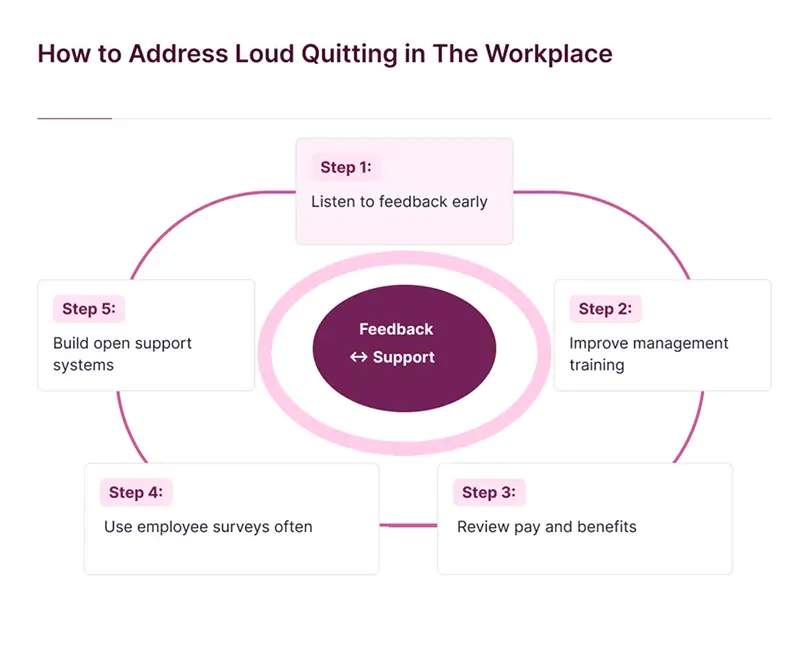
Regular one to one meeting can allow employees the opportunity to discuss any issues before frustration sets in. This small step can go a long way in making employees feel heard and can prevent the transition to open frustration. Companies that monitor emotions have found improved employee morale and a reduction in the number of public complaints.
Pay can be one reason employees become frustrated. Managers can use CompAnalyst® to review pay data and see if employee pay is in line with the market and the job.
Leaders need tools to support their teams and notice warning signs like extra sick days or drop off job duties. Strong management lowers stress and helps quiet quitters stay engaged rather than become loud. Training focused on well-being and clear expectations can prevent disengagement across the company.
Employers can ensure that pay is aligned to the work performed and that benefits adequately support mental health. Fair compensation can help prevent employees from experiencing stagnation and engaging in loud quitting. When an organization provides adequate support, the majority of employees will choose to remain involved in the organization rather than seek another position while still employed.
CompAnalyst® helps employers build and maintain salary ranges based on market information, supporting a structured approach to compensation.
The company uses regular employee surveys to monitor engagement levels and identify early signals of disengagement. Based on the data collected, management can take action to address issues such as poor management or stress. This will help all employees feel valued and will result in greater levels of productivity.
Provide employees with avenues to raise issues without fear. This will prevent employees from turning to public whining. Providing support for job responsibilities and avenues for feedback will help improve the workplace. When management expects and provides this support, levels of loud quitting will decrease, and employee focus will increase.
Real cases show how loud quitting can appear when workers choose public ways to express deep unhappiness before or during their exit.
One example involves staff at a major technology firm who openly shared detailed safety concerns about artificial intelligence work through public statements and media reports which drew wide attention and raised questions about internal processes.
Another case reflects how public criticism of workplace conditions can spread quickly when workers feel ignored and choose to speak through news channels that reach large audiences as illustrated in reports.
In many offices loud quitting shows up when an employee starts open debates with leaders in meetings and posts negative comments that other team members then discuss among themselves.
Some workers increase visible conflict by refusing tasks they once accepted and sharing the reasons with coworkers in ways that lower group energy and trust.
Here are some FAQs for better understanding.
Quiet quitting is not illegal in most places because it is part of the basic scope of employment and does not violate employment law. In at will employment, performing the essential job duties but not giving the extra mile still fulfills the employment contract.
Poor performance can be addressed through performance feedback and performance reviews, but quiet quitting is not a violation of law.
Soft quitting is similar to quiet quitting and typically occurs when an employee experiences a lack of support or stress but continues to remain employed. Soft quitting is also commonly used by employees who would like less stress and are waiting for an opportunity.
Recently, research on the workforce has found that soft quitting shares the same causes as other types of employee disengagement.
Quiet quitters are not necessarily fired if they continue to perform essential job functions and meet the minimum standards. If minimal effort causes a disruption to productivity or team performance, a manager can interfere with performance discussions or take further action.

The latest research, expert advice, and compensation best practices all in one place.
Blog
Bringing trusted compensation intelligence and seamless planning to even more ADP users.

Blog
Learn how to train managers for effective pay conversations and build trust.

Blog
Total rewards package flexibility lets employees choose what matters - pay, perks, and benefits tailored to their needs.
