Blog
Get Pay Right on ADP Workforce Now® Next Gen™
Bringing trusted compensation intelligence and seamless planning to even more ADP users.
Written by Salary.com Staff
October 09, 2026

Employer involvement in planning for a strong team is crucial. A strategic plan for recruiting can align hiring requirements to business objectives and help prevent expensive reactive hiring.
The Society for Human Resource Management Talent Trends report shows that over two thirds of organizations continue to have difficulty filling full-time positions.
A strategic hiring plan connects the hiring function to workforce planning and long-term business goals. This plan takes into account the skills within the current workforce and the skills needed based on business goals in the future. It allows HR to establish realistic hiring timelines and predict the amount of hiring that will occur.
Such a plan includes all aspects of the hiring process, from writing the job description to the onboarding process. It can also aid in budgeting and selecting the most appropriate methods for sourcing talent.
A strategic hiring plan keeps your company ready for growth and change.
Align business goals. Individual employees can be tied to business goals. This allows the organization to direct its budget to positions that generate value.
Manages recruitment expenses. HR can direct funds to meet approved recruitment requirements rather than to unnecessary recruiting activities.
Enhance the quality of the candidate pool. Defining the ideal candidate allows for better recruitment and a higher quality employee pool.
Lowers implementation risk. Key positions can be planned or reaction to economic and labor market fluctuations.
Enhances workforce planning. Hiring can be planned according to forecasts of growth, turnover, skills gaps, and future business requirements.
Promotes fair recruitment. Using structured interviews and consistent selection criteria can increase the consistency of the recruitment process. According to the U.S. Office of Personnel Management, structured interviews utilize the same questions and scoring across all candidates.
With CompAnalyst®, HR and compensation teams can create market composites and model salary structures using market data.
An effective hiring plan should consider business priorities, available talent, costs, recruitment channels, and the ability of the existing team to support new hires.
Business strategy: Linking the role of business goals, business objectives, and desired business results.
Hiring needs: Assess vacancies currently open, critical roles, internal mobility and skills gaps prior to approving new hires.
Budget: Establish costs for salary, recruitment, technology and any other relevant costs prior to recruitment.
Headcount approval: Ensure business owners have approved the required number of employees prior to HR starting the recruitment process.
Labor market: Assess labor market conditions, labor data, availability of labor, and competition for talent.
Recruitment channels: Evaluate the effectiveness of job boards, social media, employee referrals, employee referral programs, targeted recruitment and any other recruitment channels.
Company culture: Ensure the desired candidate possesses the right skills and behaviors to thrive within the company culture.
Realistic hiring timelines: Establish realistic timelines for sourcing, screening, interviews, selection, job offer and onboarding.
HR technology: Use HR technology such as an applicant tracking system to enhance communication, manage applications, and streamline the recruitment process.
Employer brand: Communicate the employer brand to candidates and passive job seekers to understand what is available at the company.
CompAnalyst® provides market pricing information that can help organizations understand external competitiveness.
Follow these four steps to create a workable plan.
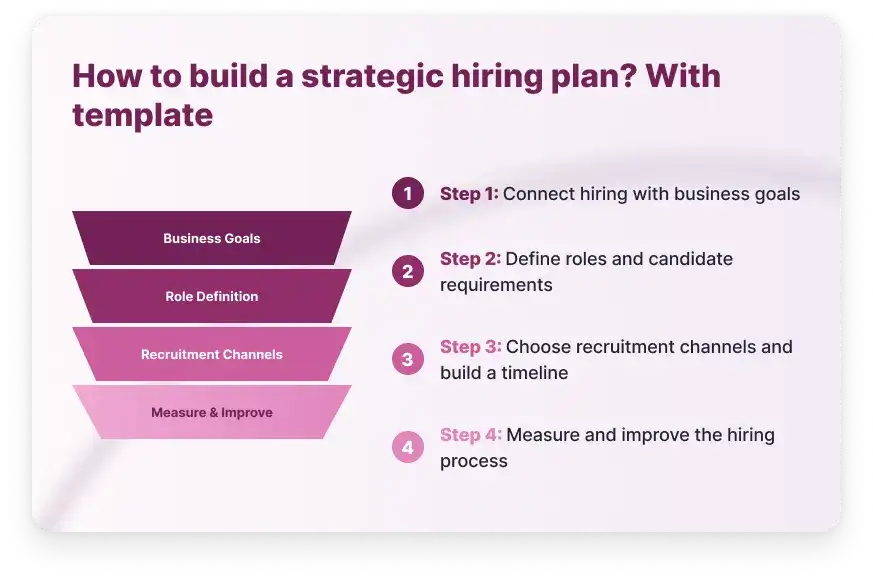
Start by reviewing the strategic plan and identifying the roles needed to achieve business goals. Work with business leaders and hiring managers to forecast hiring and prioritize critical roles.
Create a clear job description that explains responsibilities, required skills, experience, and expected results. Define the ideal candidate before starting the recruitment process.
Select the most effective recruitment channels based on the role and talent pool. Use job postings, job boards, social media, employee referrals, employee referral programs, and targeted outreach when appropriate.
Track recruitment metrics such as time to hire, hiring costs, candidate quality, source of hire, and offer acceptance. Use these results to improve the recruiting strategy and future recruiting efforts
CompAnalyst® provides searchable, shareable reports and scheduled reporting capabilities.
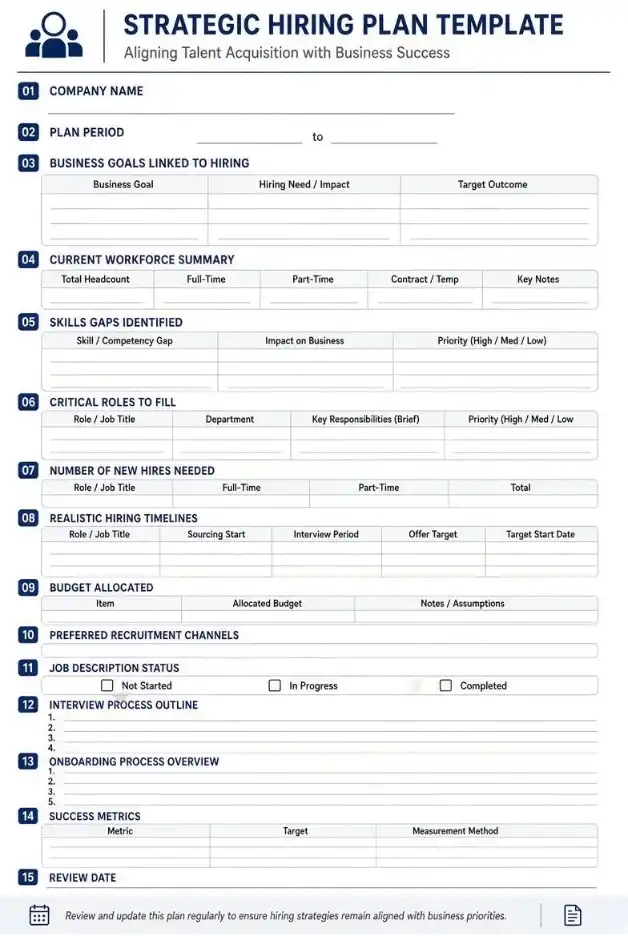
Use this free template as a starting point for your strategic recruitment plan. Fill in the sections with your company's details.
Company Name:
Plan Period:
Business Goals Linked to Hiring:
Current Workforce Summary:
Skills Gaps Identified:
Critical Roles to Fill:
Number of New Hires Needed:
Realistic Hiring Timelines:
Budget Allocated:
Preferred Recruitment Channels:
Job Description Status:
Interview Process Outline:
Onboarding Process Overview:
Success Metrics:
Review Date:
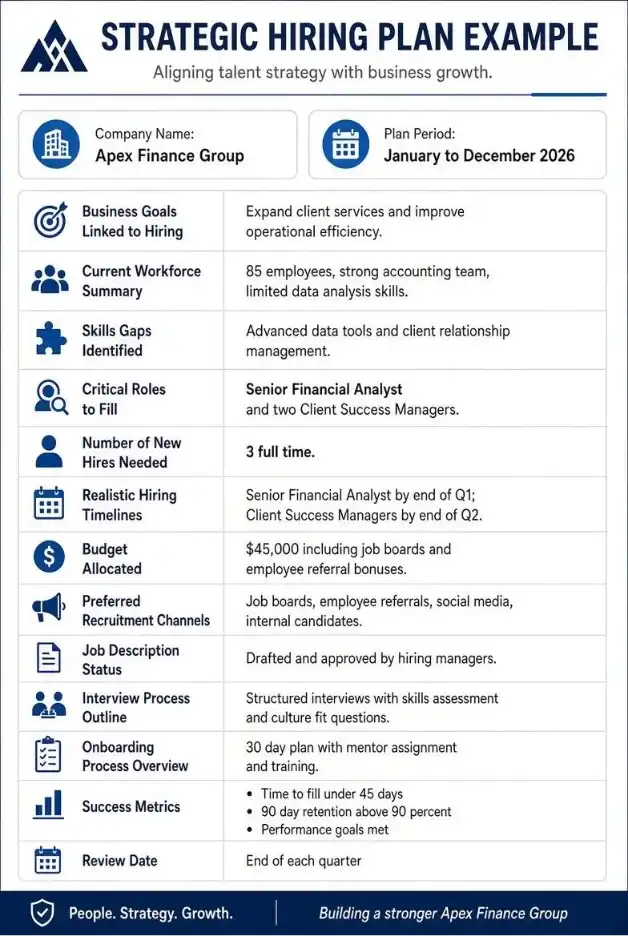
Here is a simple filled example for a mid-size finance firm.
Here's are some FAQs for better understanding
There exists a 70/30 hiring formula. Spend approximately 70% of your time evaluating culture fit, potential for growth and soft skills, and only 30% on technical abilities. Using this process increases the chances that the hire will be a long-term performer and fit within the company culture. Companies utilizing this method tend to have higher retention of top talent and better results across the team.
The 5 C's in hiring are character, competency, culture fit, chemistry and congruence to the needs of the role.
Characters relate to integrity and reliability.
Competency relates to the necessary skills for the role.
Culture fit relates to alignment with the values of the organisation.
Chemistry relates to how well the candidate will work with the current team.
Congruence refers to how well the role fits an employee's skills and goals. Employers can use all 5 to make effective hiring decisions that aid in long term business success.

The latest research, expert advice, and compensation best practices all in one place.
Blog
Bringing trusted compensation intelligence and seamless planning to even more ADP users.

Blog
Learn how to train managers for effective pay conversations and build trust.

Blog
Total rewards package flexibility lets employees choose what matters - pay, perks, and benefits tailored to their needs.