Blog
Get Pay Right on ADP Workforce Now® Next Gen™
Bringing trusted compensation intelligence and seamless planning to even more ADP users.
Written by Salary.com Staff
June 20, 2025

There are 4 types of organizational culture, and they differ in company values, leadership style, and norms. Adhocracy culture focuses on innovation and risk taking. Market culture prioritizes results and competitiveness. Hierarchy culture promotes a formal and controlled structure.
Meanwhile, the fourth one is clan culture, which highlights open communication, participative decision-making process, collaborative work and mentorship, and familial atmosphere that cultivates loyalty and mutual respect.
To learn more about the fourth culture, its organization's vision, and its idea of company success, read on as we discuss the key characteristics of clan culture, its advantages and disadvantages, some examples, and how to foster one in your team.
Clan culture is one of the organization cultures that focuses on collaboration, commitment, and family-like atmosphere. The management is flexible, and existing rules do not have strict control, allowing teams the autonomy and trust to do work.
Employees in a clan culture can freely express their ideas and knowledge since they are met with value and mutual respect from leaders who actively seek workforce input. Organizations that practice this culture are usually startups, small companies, or family-owned businesses.
Although laid-back and adaptable, this corporate culture still requires effective management, which can be achieved through Talent Management. Using this tool helps companies accomplish talent pay needs through workflow automation, customizable workbooks, and clear total rewards statements fit for the transparency of clan culture.
Clan culture in business has many distinct characteristics. Contrary to other company cultures, it is typically cooperative and supportive of colleagues, languages and dress codes are more relaxed, and the top management is more accessible to employees.
Here are other key characteristics of clan culture:
A sense of belongingness: People are bonded with strong personal relationships and share the organization's mission, vision, and company's core values, so they feel like they are part of the community.
Tight knit connection: Team members spend time working closely together and even extend beyond office hours to socialize. The unit is solid and encourages loyalty within the team.
Employee centricity: The organization is committed to employee well-being, ensuring a nurturing environment that is safe, healthy, and promotes employee growth.
Active participation: Collaborative culture and teamwork are prioritized so there is a collective effort from each member, brainstorming ideas, finding alternatives, and achieving goals and objectives.
Informal company structure: There is no discrimination between different positions and levels as everyone is treated equally. It promotes a family-like environment to the conventional corporate setup.
Clan culture in business fosters support, a sense of belonging, and employee engagement. This sets it apart from the other 3 types of organizational culture: hierarchy culture, market culture, and adhocracy culture.
Although it is a very effective company culture, there are still drawbacks that come with the clan system. Here are the advantages and disadvantages of implementing clan culture in the workplace:
Advantages
Robust team relationship: The culture encourages employees to build strong ties through a relaxed workplace, shared values, and supported workforce. This positive relationship fosters a healthy work environment.
Active communication: Open communication is practiced, such as a fun catch up during lunch break or regular check ins. Everyone is motivated to speak up and give honest employee feedback since they trust the management and colleagues.
Open space for innovation: Ideas can flow freely in a culture where every individual’s perspective is valued. This results in an abundance of innovative solutions and creative pursuits that benefit the company, its people, and its goals.
Workforce loyalty: Loyal employees are earned when the system is especially catered their satisfaction. The culture makes the workforce feel that they are not performing. Rather, employees contribute to business success and goals that match theirs.
Employee development: The culture also focuses on knowledge sharing, coaching, and mentorship. This encourages members to pursue career growth and leadership roles with the support and resources provided by the organization.
Disadvantages
Less diversity: People in this culture can be repulsive from external entities. New hires might be from referrals, so a diverse workforce is not focused. This builds echo chambers, where people share the same values and beliefs, potentially neglecting flawed opinions and impeding innovation.
Lack of assertive authority: There can be conflicts when it comes to imposing authority and structure in the team if boundaries are not properly communicated. Flexibility can be an opportunity for people to act inappropriately in the workplace, which is detrimental to overall organizational success.
Excessive collaboration: Important and urgent decision-making might be delayed due to uncontrolled communication of ideas and perspectives. Too many team meetings and discussions can be counterproductive if not well-regulated.
To avoid the downsides of promoting clan culture in business, there are vital steps the HR team can adopt. These measures ensure that the organization exudes a sense of mutual support, collaboration, and community to its people. Here is how to foster a strong clan culture in 6 steps:
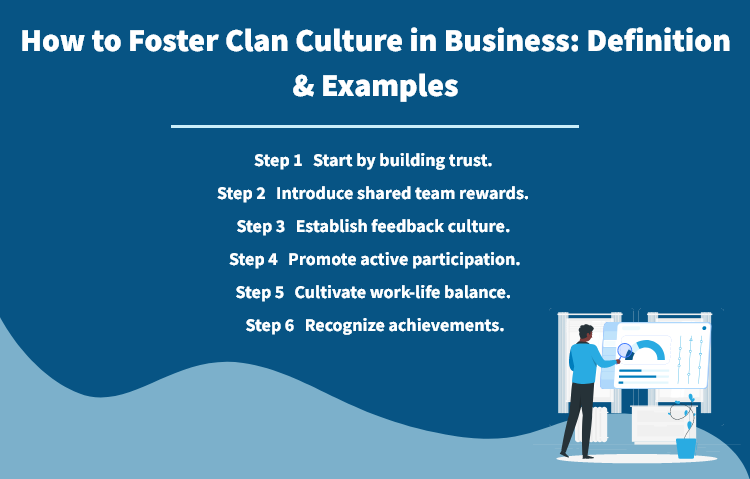
Trust is a requisite for open communication. Provide genuine encouragement to build interpersonal relationships, especially to new employees, encourage managers to be more accessible to staff, and put less emphasis on failures and more on learning culture.
Boost employee morale and promote employee synergy by giving incentives, such as team performance-based bonuses, employee stock ownership, or annual recognition events.
To effectively do that, you can use tools like Compensation Planning Software, where you can combine versatile spreadsheets and automated workflow to create merits, bonuses, commissions, long-term incentive awards, and equity tailored fit for the culture of your organization.
Since clan culture is all about open and honest communication, practice active listening and encourage culture of feedback to identify areas of improvement. Some of the ways to exercise feedback processes are employee surveys, one-on-one meetings, or brainstorming sessions.
Connection is developed when people participate and engage in collaborative activities, such as team tournaments, social company events, team-building exercises, mentoring programs, and special projects that develop interpersonal closeness and openness.
Employees will not be as engaged and fun to be around with if they are overloaded with work and have no time for their personal lives. Ensure that the flexibility of clan culture is focused on employee wellbeing by giving employees flexible work arrangements, giving them space to rest and relax.
Being acknowledged by peers and managers cultivates a positive workplace culture since employees feel valued and motivated. It also promotes teamwork, collaboration, and community to achieve accomplishments and rewards.
What is an example of clan culture? This is a valid query since this system only seems like a concept in the corporate industry where profitability and productivity are prioritized. However, there are real-life organizations that have clan culture traits. Here are the examples:
This company has core values like warrior spirit and servant’s heart that guide them to camaraderie and purpose for its employees. They offer employee benefits, such as profit-sharing and career development.
Core values like collaboration, fun, and innovation emphasize this company’s robust interpersonal relationships and positive work environment. They promote open communication by holding regular forums and company-wide meetings, where workers can recognize accomplishments and build connections.
They are committed in creating an inclusive and supportive work environment for the workforce, so they offer various employee benefits like wellness programs, flexible work arrangements, and creative spaces.
What better way to practice openness and support in a clan culture than providing a transparent view of the employees' overall compensation. To deliver this commitment, Compensation Planning Software helps you highlight employee pay and benefits in a well-structured presentation, providing pay transparency and open communication to your team.

The latest research, expert advice, and compensation best practices all in one place.
Blog
Bringing trusted compensation intelligence and seamless planning to even more ADP users.

Blog
Learn how to train managers for effective pay conversations and build trust.

Blog
Total rewards package flexibility lets employees choose what matters - pay, perks, and benefits tailored to their needs.