Blog
Get Pay Right on ADP Workforce Now® Next Gen™
Bringing trusted compensation intelligence and seamless planning to even more ADP users.
Written by Salary.com Staff
November 27, 2026

Improving employee performance is essential for maintaining productivity and achieving organizational goals. For HR teams and managers, understanding how to improve work performance starts with recognizing what helps employees succeed and what holds them back.
Unclear expectations, limited resources, and insufficient development opportunities can affect employee effectiveness. Rather than simply increasing workloads, organizations need practical strategies that address these challenges.
The nine strategies below offer actionable ways to strengthen performance, starting with understanding what work performance means.
Work performance refers to how effectively employees fulfill their job responsibilities and contribute to organizational goals. It considers work quality, productivity, efficiency, collaboration, and the ability to achieve expected results.
Strong performance goes beyond task completion, as employees must also meet expectations and support team objectives. To improve work performance, employers need clear expectations, regular evaluations, and development opportunities that help employees succeed.
Structured performance management connects individual contributions with organizational priorities through ongoing feedback, progress monitoring, and employee development. It helps managers identify strengths, address performance gaps, and support consistent improvement.
SalaryTalent™ Performance Management connects employee goals, performance reviews, and career development opportunities, helping organizations make more informed decisions about employee growth and performance.
Several factors affect work performance, including employee capabilities, management practices, and workplace conditions. Performance challenges may reflect individual effort, organizational barriers, or a combination of both.
Interpersonal factors: Poor communication, workplace conflicts, and limited feedback can weaken collaboration. Inadequate management support may also affect employee confidence.
Work-related factors: Unclear responsibilities, excessive workloads, and insufficient training can limit effectiveness. Staffing shortages and scheduling gaps may also reduce productivity, as reflected in workforce research.
Environmental factors: Workplace distractions, outdated equipment, and limited resources can interrupt daily tasks. Unsuitable working conditions may also affect concentration and efficiency.
Employee engagement and motivation: Limited recognition and career development opportunities can lower employee morale. Feeling disconnected from organizational goals may also reduce commitment.
Identifying these barriers helps employers choose the right improvement strategies. When staffing gaps or workforce capacity affect productivity, workforce planning can help organizations better align staffing decisions with operational needs.
For shift-based teams, SalaryTalent™ Workforce Management connects scheduling, attendance, and leave information to help managers identify staffing gaps and maintain appropriate workforce coverage.
Finding effective ways to improve work performance starts with understanding what your employees need to succeed. Once you've identified performance gaps, these nine practical strategies can help your organization strengthen productivity, support employee development, and achieve better results.
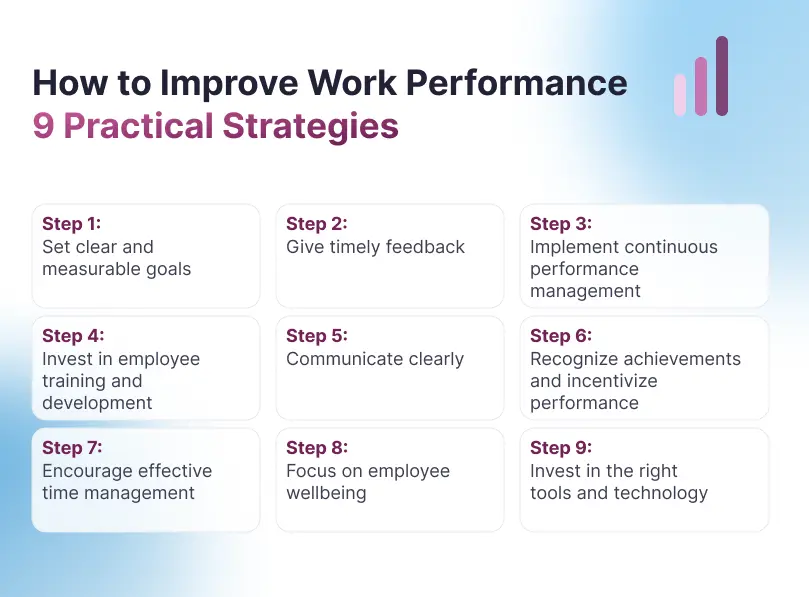
Clear goals help employees understand expectations and prioritize responsibilities that contribute to organizational success. Use SMART goals within a structured performance management framework to establish specific, measurable objectives with realistic deadlines.
For example, a manager might aim to reduce recurring project errors by 15% within three months. Regularly reviewing progress and recognizing milestones helps employees stay accountable while keeping individual efforts aligned with business priorities.
Timely, constructive feedback as part of regular feedback helps employees recognize strengths and correct performance issues before they become recurring problems. Managers should focus on specific behaviors, observable results, and actionable improvements rather than making general judgments.
For example, instead of saying an employee needs better communication skills, explain which project updates were missing. Recognizing improvements alongside areas needing attention, while highlighting strengths as well as areas for improvement so employees understand how to grow, also reinforces desired work behavior.
Continuous performance management involves regularly reviewing employee progress, discussing goals, and identifying development needs throughout the year. Rather than relying solely on annual evaluations, managers can schedule monthly check-ins and coaching sessions, conduct periodic performance reviews to assess progress, and use periodic performance reviews to set updated goals.
These performance conversations help employees adjust priorities, address challenges, and maintain alignment with organizational objectives. Consistent documentation and structured performance management practices also support more informed performance and development decisions.
Regular check-ins become easier when goals, feedback, and reviews stay connected. SalaryTalent™ Performance Management supports ongoing performance discussions while connecting employee development with compensation insights.
Targeted training helps improve employee performance by addressing skill gaps that affect daily responsibilities. Managers can identify development needs through performance discussions, skills assessments, and recurring work challenges.
Provide relevant learning opportunities through mentoring, coaching, structured training, or cross-training initiatives. For example, employees struggling with new software may benefit from guided practice that strengthens their technical skills and confidence.
Clear communication reduces misunderstandings and helps team members complete responsibilities accurately and efficiently. Managers should communicate project expectations, deadlines, priorities, and changes using consistent channels, supported by clear and organized documentation.
For example, sharing written project updates helps remote and hybrid employees understand their responsibilities. Encouraging open communication also allows employees to ask questions, clarify instructions, and raise concerns before problems affect team productivity. A collaborative environment improves communication because employees can raise questions and concerns earlier. Employees feel comfortable suggesting improvements when managers respond to questions and feedback constructively.
Recognizing employee achievements reinforces positive behaviors and encourages employees to maintain strong performance. Managers can acknowledge completed projects and recognize project milestones, not just final outcomes, or provide meaningful development opportunities.
Recognition should reflect clear expectations and remain consistent across teams to support fairness. Whether through public appreciation, personalized feedback, or performance-based rewards, organizations can reward employees for meaningful contributions. Timely acknowledgment helps employees feel valued and supports job satisfaction, and strong work performance plays a role in motivation and future growth.
Effective time management helps employees prioritize tasks, maintain focus, and meet deadlines without unnecessary pressure. Managers can support productivity by clarifying urgent priorities, reviewing workloads, and reducing avoidable meetings.
Encourage employees to use time blocking or group similar tasks to minimize interruptions. Focus on realistic workloads and meaningful results rather than longer working hours when evaluating productivity.
Supporting employee wellbeing helps organizations maintain sustainable productivity and reduce unnecessary workplace strain. Managers should encourage reasonable workloads, appropriate breaks, and clear boundaries between professional and personal responsibilities.
Regular workload discussions can reveal when employees need additional resources or schedule adjustments. Offering flexible work arrangements where practical and providing access to employee support can help maintain physical and mental health.
The right technology helps employees streamline processes, access information, and complete responsibilities more efficiently. Organizations can use workflow management systems, collaboration platforms, and automation tools to automate repetitive tasks and reduce repetitive tasks that slow down more valuable work.
Before introducing new software, assess which workplace challenges actually require technological support. Choose tools that address specific operational needs, provide appropriate training, and regularly evaluate whether they help employees produce high-quality work while also helping improve workplace performance through better support for daily tasks.
Measuring employee work performance helps employers determine whether improvement strategies are producing meaningful results. Regular performance reviews should consider several indicators based on job responsibilities and broader workplace performance, not productivity alone or just one standard measurement.
Goal achievement: Track progress toward established objectives, project milestones, and role-specific expectations. Regular reviews help managers identify accomplishments and areas needing attention.
Work quality: Evaluate accuracy, consistency, and completed deliverables. Recurring errors or rework may indicate areas requiring additional support.
Productivity and efficiency: Review task completion relative to available time, resources, and realistic expectations. Consider both output volume and efficient resource use.
Employee engagement and development: Assess skill development, participation in performance discussions, and relevant engagement indicators. For roles that involve guiding teams, this can also include leadership skills. Look for progress in employee growth and workplace contributions.
Reviewing these measures helps organizations adjust development plans, management practices, and employee support to boost performance when managers refine tools, support, and expectations based on results.
Improving performance requires connected workforce insights. SalaryTalent™ brings performance, workforce, and compensation information together to support informed decisions.
Here are answers to common questions about evaluating employee performance, addressing concerns, and supporting ongoing improvement.
Common areas for improvement include communication, time management, organization, problem-solving, collaboration, and job-specific skills that support personal and organizational goals. Managers should identify development needs based on individual responsibilities and observed performance gaps.
For example, recurring project delays may indicate a need for stronger planning or task prioritization rather than additional technical training. Better engagement and growth efforts also help improve workplace performance, and companies with high employee engagement show 23% greater profitability.
Managers should discuss employee performance during regular check-ins and hold performance conversations regularly rather than waiting for formal evaluations, as well as whenever significant concerns arise. Missed deadlines, declining work quality, or repeated difficulties meeting expectations may require additional conversations.
Address concerns promptly through private, constructive discussions based on specific observations. When tension or misunderstandings are affecting work, effective conflict resolution strategies can be part of these discussions, and handling issues early helps maintain a harmonious work environment. Early communication helps employees understand expectations before problems become more serious.
A performance improvement plan (PIP) is a formal document outlining expectations and actions to address ongoing employee performance concerns. It typically includes measurable goals, a defined timeframe, available support resources, and scheduled progress reviews.
Employers may use a PIP when performance problems require structured guidance and closer monitoring.
Employee evaluation frequency depends on organizational policies, job responsibilities, and individual development needs. Formal performance reviews may occur annually, semiannually, or at other scheduled intervals, and they matter not only for measuring results but also for development planning that can enhance employees' skills and create career advancement opportunities.
Managers should also maintain regular check-ins between evaluations to discuss progress, address emerging concerns, and support employee development without waiting for the next formal review. Excellent performance opens doors because employees who consistently demonstrate exceptional skills are more likely to be recognized for growth opportunities and employers can better provide flexible work arrangements for people with exceptional skills.

The latest research, expert advice, and compensation best practices all in one place.
Blog
Bringing trusted compensation intelligence and seamless planning to even more ADP users.

Blog
Learn how to train managers for effective pay conversations and build trust.

Blog
Total rewards package flexibility lets employees choose what matters - pay, perks, and benefits tailored to their needs.