Blog
Get Pay Right on ADP Workforce Now® Next Gen™
Bringing trusted compensation intelligence and seamless planning to even more ADP users.
Written by Salary.com Staff
December 05, 2025

Compensation planning is a foundational element of a successful business strategy, directly influencing an organization's ability to attract, motivate, and retain top talent. A well-designed compensation plan goes beyond just salary; it includes a total rewards system that aligns with company goals and promotes employee engagement.
For HR professionals and business leaders, mastering the planning process is not just an administrative task but a strategic imperative. This guide provides a comprehensive overview of what compensation planning is, why it is critical, and how to build a competitive strategy that supports long-term business success.
Compensation planning in Human Resource Management (HRM) is the systematic process of developing and implementing a total rewards strategy for employees. This process involves determining how employees will be paid and what benefits they will receive.
The primary purpose of a strong pay plan is to ensure that pay is competitive, equitable compensation, and aligned with the organization's overall business strategy.
An effective plan balances the company budget with the need to offer competitive pay that attracts and retains the right people. It considers various components to create a comprehensive compensation package:
Base pay: The fixed employee salaries or hourly wage they receive.
Incentives: Performance-based rewards, such as bonuses and sales commissions, designed to drive specific behaviors and outcomes.
Benefits: Indirect compensation, including health insurance, retirement plans (like 401(k)s), paid time off, and other perks that enhance employee well-being.
Equity: Ownership stakes in the company, such as stock options or profit-sharing, which give employees a direct investment in the organization's success.
A strategic compensation plan is more than just a necessity; it is a powerful tool for driving business success. By thoughtfully designing a plan that is competitive, equitable, and aligned with organizational goals, employers can attract and retain the top talent needed to thrive. Explore Salary.com’s compensation planning software now to streamline your planning process.
A strategic approach to employee compensation is vital for organizational health and growth. Without a formal plan, businesses risk creating pay inequities, losing valuable employees, and falling behind competitors.
Attracting and retaining talent: In a competitive job market, a compelling compensation package is a key differentiator. According to SHRM, 61% of HR professionals report that competitive compensation is highly effective to reduce turnover and retain deskless workers. A strong plan signals to the top talent that the organization values its people.
Ensuring fairness and compliance: This helps ensure fair and equitable pay practices, reducing the risk of discrimination claims. Organizations must comply with labor laws and equal pay regulations, and a structured plan with clear salary ranges helps maintain internal equity and transparency.
Boosting employee engagement and productivity: When employees feel their compensation is fair and reflects their contributions, their motivation and engagement levels increase. Performance-based incentive programs directly link individual efforts to reward, driving productivity, and aligning employee needs and actions with organizational goals.
Supporting business objectives and financial planning: Compensation is a significant operating expense for most companies. Strategic planning aligns this cost with the company budget and long-term business goals. It allows for predictable financial planning and ensures the investment in human resources yields a positive return.
Organizations can use several types of compensation to build a total rewards strategy. The right mix depends on the company culture, industry, and organizational goals.
Base pay plans: This is the most common form of direct compensation. It includes a fixed base salary or hourly wage determined by factors like job responsibilities, experience, and market rates. Salary structures with defined salary ranges for different job levels are a core component.
Incentive plans: These plans offer variable pay tied to performance. Examples include annual performance bonuses for meeting targets, sales commissions based on revenue generated, and project-based bonuses for completing specific initiatives.
Benefits and perks: This indirect compensation is crucial for employee well-being and satisfaction. Standard benefits include health insurance, dental and vision coverage, and retirement plans. Modern perks may also include flexible work schedules, professional development opportunities, wellness programs, and gym memberships.
Equity-based compensation: Often used by startups and tech companies, equity plans give employees ownership in the business. Stock options, restricted stock units (RSUs), and profit-sharing plans align employee interests with long-term company success. These plans often have vesting schedules, meaning an employee receives ownership over a set period.
Compensation plans can be tailored to different industries and roles.
Tiered salary structure for tech companies: A tech company like Microsoft might implement a job architecture with defined career levels (e.g., Junior Developer, Senior Developer, Principal Engineer). Each level has a specific salary range based on market research. This structure provides clarity on career growth and compensation progression.
Performance-based bonus plan for sales teams: A sales team's compensation often includes a lower base salary combined with a high potential commission like that of Salesforce. The plan might set performance metrics, such as monthly sales quotas, with commissions paid out as a percentage of the revenue generated.
Hybrid compensation model: Many organizations like Amazon adopt a hybrid model that combines a competitive base salary with performance-based incentives and equity. For example, a marketing manager might receive a base salary, an annual bonus tied to marketing communications campaign performance, and stock options that vest over four years.
Creating a pay plan requires careful research, planning, and communication. Following a structured process ensures the final strategy is effective, fair, and sustainable.
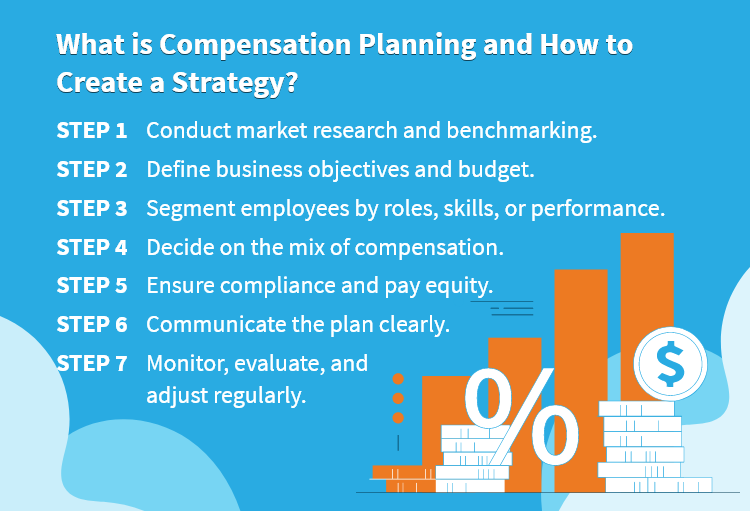
Use salary survey data from reputable sources to understand market trends and what competitors are paying for similar roles. This market pricing data helps establish competitive salary ranges.
Align your compensation philosophy with your organization's goals. Are you aiming to be a market leader in pay, or do you want to match the market average? Determine the company's budget for total compensation.
Group employees based on their function, level, and performance. This job architecture allows you to create tailored salary structures that reflect the value of different roles and skills.
Determine the right balance of base pay, incentives, and benefits for your workforce and manage them efficiently using our Total Compensation Planning tool. Consider what will best motivate your employees and support your company culture.
Work with legal and HR professionals to ensure your plan complies with all labor laws. Conduct regular equity audits to identify and address any pay gaps between employees in the same role or with similar responsibilities.
Transparency is key. Ensure employees understand the company's approach to compensation. Explain how their pay is determined and what they can do to increase their earnings through career growth and performance.
Compensation management is an ongoing process that can be effortless with the help of tools like Salary.com’s Compensation Planning Software. Regularly review the plan's effectiveness, gather employee feedback, and adjust it based on market changes and organizational needs.
Here are some queries related to compensation planning:
The difference between compensation planning and compensation policy is that the former is a strategic process of designing the entire rewards system, while the latter is a formal document that outlines the principles and guidelines of the plan.
A compensation philosophy outlines the guiding principles behind how an organization pays and rewards employees. It defines the company’s compensation goals, such as attracting talent or incentivizing performance, and the strategies used to achieve them, ensuring pay decisions are fair, and employees feel valued.
A good compensation strategy includes a mix of direct and indirect compensation. This consists of a competitive base salary, performance-based incentives, comprehensive benefits (like health insurance and retirement plans), and potential equity. It is built on thorough market research and is aligned with the company's budget and business goals.
Compensation planning directly impacts employee motivation. When employees believe their pay is fair and competitive, their job satisfaction and loyalty increase. Performance-based incentives can further boost motivation by creating a clear link between effort and financial reward, encouraging employees to contribute to organizational success.
Pay transparency involves being open about the company's compensation philosophy and practices. This can range from sharing salary ranges for open positions to providing employees with clear information on how their pay is determined. Integrating pay transparency into the planning process can build trust, reduce pay inequities, and improve employee satisfaction.

The latest research, expert advice, and compensation best practices all in one place.
Blog
Bringing trusted compensation intelligence and seamless planning to even more ADP users.

Blog
Learn how to train managers for effective pay conversations and build trust.

Blog
Total rewards package flexibility lets employees choose what matters - pay, perks, and benefits tailored to their needs.