Underwater Welding 2025: Salary and Training
Written by Salary SpecialistNovember 20, 2025
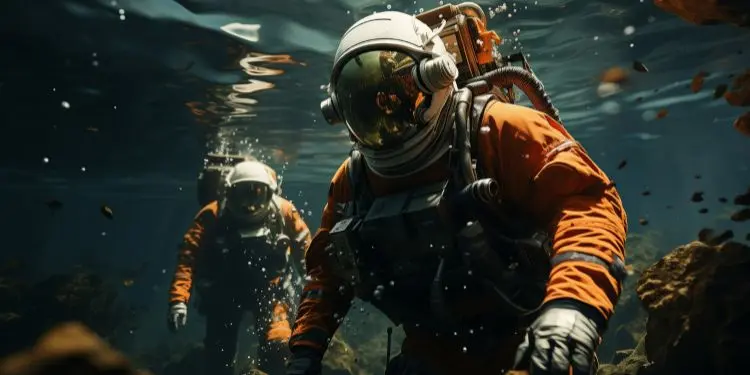
Underwater welding is a highly specialized and demanding profession that combines the physical rigor of commercial diving with the technical skill of structural welding. These professionals help maintain underwater structures such as oil rigs, pipelines, ships, and dams, facing many unique challenges.
This article provides a comprehensive career guide, detailing the training required and an in-depth look at the highly competitive underwater welding salary landscape in 2025.
What is underwater welding?
Underwater welding is a unique discipline blending commercial diving with advanced welding skills. In practice, a professional diver uses specialized welding equipment to join, repair, or cut metal structures submerged in water.
Common assignments include repairing underwater pipelines, ships' hulls, offshore oil and gas infrastructure, bridge supports, dams, and subsea installations.
The field of underwater welding generally employs two primary techniques:
- Wet underwater welding: The most common method, where the welder is directly exposed to the water. This technique utilizes waterproof electrodes and is often used for non-critical, temporary, or rapid emergency repairs due to the rapid cooling of the weld and potential for hydrogen-induced cracking.
- Dry underwater welding (habitat welding): This method involves enclosing the weld area in a large, sealed habitat from which the water has been displaced by a pressurized gas mixture. This creates a dry, controlled environment that allows for the highest quality welds, often comparable to surface welding. This process is typically reserved for critical repairs that require superior weld integrity.
The specialized nature of the work, which requires a blend of diving and metalworking expertise, is a primary factor contributing to the robust underwater welding salary.
Training and requirements for underwater welding
Becoming an underwater welding professional is a rigorous, multi-step process that requires a significant commitment to specialized training. It is not a career for those who are merely comfortable swimming; it demands exceptional physical and mental fortitude.
The general path to this lucrative profession includes:
- Becoming a certified surface welder: Candidates must first master the fundamental skills of traditional welding, including common processes like Shielded Metal Arc Welding (SMAW). A certification from a recognized body, such as the American Welding Society (AWS), is a necessary first step.
- Commercial diver certification: A commercial diving license is mandatory, as this training covers essential skills for working safely underwater, including decompression procedures, underwater communication, and the use of professional diving apparatus. This training is typically completed at an accredited commercial diving school.
- Specialized underwater welding course: Finally, specific training in underwater welding techniques is required. This often culminates in an AWS D3.6M certification for underwater welding, which sets the standards for both wet and dry hyperbaric welds.
The skills learned including non-destructive testing, rigging, and various inspection techniques, directly impact job placement and, consequently, the earning potential of an underwater welding salary.
How much can you earn? Underwater welding salary explained
The high-risk, high-reward nature of this occupation is clearly reflected in the underwater welding salary. While the income potential is significantly higher than for most traditional welding careers, earnings can vary dramatically based on numerous factors, including experience, location, and the depth of the work.
Salary.com data shows that as of October 1, 2025, the average salary for an underwater welder in the United States is $57,182 per year, or about $27 per hour. Pay can vary widely based on experience and project type:
- Top earners (90th percentile): $67,925
- Typical range (25th-75th percentile): $48,389-$62,805
- Entry-level (10th percentile): $40,384
Similarly, the American Welding Society (AWS) reports the following breakdown of typical earnings:
- Entry-level underwater welders may earn a base salary between $40,000 to $60,000 per year as they build experience, typically on inland or shallow coastal projects.
- Experienced commercial diving welders see a substantial increase in their income, with the potential to earn $80,000 to over $150,000 annually. This is often associated with offshore work, complex repairs, and highly technical projects.
- Saturation diving welders , who work at extreme depths and live in pressurized habitats for extended periods, may command even higher salaries than the top-tier experienced welders.
Because the underwater welding salary is often highly variable by project and location, many welders operate on contract or per-project pay rather than fixed salary arrangements.
Risks and rewards of an underwater welding career
A career in underwater welding is a challenging duality of significant professional hazards and substantial financial rewards.
Risks
The job demands working in an incredibly unforgiving environment. The primary hazards include:
- Health and safety: Divers are exposed to the physical stresses of pressure, including the risk of decompression sickness ("the bends"). They also face electric shock hazards, as the welder and electrode are directly exposed to the water, requiring rigorous equipment insulation and safety protocols.
- Environmental dangers: Working in unpredictable currents, low visibility, and extreme temperatures can quickly turn routine work into a perilous situation.
- Isolation: Offshore and saturation work involves extended periods away from home, which can be mentally taxing.
The Occupational Safety and Health Administration (OSHA) is the official government source that mandates comprehensive safety standards for commercial diving operations, including underwater welding, underscoring the serious nature of the physical risks involved. These regulations cover everything from equipment requirements to emergency procedures, confirming the necessity of meticulous safety practices in this field.
Rewards
Beyond the competitive underwater welding salary, the career offers unique advantages:
- High earning potential: The most significant reward is the ability to earn a six-figure income with a non-traditional educational background.
- Job satisfaction: Many professionals report a high degree of satisfaction due to the unique, critical nature of their work and the demanding problem-solving involved.
- Travel and adventure: The global demand for skilled underwater welding professionals means opportunities to work on international projects across the world's oceans.
The high compensation of the underwater welding salary is ultimately a financial reflection of the significant technical skill and physical risks that professionals take on to maintain vital infrastructure.
FAQs
What is the difference between wet and dry underwater welding techniques?
The essential difference is the working environment. Wet welding is performed directly in the water, which is quick and cheap but yields lower quality welds because the surrounding water cools the metal too fast. Dry welding (or hyperbaric welding) uses a sealed, pressurized chamber (habitat) around the workpiece to exclude the water, resulting in superior, high-quality welds necessary for critical repairs.
How does extreme depth affect a welder's salary?
Extreme depth and pressure directly correlate to significantly higher pay. Deeper projects require elite skills, specialized equipment, and greater risk management (e.g., saturation diving). This specialization demands a large depth premium, making a Saturation Diving Welder's salary several times higher than that of a shallow-water diver.
Are there mandatory health and physical requirements for training?
Yes. All reputable commercial diving and welding schools require candidates to pass a rigorous medical examination (often called an ADCI/UHMS physical) by a diving physician. This ensures the student does not have any pre-existing conditions (like severe respiratory or sinus issues) that could be life-threatening under pressure. Excellent physical fitness and mental stability are also mandatory due to the high-stress, arduous nature of the work.

Discover how to become a travel agent with step-by-step guidance on skills, licensing, certification, and working from home.
Discover how hotshot trucking works, from choosing the right truck to finding loads and scaling your business for long-term success.

Learn how to become a voice actor. From building your demo reel to finding voice acting jobs and understanding pay rates, this guide got you covered.

Discover how long does it take to become a pharmacist, the average salaries in the US, and answers to common questions in this guide.

Learn what a quality engineer does, the average salary ranges, key responsibilities, and how to become one.

Copywriting is about writing words that sell and persuade. Learn what copywriters do, essential skills, and how beginners can get started in 2025