Blog
Get Pay Right on ADP Workforce Now® Next Gen™
Bringing trusted compensation intelligence and seamless planning to even more ADP users.
Written by Salary.com Staff
August 22, 2025

Creating a high-performing sales force in 2025 takes more than just strong leadership and great products—it requires motivation that truly moves the needle. That’s where a sales incentive program comes into play.
Whether you're looking to reward sales reps for exceeding quotas, energize your entire sales team, or create a culture of continuous achievement, building the right sales incentive plan is essential.
In this guide, we’ll explore how to build successful sales incentive programs that don’t just deliver short-term wins, but build long-term momentum—fueled by clarity, competition, and meaningful rewards.
A sales incentive program is a structured rewards system designed to encourage sales reps and sales teams to exceed sales targets—whether by increasing total sales, improving the sales process, or generating more closed deals.
These incentive programs can include monetary rewards like cash rewards or financial incentives, or non-monetary incentives like experiential rewards, recognition, and professional development. They serve as a valuable tool to motivate salespeople, boost employee satisfaction, and align efforts with the organization's goals.
A sales incentive plan often outlines the criteria—such as sales metrics, revenue targets, or performance targets—that determine who gets what reward. It’s a structured blueprint for an effective sales incentive program.
A sales rewards program, on the other hand, refers to the actual incentive rewards (like trips, gifts, or cash rewards) once the plan criteria are met.
A well-designed sales incentive plan fosters healthy competition, ensures fairness across the entire sales team, and clarifies expectations. The smart combination of both leads to a successful sales incentive plan that drives consistent results.
Clarifying plan structures versus reward execution can be challenging. Salary.com’s Compensation and Benefits Program Design makes it easier to build scalable plans with well-defined performance criteria.
A few proven sales incentive ideas and structures include:
Activity-based incentives: Encourage specific behaviors like prospecting, cold calls, or follow-ups—ideal for building strong sales habits early in the pipeline.
Outcome-based incentives: Reward tangible results such as deals closed or exceeding sales targets, directly linking rewards to performance outcomes.
Individual plans: Tailored to recognize personal achievement and motivate high-performing sales reps through personalized goals.
Team-based plans: Designed to drive collaboration by rewarding group performance, boosting morale across the entire sales team.
Short-term contests: Time-limited challenges that spark urgency and boost quick results—great for energizing teams during slow periods.
Long-term incentives: Structured over months or quarters to promote consistency and reward sustained contributions toward revenue targets.
Short-term sales contests: Quick competitions that give immediate gratification—great for boosting morale and closing the fourth quarter strong. These can include split sales incentives, where teams compete in subgroups, or channel partners engaging in friendly rivalry.
Long-term incentive programs: Designed to provide employees with ongoing motivation, rewarding program participants over months or years. These can integrate analytics-based sales incentives to track performance and adapt rewards.
Other incentive programs may emphasize role specific incentives, such as tailored rewards for account executives, or encourage team effort among sales professionals and sales pros.
Both approaches keep sales jobs engaging and align with long-term professional development goals and if you're building short-term pushes or long-range reward programs, Variable Pay Program Design by Salary.com helps structure incentives that truly engage sales professionals at all levels.
To build an effective sales incentive initiative:
Define clear sales goals and performance targets: Establish measurable sales metrics and revenue targets. Clarity is crucial—everyone must know what is expected and how to win.
Combine monetary and non-monetary incentives: For instance, pair financial rewards or monetary compensation with experiential rewards like team retreats or exclusive events. This mix boosts job satisfaction and boosts engagement across the entire team.
Use analytics-based sales incentives: Monitor behaviors like activity levels and key behaviors that lead to closed deals. Data-driven insights help refine the reward structure and keep momentum high.
Promote team and individual recognition: Recognize top performers and encourage healthy competition. Consider split sales incentives for smaller groups and “team fired” motivations that energize the entire sales team.
Keep communication transparent: Make the sales incentive program visible—show leaderboards, share sales performance updates, and reinforce how the program supports the sales process and organization's goals.
Structure and fairness matter in sales incentives. Salary.com’s Competitive Pay Assessment provides insights into market benchmarks, ensuring that your incentive structures are both competitive and aligned with industry standards.
To design and roll out an effective sales incentive program this year, follow these steps:
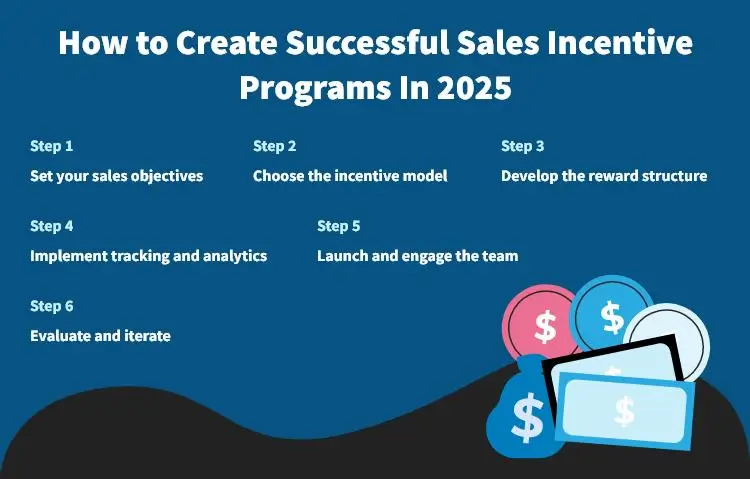
Define what your sales incentive program aims to achieve—whether it's hitting revenue targets, expanding market reach, or boosting overall sales. Make these goals measurable and directly aligned with your company’s broader objectives. This clarity ensures that everyone knows what success looks like.
Select the right mix of rewards—cash rewards, financial incentives, or experiential rewards. Consider a hybrid approach that also includes non-monetary incentives like recognition or career development. Tailor the model to suit both individuals and the entire team, ensuring the incentive plans speak to different roles and motivations.
Design a clear framework that outlines thresholds, reward tiers, and timelines. Use split sales incentives or time-based sales contests to create urgent and healthy competition. A well-structured plan keeps reps focused and engaged.
Establish solid tiers and scalable pay systems with Salary Structure Building, ideal for evolving organizations.
Use your CRM and performance tools to track sales metrics and monitor progress in real time. Integrate analytics-based sales incentives to adjust strategies as needed and maintain transparency and fairness throughout the program.
Promote your program with energy. Share the details, highlight rewards, and motivate your sales reps to aim high. Keep the team updated with ongoing updates, recognition of top performers, and visible leaderboards.
At the end of the cycle, review outcomes. Measure impact on sales performance, gather feedback from program participants, and assess ROI. Use these insights to fine-tune your next effective sales incentive campaign.
By defining clear objectives, selecting tailored incentive rewards, and tracking sales performance with data-driven precision, you create a system where both your business and your sales professionals win. From sales reps chasing cash rewards, to channel partners collaborating in sales contests, the right approach turns effort into impact—and goals into achievements.
As you head into 2025, use these strategies to inspire your entire team, celebrate top performers, and implement a successful sales incentive plan that doesn’t just raise numbers—but raises the bar. Because when you motivate your sales team with purpose, you don’t just grow your pipeline—you create momentum that lasts.

The latest research, expert advice, and compensation best practices all in one place.
Blog
Bringing trusted compensation intelligence and seamless planning to even more ADP users.

Blog
Learn how to train managers for effective pay conversations and build trust.

Blog
Total rewards package flexibility lets employees choose what matters - pay, perks, and benefits tailored to their needs.