Blog
Get Pay Right on ADP Workforce Now® Next Gen™
Bringing trusted compensation intelligence and seamless planning to even more ADP users.
Written by Salary.com Staff
June 27, 2025

In today’s fast-paced business environment, leveraging the right HR technology is crucial. Artificial intelligence is increasingly used to enhance recruitment, talent acquisition, and overall talent management, making HR processes more effective.
It enables HR teams to automate administrative tasks, with automating administrative tasks being a key benefit, managing sensitive employee data securely, and making data-driven decisions.
In this guide, we’ll explore what a modern HR tech stack looks like, why it matters, and how to build one with real-world examples and tool recommendations.
An HR tech stack refers to the collection of digital tools and platforms that HR professionals use to manage various HR functions. It is used by human resources to manage people and processes. This includes everything from recruitment and onboarding to performance management and employee engagement.
A well-structured HR technology stack streamlines HR processes, enhances data accuracy, and improves overall efficiency. HR leaders, HR executives, and HR departments are responsible for selecting and implementing technology solutions and essential tools to drive operational efficiency.
Data driven decision making is essential for strategic talent management and workforce planning. By integrating various HR systems, organizations can ensure a seamless flow of information, leading to better employee experience and satisfaction.
Building an effective HR tech starts with aligning your compensation framework to your organizational goals. Salary.com’s Compensation Philosophy Facilitation guides HR leaders in developing consistent compensation principles that serve as the backbone for long-term HR technology adoption.
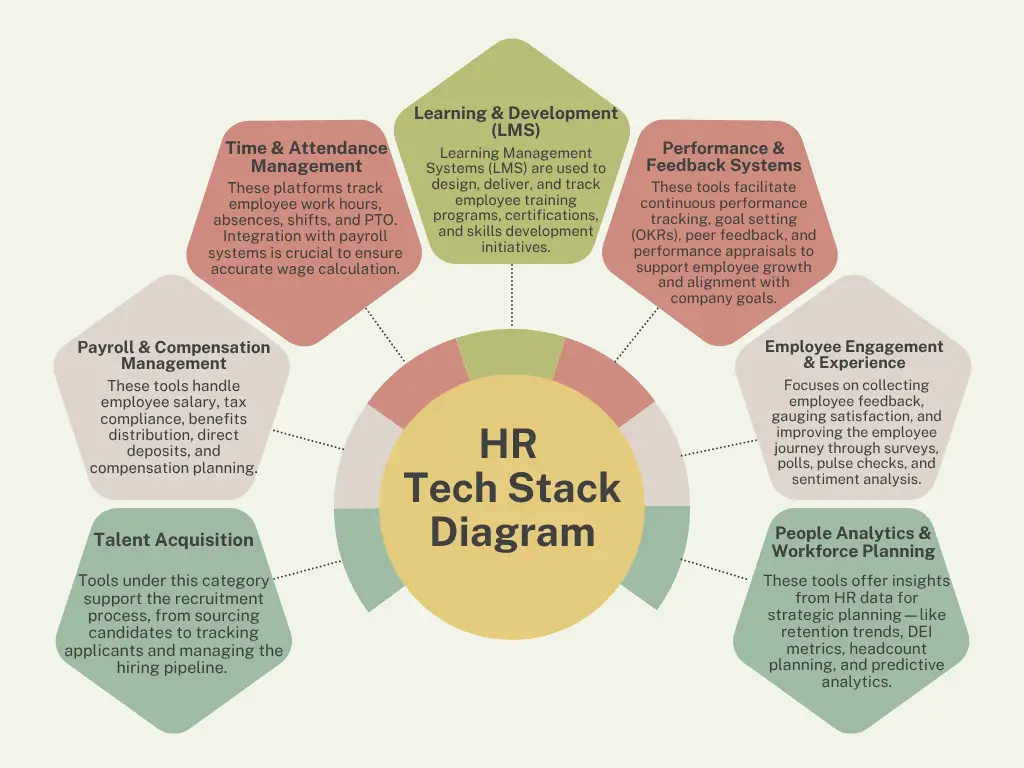
Building a robust HR tech stack involves understanding the core categories that address different HR needs. Building an HR tech means selecting the right combination of tools.
Recruitment and onboarding
Applicant Tracking System (ATS): Applicant tracking systems that automate and streamline recruitment processes, including candidate monitoring and communication, from posting job openings to tracking applicants.
Onboarding Platforms: Software that streamlines the onboarding process, ensuring new hires have a smooth transition.
Accurate job architecture and standardization are key to successful onboarding and applicant tracking. Salary.com’s Job Titling Standardization supports structured titles that streamline recruitment workflows and strengthen ATS performance.
Performance Management
Performance management software: Platforms like 15Five facilitate performance reviews, continuous feedback, and tracking of key performance indicators. A management system integrates these HR functions, streamlining processes for greater efficiency.
Learning Management Systems (LMS): Tools like SAP SuccessFactors support learning and development, helping employees grow within the organization. A learning management system serves as a centralized platform for employee training, onboarding, and compliance tracking.
Employee engagement and satisfaction
Employee Engagement Tools: Enhance employee recognition and gather feedback to boost employee engagement. An HR platform can centralize these employee engagement features along with other HR tools, streamlining workflows and improving operational efficiency.
Benefits Management Software: Manage employee benefits, and when integrated into an HR platform, they work alongside other HR tools to contribute to higher employee satisfaction.
HR Administration
HR Information Systems (HRIS): Now handle payroll processing, managing employee records, and compliance. Payroll software and payroll systems automate salary calculations, benefits management, and compliance, ensuring accurate and timely payments.
Data Security: Ensuring the protection of sensitive employee data is paramount. Tools with robust data protection regulations compliance are essential. Protecting from data breaches is critical to safeguard employee information and maintain organizational trust.
To build an HR tech stack that truly supports your organization, it’s essential to focus on building your HR tech by carefully selecting and integrating the right tools to meet your unique needs.
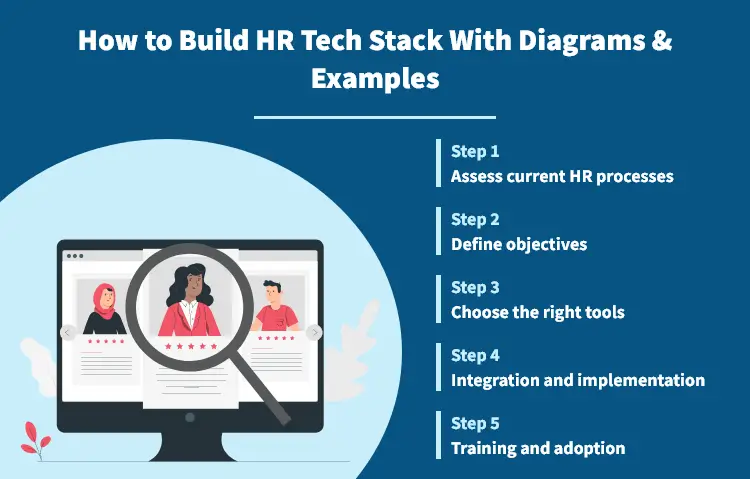
Begin by reviewing existing systems and evaluating current HR processes to identify gaps and areas for improvement. Understand the specific needs of your HR department and the broader organization.
HR executives play a critical role in defining objectives for the HR tech stack. Set clear goals for what you want to achieve. Whether it’s improving employee engagement, streamlining the recruitment process, or enhancing performance management, having defined objectives will guide your choices.
When choosing HR tech tools, prioritize selecting essential tools and evaluating technology solutions that align with your organizational needs. Consider factors like integration capabilities, user-friendliness, and scalability. Ensure the tools can handle various HR functions effectively.
Integrate the chosen tools into a cohesive tech stack by prioritizing seamless integration with existing systems. This approach ensures operational efficiency, allowing for efficient data flow, and minimizing manual tasks.
Train your HR team and other stakeholders on the new systems. Encourage adoption by highlighting the benefits and providing continuous support.
A foundational step is ensuring competitive and compliant pay across the board. Salary.com’s Competitive Pay Assessment helps you evaluate and adjust compensation programs to support digital transformation initiatives in HR.
Real-world examples show how companies across industries are leveraging a solid HR tech stack to transform their HR operations, automate administrative tasks, and enhance the employee experience. These organizations demonstrate the impact of adopting the best HR technology to streamline HR functions and support strategic growth.
Communicorp UK: Integrated AI-driven payroll solutions into their HR systems, dramatically reducing manual tasks and improving operational speed. This shift in their tech stack boosted productivity and elevated employee satisfaction by freeing up time for strategic work.
Moderna: Reimagined its HR by merging it with IT to create a more agile HR technology stack. This integration enabled better handling of employee data, supported data-driven decision making, and streamlined their recruitment process, aligning with key HR functions.
Dell: Automated onboarding alerts and performance reviews, increasing productivity by 85%. Their tech-enabled HR team now delivers better employee engagement and faster strategic initiatives.
Coca-Cola: Automated over 50 HR tasks using SAP tools within its HR tech, increasing operational efficiency and compliance across their enterprise. Their perfect HR tech stack not only standardized workflows but improved transparency and audit readiness.
These examples demonstrate how organizations tailor their HR tech stacks to meet specific needs, ensuring a balance between functionality and user experience.
Planning for the future of HR tech means aligning platforms with total rewards strategies. Salary.com’s Total Rewards Strategy Consulting helps organizations select tools that align with compensation, benefits, engagement, and long-term workforce planning.
By incorporating these steps into your HR tech, you can ensure efficient HR operations, improved employee experience, better alignment with organizational goals, and build a solid HR tech stack.

The latest research, expert advice, and compensation best practices all in one place.
Blog
Bringing trusted compensation intelligence and seamless planning to even more ADP users.

Blog
Learn how to train managers for effective pay conversations and build trust.

Blog
Total rewards package flexibility lets employees choose what matters - pay, perks, and benefits tailored to their needs.