Blog
Get Pay Right on ADP Workforce Now® Next Gen™
Bringing trusted compensation intelligence and seamless planning to even more ADP users.
Written by Salary.com Staff
June 27, 2025

Building a modern and agile workforce isn’t just about great culture—it’s about smart pay. In the ever-evolving business landscape, having a reliable compensation solution is crucial for ensuring you’re rewarding your people fairly, consistently, and strategically.
But with so many tools, platforms, and systems available, how do you choose?
This guide will walk you through the types of compensation management solutions, must-have key features, and best practices for implementation—so your business can stay ahead, optimize budgets, and retain top talent.
A compensation solution is more than just a software product — it’s a strategic approach that streamlines the entire compensation process. It involves the use of tools and systems that help empower organizations to effectively design, manage, and distribute employee pay, bonuses, and benefits.
In today’s market, where attracting top talent and ensuring pay equity are paramount, a strong compensation management framework is not optional — it’s essential. These solutions provide executives with access to accurate, up-to-date compensation data, supporting informed decision-making and strategic planning.
The best compensation management solution ensures compliance, aligns with market trends, and enables smarter decision-making across departments. With proper compensation planning, companies can manage compensation budgets, minimize high costs, and evaluate the total cost of ownership for greater value.
There are several types of compensation management tools and platforms, each serving different needs. Choosing the right one depends on your industry, business size, and workforce model. Below are the most common types:
Integrated HR systems: These solutions blend total compensation, payroll, job descriptions, and performance data into one cohesive platform, simplifying cross-functional planning and helping reduce manual processes.
Cloud-based software: A scalable, agile solution that supports remote teams and real-time data synchronization.
Specialized compensation planning tools: Focused entirely on managing salary, budgeting, and performance-based rewards, these tools can calculate and automate total compensation calculations such as merit and incentive awards, streamlining processes and improving accuracy.
They also enable the creation, customization, and automation of compensation plans to optimize employee pay structures and ensure competitiveness.
AI-driven platforms: These platforms help companies analyze salary gaps, improve pay equity, and stay in sync with industry standards.
The goal is to align with competitive compensation practices while eliminating workflow complexity and delivering seamless user experiences for HR professionals and managers. To benchmark offerings and implement competitive compensation practices Salary.com's Competitive Compensation helps to attract and retain high-performing talent.
When selecting compensation management software, your first priority should be identifying the key features that match your company’s current and future needs. Below are the most important to consider:
Customizable salary structures and total workers’ compensation packages: Being able to manage salary, bonuses, and equity across roles and locations is non-negotiable. Great software will allow dynamic salary planning, easily adjusted for performance or market shifts, and should support benchmarking salaries to ensure your compensation remains competitive in the market.
Real-Time reporting and analytics: Look for built-in dashboards that can deliver real-time data on job performance, pay equity, and total compensation insights. The ability to generate detailed, customizable reports is essential for in-depth analysis and informed decision-making, enabling HR to address compensation gaps quickly.
Seamless HR software and systems integration: If your HR systems include tools for payroll, recruiting, and employee engagement, your compensation tool should integrate seamlessly. This reduces errors, saves time, and ensures more consistent compliance tracking.
Security and compliance: Data security is vital. Look for audit trails, user permissions, and tools that help you ensure fair pay while staying compliant with labor laws. This supports ethical practices and builds transparency across your organization. To maintain compliance with labor laws and support pay equity, Salary.com's Minimum Wage Data provides real-time legislative updates across jurisdictions.
Pay equity software: By proactively addressing pay equity, companies not only reduce the risk of non-compliance with evolving labor regulations but also build a more inclusive and motivated workforce. With the right compensation management solution, businesses can confidently address equity issues, support ongoing retention efforts, and drive sustainable growth.
Rolling out a new compensation management solution takes planning, but the results are worth it. Effective implementation includes leveraging compensation data to accurately price jobs and inform pay strategies. Follow these core steps:
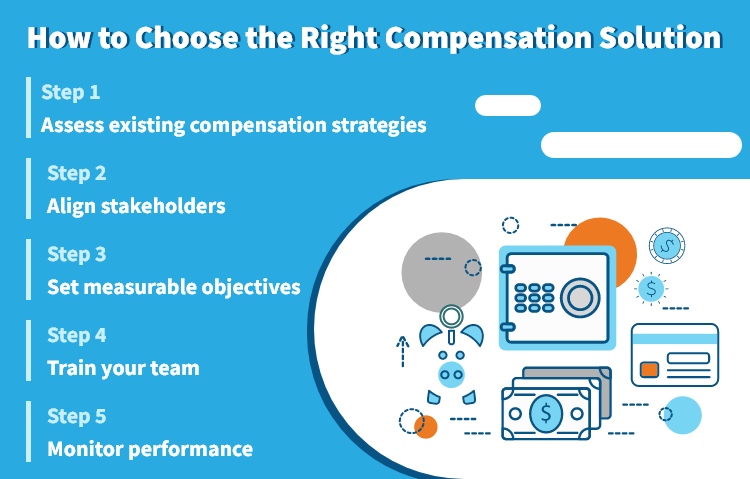
Use your current data and job descriptions to benchmark where gaps exist and whether current systems support scalable planning.
Bring together HR professionals, finance, and department heads to set goals, align resources, and reduce internal friction.
To build a robust compensation management plan, it’s essential to set measurable objectives that align with your organization’s broader business goals. Start by defining clear targets for your compensation budgets and pay equity initiatives.
This approach enables your organization to stay ahead of market trends, attract and retain top talent, and maximize the impact of your resources. Whether your goals include improving pay equity, optimizing incentive management, or maintaining competitive compensation packages, having defined objectives ensures your compensation management efforts are focused, efficient, and effective.
Help your team understand how to use the new software, from uploading salary info to managing benefits and triggering merit increases.
Use built-in reporting tools to generate a comprehensive report and leverage employee feedback to continuously optimize the system. Make sure you’re ready to scale and refine your compensation management models as your business evolves.
For organizations implementing performance-based pay, Salary.com Merit Modeling can help simulate merit increases and performance adjustments before they’re deployed at scale.
Finding the best compensation management software means more than ticking feature boxes—it’s about choosing a solution that aligns with your organization's size, goals, and growth plans.
A scalable, user-friendly platform that integrates with your existing HR systems, supports pay equity, and simplifies compensation planning can significantly improve how you manage pay, bonuses, and benefits.
Before you make a purchase request or send out an RFP, you’ll need to evaluate multiple factors that influence the long-term impact of your compensation management solution:
User-friendly platforms: Ensure intuitive design that minimizes training time.
Comprehensive feature sets: Look for a system that includes budgeting, salary, bonus, and benefits tools.
Real-time data: Look for software that pulls from market sources and enables performance-based adjustments on the fly.
Strategic integrations: Make sure it works with existing HR software, payroll, and management solution tools to provide complete visibility.
Adaptability: The right system should scale with your organization, adapting to new roles, locations, and total compensation planning needs.
By choosing carefully, your company will be positioned to implement effective compensation strategies that not only meet compliance requirements but also maximize employee performance and internal alignment. For transparent communication with staff, Salary.com Total Compensation Statement offers a way to present full compensation values clearly.
Choosing the right compensation solution helps your organization simplify pay decisions, promote pay equity, and retain top talent. With the right tools and a solid compensation management strategy, your business can effectively address and support long-term success using compensation management solution

The latest research, expert advice, and compensation best practices all in one place.
Blog
Bringing trusted compensation intelligence and seamless planning to even more ADP users.

Blog
Learn how to train managers for effective pay conversations and build trust.

Blog
Total rewards package flexibility lets employees choose what matters - pay, perks, and benefits tailored to their needs.